
Part 1: Dream Presentation
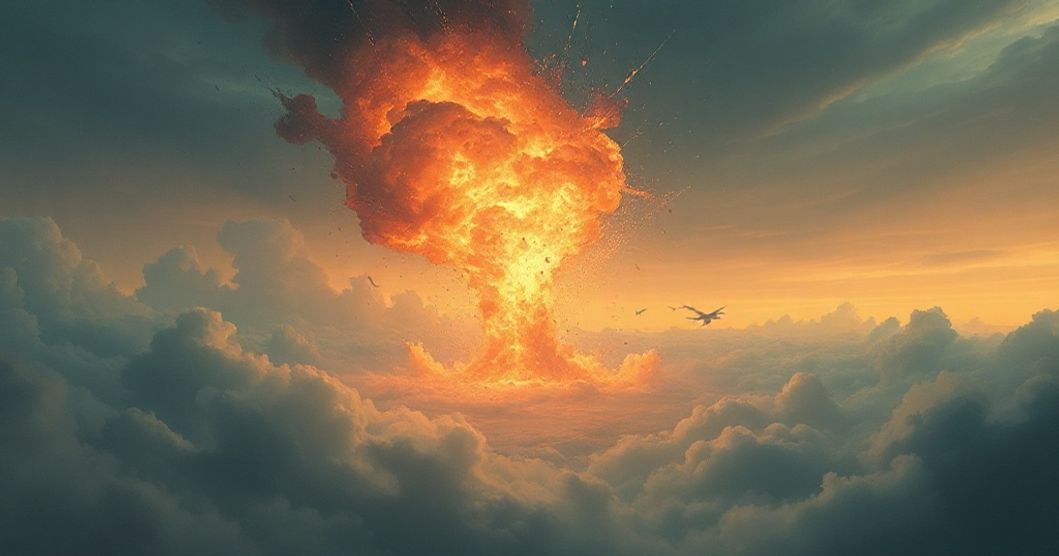
Dreams often serve as portals to the unconscious, offering glimpses of our deepest fears, desires, and unresolved truths. This particular dream stands out not just for its dramatic premise but for the extraordinary sensory realism that persisted even after waking—a phenomenon that invites exploration into the depths of our psychological landscape. The dream begins in a vast, sunlit room within an unfamiliar building, its emptiness creating an eerie stillness that contrasts sharply with the impending cataclysm. The daylight, though bright, carries an undercurrent of unease, suggesting that even in the face of destruction, the mind clings to familiar sensory cues. The explosion, described as nuke-like in scale, is presented not as a violent event but as an inevitable one, with the dreamer choosing calm acceptance over futile escape. This moment of surrender—standing still, watching as the world warps—reveals a profound shift in emotional response: instead of fear, there is a strange, almost amused resignation. The explosion itself is experienced without pain, only a sudden, disorienting loss of physical form, followed by a fall through luminous white clouds rather than darkness. This ascent into light, combined with the single, powerful thought of 'god,' suggests a transcendent experience, a moment of spiritual awakening within the dream state. The cold wind, which persists even after waking, becomes a physical manifestation of the dream’s emotional residue, lingering as a tangible reminder of the boundary between sleep and reality.
The dream also includes a parallel experience: being shot into space, with consciousness expanding until it feels boundless, yet the dreamer wakes with the same sense of disorientation. This earlier dream, while less concrete, hints at similar themes of existential expansion and the dissolution of self—a recurring motif in dreams of transcendence. The juxtaposition of these two dreams suggests a deeper exploration of mortality and continuity, with the explosion representing a sudden end and the space dream representing a more gradual, boundless transformation. Together, they create a narrative of the unconscious wrestling with life’s fragility and the nature of existence.
Part 2: Clinical Analysis
Want a More Personalized Interpretation?
Get your own AI-powered dream analysis tailored specifically to your dream
🔮Try Dream Analysis FreeThe Explosion as Inevitable: Symbolic Death and Acceptance
The explosion in this dream functions as a powerful symbol of overwhelming change or loss in the dreamer’s waking life. The nuke-like scale and inevitability suggest a feeling of powerlessness in the face of forces beyond control—perhaps career pressures, relationship stress, or existential uncertainty. The decision to 'not try to hide' reflects a deeper psychological pattern: the dreamer may be confronting situations where resistance feels futile, leading to a subconscious acceptance of inevitable outcomes. This theme of acceptance is crucial; instead of panic, the dreamer experiences a calm surrender, which could indicate a growing awareness of life’s impermanence or a desire to let go of control in certain areas.
In Jungian terms, the explosion might represent the 'anima/animus' archetype—the unconscious feminine/masculine principle—asserting itself with force. Alternatively, it could symbolize the shadow self, a part of the psyche we’ve repressed, now emerging to confront us. The empty room, with its stark, bare walls and bright light, serves as a metaphor for the dreamer’s internal state: a space stripped of distractions, forcing direct confrontation with core fears or truths. The daylight, though illuminating, creates an ironic contrast with the impending destruction, suggesting that the dreamer is aware of potential threats even in seemingly safe environments.
Sensory Realism in Dreams: The Physics of Consciousness
The dream’s most striking feature is its hyper-realistic sensory details—the cold wind, the falling through light, the lingering post-waking chill. This level of sensory accuracy is rare in dreams, where we typically experience fragmented or abstract sensations. According to modern dream research, the brain’s somatosensory cortex (which processes touch, temperature, and movement) remains active during REM sleep, creating the illusion of physical experience. The dreamer’s report of feeling wind despite having no body suggests a merging of the physical and psychological realms—a phenomenon known as 'out-of-body experience' (OBE) in dreams, which often correlates with feelings of liberation or transcendence.
The 'falling through white clouds' imagery is particularly significant. In dream symbolism, white often represents purity, spirituality, or the unconscious mind, while falling can signify a loss of control or a descent into the unknown. The brevity of the fall (four seconds) contrasts with the dreamer’s feeling that it lasted 'an eternity,' a common distortion in dream time perception. This suggests that the dreamer’s mind was processing a profound transition—from physical existence to a state of consciousness beyond the body—with remarkable clarity.
The 'God' Thought and Transcendent Experience
The single word 'god' that arises during the fall is laden with meaning. In dreams, such spontaneous thoughts often reflect the dreamer’s deepest spiritual or existential questions, even if they are not traditionally religious. The word 'god' here may symbolize the collective unconscious, the 'numen' (a term Jung used for the transcendent aspect of the psyche), or simply the recognition of a force beyond oneself. The transition from physical death to this transcendent state without pain suggests a desire for a painless end—a reflection of the dreamer’s need to resolve fears of suffering or loss in waking life.
Freud might interpret the 'god' thought as a sublimation of repressed desires or a defense mechanism against overwhelming anxiety. In contrast, Jung would view it as an archetypal encounter, a meeting with the self or the divine within. The dreamer’s non-native English speaker status, yet the thought occurring in English, hints at the universality of certain archetypal experiences, transcending language barriers. This suggests that the core message—the exploration of mortality and transcendence—is universal, regardless of cultural context.
Waking Aftershocks: The Lingering Wind of Uncertainty
The post-waking sensation of cold wind is a powerful example of 'dream leakage'—where elements of the dream persist into waking consciousness. This phenomenon can occur due to the brain’s difficulty distinguishing between real and imagined stimuli, especially when emotional intensity is high. The dreamer’s conviction that 'this is maybe how dying really feels like' reveals a deep-seated curiosity about the nature of death, perhaps triggered by recent losses, aging, or existential reflection.
The 'alternative life' thought reflects a desire for change or a fear of continuity. The dreamer’s uncertainty—whether they’ve stepped into a new reality or merely dreamed of one—suggests a period of transition in waking life. This could be related to career changes, relationship shifts, or personal growth, where the unconscious is processing the idea of leaving behind a familiar self for something new.
Therapeutic Insight: Embracing the Inevitable
This dream offers several opportunities for self-reflection. First, the theme of acceptance—choosing to face death without fear—encourages the dreamer to examine areas of their life where they might benefit from letting go of control. Journaling about recent stressors or decisions where they felt powerless could help identify patterns to address in waking life.
The hyper-realistic sensations invite mindfulness practice. The dreamer might benefit from grounding exercises, such as focusing on physical sensations in the present moment, to distinguish between reality and the unconscious’s projections. Regular meditation could help integrate the dream’s message of acceptance into daily life.
Finally, the recurring dreams of transcendence suggest a need for spiritual or existential exploration. The dreamer might consider exploring meditation, journaling about their deepest values, or engaging in creative pursuits that allow for self-expression—areas often overlooked in modern life but essential for psychological wholeness.
FAQ Section
Q: Why did the explosion feel inevitable in the dream?
A: The explosion likely symbolizes an area of life where you feel powerless or overwhelmed. The 'inevitability' reflects a subconscious acceptance of change, suggesting you may be ready to let go of control in certain situations.
Q: What does the 'falling through light' imagery represent?
A: Falling through light often signifies transcendence or spiritual awakening. It may reflect a desire to move beyond physical limitations or confront fears of mortality with a sense of hope.
Q: Why did the cold wind persist after waking?
A: Lingering dream sensations like this can indicate unresolved emotions. The wind may symbolize uncertainty or the need to process change, reminding you to acknowledge these feelings rather than dismiss them.