
Part 1: Dream Presentation
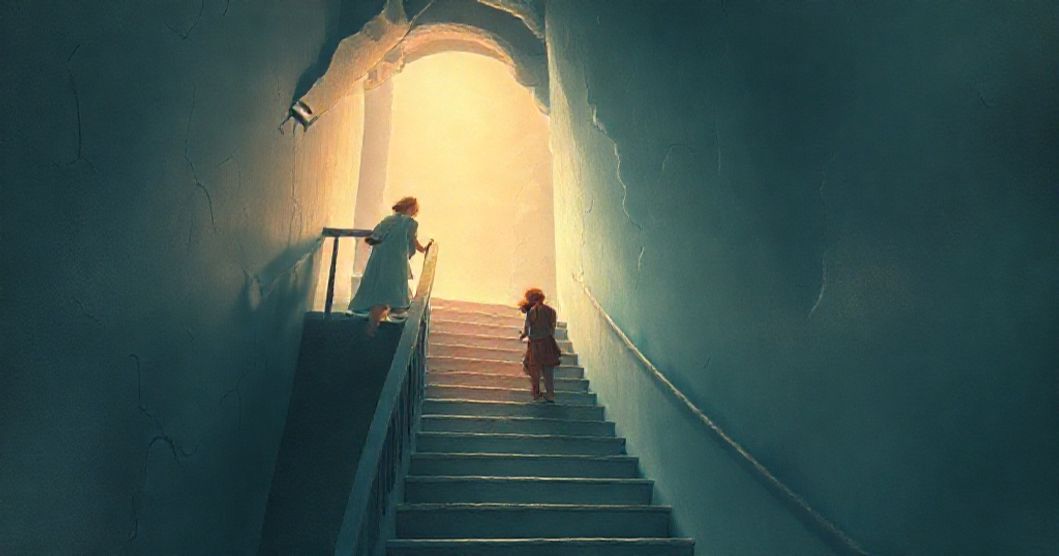
Dreams often serve as psychological compasses, guiding us through the uncharted territories of our unconscious minds. In this recurring dream, the dreamer and their sister navigate a surreal architectural landscape that merges childhood nostalgia with symbolic resistance to conventional progress. The setting—a grandmother’s apartment building—anchors the dream in familiar familial territory, while the 'connected stairs' introduce a paradoxical element: a structure meant for ascension becomes an obstacle, forcing an alternative, uncomfortable path.
My sister and I have long shared a strange, recurring dream pattern: we find ourselves in a network of connected staircases that seem to defy logic, yet feel eerily familiar. The setting is always our grandmother’s apartment building—its creaky wooden floors, the faint scent of her lavender perfume, and the faded wallpaper that somehow feels both comforting and disorienting. In these dreams, the stairs themselves are the puzzle: they connect multiple levels in a way that makes no architectural sense, yet they’re unmistakably the same structure we once climbed as children. To reach the destination—usually the top floor where Grandma kept her antique china or the cozy den where we’d play as kids—we can never simply follow the natural path. Instead, we’re forced to climb from the side, clinging to the handrail that juts out awkwardly, our shoes slipping on the worn steps that seem to shift beneath our feet. The destination is always just out of reach if we take the 'proper' route, yet when we scramble from the side, we can sense the goal drawing near. It’s as though the stairs exist to test our assumptions about how things should be done, reminding us that sometimes the most direct path isn’t the one that leads where we need to go. These dreams always leave me with a bittersweet feeling—nostalgic for the grandmother we’ve lost but also confused by the way the stairs refuse to cooperate, much like how our own lives sometimes feel disconnected from the paths we thought we’d take.
Part 2: Clinical Analysis
Want a More Personalized Interpretation?
Get your own AI-powered dream analysis tailored specifically to your dream
🔮Try Dream Analysis FreeSymbolic Landscape: The Staircase as Archetypal Path
Stairs in dreams universally symbolize progression, transition, and the journey of self-discovery (Freud, 1900). In this recurring dream, the 'connected' nature of the staircases introduces a layer of complexity: they represent not just individual growth but interconnectedness—perhaps the dreamer’s relationship with their sister, or the web of family history. The 'impossible to ascend normally' quality suggests psychological resistance to conventional life paths, where the dreamer and sister must 'climb from the side'—an unconventional, almost rebellious approach to reaching their goal. This physical awkwardness mirrors emotional discomfort with established norms: the dream’s logic defies architectural sense, just as the dreamer’s emotional reality may resist straightforward solutions.
The grandmother’s apartment building functions as a liminal space—a threshold between the known (childhood memories) and the unknown (adulthood’s challenges). Grandmothers often symbolize nurturing, wisdom, and ancestral connection in dreamwork (Jung, 1933), and her physical absence in the dream (though present in memory) creates a poignant tension: the stairs lead toward her memory, yet the path is fraught with difficulty. This duality reflects the dreamer’s complex relationship with loss and legacy: the destination is both comforting and unattainable, much like how memories of loved ones can feel simultaneously accessible and distant.
Psychological Undercurrents: Sibling Dreams and Collective Unconscious
From a Jungian perspective, shared dreams between siblings often indicate the 'collective unconscious' at work—archetypal patterns that transcend individual experience (Jung, 1921). The stair imagery may represent the 'shadow' aspect of their relationship: the parts of themselves they both struggle to acknowledge or integrate. The need to 'climb from the side' could symbolize how they navigate challenges together—finding unconventional solutions when direct paths feel blocked. In waking life, siblings often act as emotional mirrors, and this recurring dream suggests they’re processing similar psychological terrain, even if unconsciously.
Freudian analysis might interpret the 'impossible staircase' as a manifestation of repressed childhood conflicts—perhaps unresolved jealousy, rivalry, or fear of disappointing their grandmother. The 'destination' that remains just out of reach could represent unmet needs from childhood that persist into adulthood. The physical 'slipping' on the steps might symbolize instability in their sense of self or relationships, where they feel unsteady in their approach to life’s 'ascents.'
Emotional and Life Context: Unpacking Family History
Recurring dreams often surface during periods of life transition or emotional reprocessing. The dreamer mentions 'used to have weird dreams'—implying this imagery predates significant life changes, yet persists. The grandmother’s apartment as a setting suggests a nostalgic anchor: perhaps the dreamer is processing grief, moving through a period of family change, or reconnecting with childhood identity. The 'impossible stairs' could metaphorically represent how they approach life’s transitions—sticking rigidly to old patterns instead of adapting. In waking life, do they find themselves 'climbing from the side' in relationships or career paths, avoiding the 'natural' route? The dream’s repetition suggests these patterns are worth examining.
The emotional tone of frustration and familiarity is key: the dream feels both strange and deeply personal, reflecting the dreamer’s internal landscape. The 'sister' element adds another layer of intimacy—siblings share not just blood but often similar life experiences, and this shared dream imagery might indicate they’re processing parallel challenges, even if separately. The inability to 'go on them how it was supposed to go' could signal resistance to societal expectations of how relationships or life 'should' unfold.
Therapeutic Insights: Navigating the Dream’s Message
The recurring nature of this dream offers a powerful opportunity for self-reflection. First, journaling about specific 'stair moments' in waking life—when they felt forced to take unconventional paths—can reveal patterns. Are there areas where they avoid direct confrontation or choose the 'side climb' approach in relationships? Second, exploring the grandmother’s role in their lives: what did she represent, and how might her memory influence current choices? Perhaps a conversation with their sister about these dreams could uncover shared insights about their relationship.
Therapeutic work might involve 'integrating the shadow'—acknowledging the 'side climbing' as a valid strategy rather than a flaw. The dream suggests that sometimes, going against the expected path leads to deeper understanding. The 'destination' isn’t lost; it’s just redefined. Encouraging the dreamer to ask: What if the 'impossible staircase' is actually a guide to a different kind of success—one that honors both their unique strengths and their interconnectedness with others?
FAQ Section
Q: Why do the stairs feel 'impossible' to ascend normally?
A: Stairs in dreams often symbolize resistance to conventional life paths. The 'impossible' quality may reflect psychological blocks—fear of failure, societal pressure, or unmet childhood needs that surface in adulthood.
Q: What does the grandmother’s apartment represent in this dream?
A: It functions as a liminal space between past and present, symbolizing ancestral wisdom, unresolved grief, or the tension between nostalgia and growth.
Q: How can I use this dream to improve my waking relationships?
A: Reflect on how you and your sister navigate challenges together. The 'side climb' suggests you might benefit from creative problem-solving and open communication when direct paths feel blocked.