
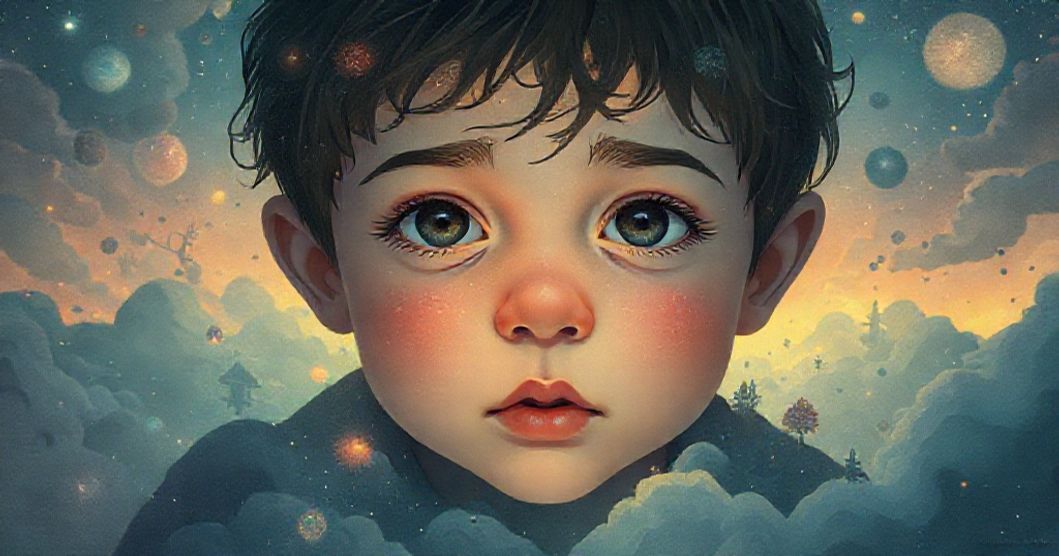
Part 1: Dream Presentation
Dreams often arrive as cryptic messengers, and this particular vision offers a compelling encounter with the tension between simplicity and complexity, innocence and awareness. The dream begins with a girl rendered in the unguarded style of a five-year-old—unrefined lines, bold crayon strokes, and a lack of adult precision that immediately evokes childhood creativity, spontaneity, and perhaps even a sense of vulnerability. This initial image sets the stage for a deeper exploration of what lies beneath surface appearances, as the dreamer’s attention is immediately drawn to the girl’s most distinctive feature: her iris, described as a “very complex shade of brown.” This single detail—an otherwise ordinary eye color rendered extraordinary—becomes the emotional anchor of the dream, shifting from a static observation to a charged moment of connection when the eye turns to meet the dreamer’s gaze. The narrative arc of the dream—from casual observation to deliberate eye contact—mirrors the way our subconscious often confronts us with elements we’ve tried to dismiss, only to find them lingering in our awareness.
The rewritten dream captures this journey with vivid sensory detail: the girl’s form as a child’s drawing, the iris’s shimmering complexity, and the dreamer’s internal shift from shaking off the image to being held by its gaze. This sequence reflects a common dream pattern: the initial dismissal of a strange image followed by a deeper engagement when the subconscious decides to communicate its message more directly. The “complex brown iris” stands out not just visually but symbolically, suggesting layers of meaning beneath a seemingly simple exterior—a theme that will resonate throughout our analysis.
Part 2: Clinical Analysis
Want a More Personalized Interpretation?
Get your own AI-powered dream analysis tailored specifically to your dream
🔮Try Dream Analysis FreeSymbolic Landscape: The Childlike Drawing and Complex Iris
The five-year-old drawing style in dreams often represents a regression to a more authentic self, free from adult pretense and self-consciousness. In Jungian psychology, this can signify the “shadow” of adulthood—the parts of ourselves we’ve buried beneath societal expectations, responsibilities, or self-doubt. The childlike simplicity here may symbolize repressed creativity, unfiltered emotions, or a longing for the uncomplicated perspective of childhood. When paired with the girl’s eye, this simplicity becomes a vehicle for deeper emotional truth: the most profound aspects of our inner world often manifest in the most seemingly innocent forms.
The “complex shade of brown” iris is particularly significant. In dream symbolism, eyes represent awareness, perception, and the “window to the soul.” A brown iris, traditionally associated with stability, reliability, and warmth, gains added depth when described as “complex”—suggesting that beneath these qualities lies a hidden richness of experience, emotion, or memory. Brown, as a color, connects earth and water, symbolizing grounding, intuition, and emotional depth. The complexity of this iris might therefore represent the dreamer’s own multifaceted emotional landscape—the layers of experience, relationships, and unspoken feelings that make up their identity.
The act of the eye turning to look at the dreamer introduces another layer of symbolism: this is not just a passive image but an active engagement. In dreamwork, eye contact often signifies recognition, confrontation, or a call to awareness. The girl’s gaze might represent the dreamer’s own need to look inward—to recognize aspects of themselves they’ve overlooked or dismissed. The dreamer’s initial “shaking it off” suggests a common reaction to these unexpected intrusions from the subconscious, but the persistence of the gaze indicates that avoidance alone is insufficient; the message demands attention.
Psychological Perspectives
From a Jungian perspective, this dream can be understood through the lens of the “anima” archetype—the unconscious feminine aspect within all individuals. The girl’s childlike form might represent the dreamer’s inner child, while the complex iris could symbolize the depth of that inner feminine presence. Jung believed the anima manifests in dreams to balance masculine and feminine energies, and its appearance here suggests a call to integrate these aspects. The childlike drawing style might represent the anima’s unfiltered, authentic nature, while the complex iris hints at the depth and complexity of emotional intelligence that lies beneath.
Freudian theory would approach this dream through the lens of repressed memories or desires. The five-year-old drawing could symbolize repressed childhood memories, while the complex iris might represent repressed emotions or desires that the unconscious is now bringing to the surface. The eye contact could signify a confrontation with these repressed elements, as the dreamer is forced to “see” what they’ve been avoiding. The “shaking it off” might reflect the ego’s attempt to repress these unconscious urges, only to have them resurface in a more direct manner.
Cognitive dream theory offers another framework, suggesting that dreams process emotional information and consolidate memories. The girl’s image could represent a recent emotional experience or relationship that the mind is still processing, while the complex iris might symbolize the emotional weight of that experience. The eye contact could reflect the mind’s attempt to make sense of how this experience is affecting the dreamer’s self-perception. From a neuroscience perspective, dreams involve the activation of visual cortex regions, and the vividness of the iris might indicate heightened emotional processing in the brain during sleep.
Emotional and Life Context
To interpret this dream, we must consider the emotional state of the dreamer and potential waking triggers. The five-year-old drawing style often evokes feelings of nostalgia or vulnerability—perhaps the dreamer is encountering a situation in waking life that requires them to reconnect with their own sense of childlike wonder or innocence. The “complex brown iris” could symbolize a relationship or situation where the dreamer is experiencing both simplicity and depth simultaneously—perhaps a new connection that feels both familiar and mysterious.
The act of the eye turning to look at the dreamer suggests a moment of vulnerability and awareness. In waking life, this might correspond to feeling seen by someone or something, or perhaps feeling the need to be seen by one’s self. The dreamer’s initial dismissal of the image could reflect a common defense mechanism: avoiding emotions or situations that feel uncomfortable. The lingering effect of the gaze upon waking hints that this emotional processing is not complete, and the mind is still wrestling with what the image represents.
This dream may also reflect the dreamer’s relationship with their own creativity or self-expression. The childlike drawing style might represent a loss of creative spontaneity in waking life, while the complex iris could symbolize the depth of emotion that creativity requires. The eye contact might be a call to embrace both the simplicity and complexity of one’s creative process, allowing oneself to be vulnerable while also recognizing the depth of one’s inner world.
Therapeutic Insights
For the dreamer, this vision offers several opportunities for reflection and growth. First, the “childlike drawing” invites exploration of areas in waking life where they might be suppressing their authentic self or avoiding vulnerability. Journaling exercises could help identify recent experiences that triggered this feeling of childlike exposure, and reflecting on the emotions associated with those experiences can provide clarity. The “complex brown iris” suggests a need to explore the depth of one’s emotional landscape—perhaps through meditation or therapy—to understand the layers of feeling that lie beneath surface interactions.
The act of the eye turning to look at the dreamer is a powerful reminder to practice self-awareness. When we encounter difficult emotions or situations, we often look away or suppress them, but this dream suggests that true growth comes from facing these moments directly. Mindfulness practices, such as daily meditation or breathwork, can help the dreamer develop the courage to “meet” their inner self as the dreamer met the girl’s gaze.
Another therapeutic insight is recognizing the tension between simplicity and complexity in one’s life. The five-year-old drawing represents the value of simplicity, spontaneity, and unguarded expression, while the complex iris represents the depth and nuance of emotional experience. The dreamer might benefit from finding balance between these two aspects—allowing themselves to be vulnerable and creative without overcomplicating their self-perception.
Finally, the eye contact in the dream can be seen as a call to embrace the “shadow” aspects of oneself. The girl’s form, with its childlike simplicity, might represent the shadow of innocence we all carry, while the complex iris represents the depth of that shadow. By acknowledging and integrating these aspects, the dreamer can develop a more complete sense of self.
FAQ Section
Q: What does it mean when a dream character’s eye turns to look at me?
A: Eye contact in dreams often signifies a deep connection or confrontation with your inner self. It may represent feeling seen, needing to confront vulnerability, or being called to recognize something you’ve been avoiding. This gaze invites awareness rather than avoidance.
Q: Why would a five-year-old drawing style appear in a dream?
A: Childlike drawing styles in dreams typically symbolize innocence, vulnerability, or repressed creativity. They may reflect a desire to reconnect with your authentic self, or a need to address unresolved childhood emotions or experiences that still impact you.
Q: How do I interpret complex eye colors in dreams?
A: Complex eye colors often represent depth, mystery, or layered emotions. Brown, in particular, symbolizes stability, intuition, and emotional grounding. The complexity suggests nuance beneath simplicity—exploring the emotional context of the dream will reveal what these layers represent for you.
Keywords: five-year-old drawing, complex brown iris, eye contact in dreams, inner feminine archetype, emotional depth, childlike innocence, unconscious connection, shadow integration, vulnerability, repressed creativity Entities: childlike drawing style, complex iris symbolism, eye contact imagery, anima archetype, emotional processing, inner child connection, self-awareness practice