
Part 1: Dream Presentation
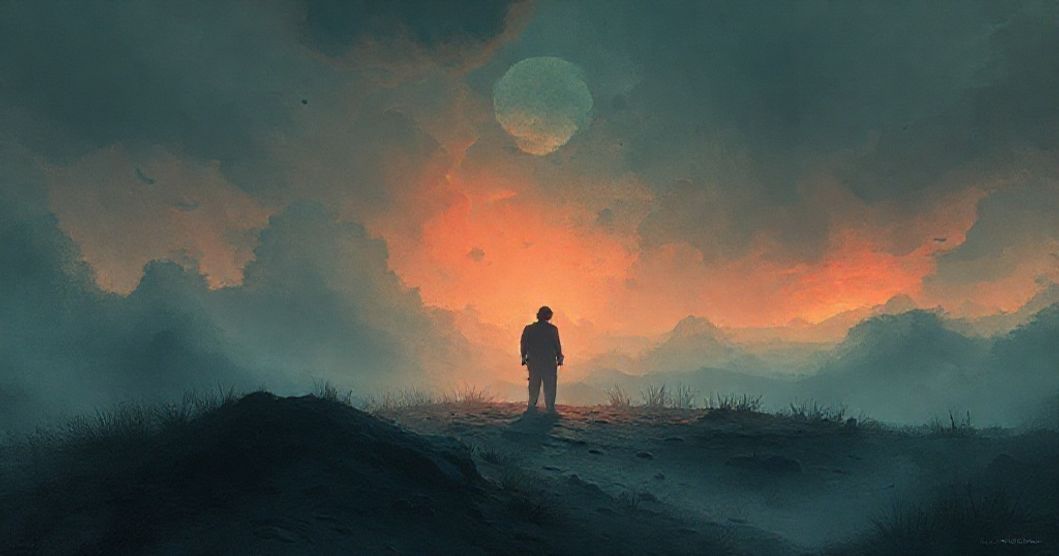
Dreams often serve as portals into our unconscious minds, revealing tensions we may not yet name or understand. This particular dream, with its stark imagery of conflict, violence, and lingering unease, offers a compelling window into the psyche’s attempt to process deeper emotional terrain. Here is the dream as the dreamer experienced it:
I awoke with the dream still vivid, its residue clinging like damp clothing to my psyche. In the dream, I found myself engaged in a brutal altercation with a man on a narrow, cobblestoned street that wound between tall buildings. The night air was thick with the hush of darkness, yet streetlights cast stark pools of amber onto the pavement, their beams slicing through the indigo-black sky where stars glimmered faintly, as if afraid to fully reveal themselves. We grappled—muscles screaming, breath ragged—on the tight, claustrophobic thoroughfare. His hands clamped around my throat, and I fought to free myself, our bodies thrashing against the cold, unyielding asphalt.
The fight escalated, and in a sudden, primal surge, I found myself overpowering him. My hands closed around his neck, not with malice, but with a desperate need to survive. The act was swift, yet not without a strange clarity: I did not feel anger, only a cold, mechanical focus. When he went limp beneath me, I did not feel triumph. Instead, a hollow void opened in my chest—a space where emotion should have been, but was now nothingness. The streetlights glowed dimly, and I saw my breath materialize in the chill night air, a wispy cloud that dissipated almost immediately, mirroring the fleeting nature of my victory.
Want a More Personalized Interpretation?
Get your own AI-powered dream analysis tailored specifically to your dream
🔮Try Dream Analysis FreeI dragged his body into a shadowy alley, though the act felt more like moving a sack of sand than a human being. The alley’s brick walls closed in around me, their rough surfaces pressing against my palms as I fumbled to conceal him beneath a pile of discarded crates and old tarps. The night air bit at my skin, and I shivered not from cold alone, but from a deeper, gnawing dread that settled in my bones. I could not shake the feeling that something vital had been lost—a part of me I’d never known I had, now gone forever.
As I stood over his hidden form, the dream warped. The alley, once a narrow passage, expanded into an endless stretch of time. Days blurred into weeks, weeks into years. I watched as seasons changed around me, yet the body remained, its presence unacknowledged yet omnipresent. I tried to forget, to move forward, but the weight of what I’d done—of what I’d become in that moment—never lifted. The dread I’d felt at the start of the dream now felt like a physical entity, a living thing that followed me through each artificial hour, each false dawn of the dream’s distorted timeline.
When I finally woke, I lay in bed, heart pounding, tears streaming silently. The dream had not been about violence—it had been about something far more primal: the struggle to control, the fear of losing oneself, and the haunting knowledge that some battles, once fought, leave scars that outlast even the passage of time.
Part 2: Clinical Analysis
Symbolic Landscape: Unpacking the Dream’s Visual Language
The dream’s symbolic elements form a cohesive narrative of internal conflict and emotional repression. The narrow street at night represents psychological boundaries—both literal (the confined space of the street) and metaphorical (limitations on emotional expression). The streetlights act as dual symbols: they illuminate the confrontation (conscious awareness) while casting shadows (unconscious forces at play). The blue-black sky with stars evokes the mystery of the unconscious, where repressed emotions and memories reside, their light faint but ever-present.
The wrestling altercation is a classic Jungian shadow archetype encounter—the 'shadow' representing repressed aspects of the self, often perceived as an external 'enemy' in dreams. The man in the dream likely embodies a part of the dreamer they perceive as threatening, perhaps anger, fear, or a conflicting desire. The act of killing is not literal but symbolic: it may represent an attempt to 'eliminate' or overcome a part of oneself, or to assert dominance over internal chaos.
The empty feeling and dread are critical emotional anchors. The dreamer does not experience relief after 'killing' the man, suggesting that the act of 'defeating' a part of oneself does not resolve underlying issues. Instead, the lingering body across days, weeks, and years is a powerful symbol of unresolved trauma or guilt—an internalized burden that refuses to be buried, even in the dream’s distorted timeline.
Psychological Currents: Theoretical Frames of Interpretation
From a Freudian perspective, the dream may represent repressed aggressive impulses or unresolved conflicts. The 'killing' could symbolize the dreamer’s attempt to assert control over repressed anger or hostility toward another person or aspect of themselves. The 'hiding' of the body aligns with Freud’s concept of the 'dream work'—the unconscious’s way of disguising threatening content to avoid waking anxiety.
Carl Jung’s analytical psychology offers a complementary view, emphasizing the shadow archetype. The man in the dream likely represents the dreamer’s shadow: a part of themselves they have disowned, perhaps anger, competitiveness, or a desire to dominate. The wrestling and subsequent 'killing' may reflect a struggle to integrate this shadow aspect rather than destroy it. Jung would note that the persistent dread arises because the shadow, when suppressed rather than integrated, continues to haunt the psyche.
Cognitive neuroscience perspectives frame dreams as emotional processing tools. The dream’s distorted time (days/weeks/years compressing) may reflect how the brain processes traumatic or emotionally charged memories, looping them to ensure emotional resolution. The chill of the night and breath in the air evoke sensory grounding, emphasizing the dream’s authenticity as a memory of emotional intensity.
Emotional & Life Context: Connecting to Waking Reality
Dreams rarely exist in isolation; they reflect waking emotional states and unresolved conflicts. The dreamer’s empty soul and lingering dread suggest a period of internal turmoil—perhaps a recent conflict, unexpressed anger, or a situation where they felt overpowered. The wrestling could symbolize a power struggle in waking life, where the dreamer feels trapped or outmatched.
The unnatural time in the dream hints at how unresolved issues feel endless in waking life. Just as the body remains 'with' the dreamer across years, unprocessed emotions can feel inescapable, even years later. The lack of triumph after 'killing' the man suggests that the dreamer’s approach to conflict resolution is flawed—eliminating or suppressing aspects of oneself rarely brings peace.
Therapeutic Insights: From Dream to Self-Awareness
This dream invites the dreamer to examine their relationship with anger, power, and integration. A key insight is recognizing that violence in dreams often represents emotional disconnection, not literal aggression. To integrate the shadow, the dreamer could journal about situations where they felt overpowered or unheard, identifying patterns of repression.
Reflective exercises include active imagination: in waking life, imagine the 'man' as a part of oneself and dialogue with this aspect, asking, 'What do you need?' This process of integration can transform the dream’s 'killing' from destruction to self-understanding. Mindfulness practices, such as grounding exercises, can help the dreamer recognize when they’re 'carrying' emotional burdens and release them intentionally.
FAQ Section: Clarifying Common Questions
Q: Why did the dreamer feel empty after 'killing' the man?
A: The emptiness reflects that eliminating a part of oneself (the shadow) does not resolve underlying emotions. True integration requires acknowledging, not destroying, conflicting aspects of self.
Q: What does the 'lingering body' symbolize?
A: It represents unresolved guilt, trauma, or unprocessed emotions that persist in waking life, demanding attention rather than suppression.
Q: How can the dreamer apply this insight to waking life?
A: The dream suggests addressing conflicts directly rather than suppressing them. Journaling, therapy, or creative expression can help process anger and integrate shadow aspects into a more whole self.