
Part 1: Dream Presentation
Dreams often serve as emotional mirrors, reflecting our deepest truths when our waking minds cannot. In this particular dream, the boundaries between memory and reality dissolve in a poignant exploration of grief, connection, and the human need to hold onto what we’ve lost. The dreamer finds themselves at a bustling shopping plaza, a space that evokes youth, freedom, and shared activity. Skateboards, laughter, and the casual intrusion of an unexpected friend set a scene of ordinary camaraderie—yet beneath this surface, a profound emotional undercurrent pulses.
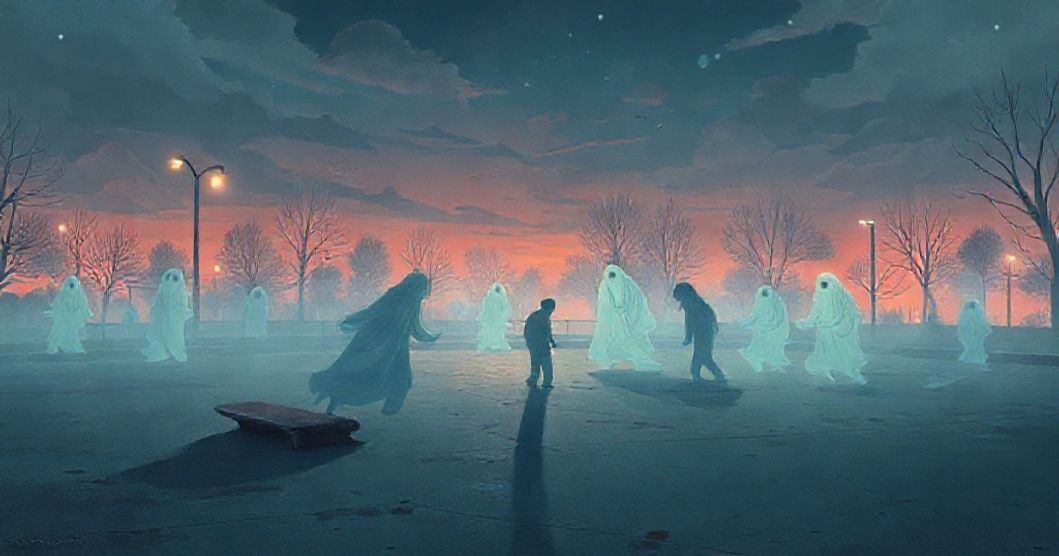
The rewritten dream narrative unfolds as follows: I woke with a jolt, the dream still vividly etched in my mind—a surreal collision of memory and loss that felt both immediate and deeply symbolic. I was at a bustling shopping plaza, the concrete echoing under the wheels of our skateboards as Tye and Barr-lo, my closest friends, and I laughed and chatted, the afternoon sun casting long shadows. The air smelled of gasoline and fresh-cut grass, a faint breeze carrying the distant hum of traffic from the nearby streets. We’d been skating for hours, the world around us a blur of motion and sound, when a third figure appeared—a mutual friend from the opposite side of town, someone I hadn’t seen in months. Her approach was unexpected, yet somehow familiar, like a character stepping into a story I didn’t know I was living. Without thinking, I called out, “Okay, rando,” half-joking, half-confused by her sudden appearance. She smiled, unfazed, and reached for my skateboard, her fingers wrapping around the grip tape. “Can I just leave it here?” she asked, and before I could answer, she’d hopped on and ridden downhill, the board carving a smooth arc along the plaza’s sidewalk before she stopped, turning back to shout, “Yeah, just leave it there!” Then she disappeared inside a store, the door swinging shut behind her. Tye and Barr-lo exchanged a glance, and we followed, the weight of her casual intrusion lingering in the air. As we neared the store, something shifted. A cold awareness settled over me like a shroud. If Tye was here, hanging with me, and Barr-lo was right beside him, neither of them could have heard the news—that Barr-lo had passed away, just weeks before. My throat tightened. “Aww, you haven’t heard about Barr-lo yet, have you?” I asked, my voice trembling. Tye shook his head, his eyes wide with confusion, and I expected Barr-lo to fade into the transparency of a ghost, as if his form were dissolving into the ether. But he didn’t. Instead, in that same breath, my mind split into two: I looked at Barr-lo and said, “You haven’t heard about Tye yet, have you?” The words hung in the air, and in that instant, everything crystallized. I was in a dream. We were all ghosts—Tye, Barr-lo, and me—bound together in a liminal space where the living and the departed blurred. Sadness flooded me, thick and tangible, as we stared at one another, each of us trapped in this surreal moment of recognition. Then I woke, gasping, the dream’s emotional weight still pressing on my chest. I’d lost two friends this year. Names changed, but their memory remains, a quiet ache in my bones. RIP, Tye and Barr-lo.
Part 2: Clinical Analysis
Want a More Personalized Interpretation?
Get your own AI-powered dream analysis tailored specifically to your dream
🔮Try Dream Analysis FreeSymbolic Landscape: The Language of Ghosts and Grief
The shopping plaza in this dream functions as a liminal space—a threshold between the living world and the realm of memory. Its bustling, ordinary nature contrasts with the dream’s emotional gravity, symbolizing the everyday moments we take for granted with loved ones, now lost. Skateboarding, a pastime associated with freedom, youth, and shared experiences, represents the vitality and connection the dreamer once felt with Tye and Barr-lo. When the stranger grabs the skateboard and leaves it, this act embodies the unexpected intrusion of loss into the dreamer’s sense of control and continuity. The board, a symbol of identity and shared history, becomes a metaphor for the dreamer’s struggle to retain connection to their friends’ memories.
The “ghosts” in the dream are not literal apparitions but psychological manifestations of unresolved grief. Jungian psychology might interpret these figures as archetypal representations of the “shadow” or the “unconscious,” where repressed emotions and memories reside. The simultaneous realization that both Tye and Barr-lo were “ghosts” suggests the dreamer’s mind is processing dual losses, each triggering similar emotional patterns of denial and acceptance. The phrase “you haven’t heard about [name] yet” acts as a linguistic trigger, revealing the dreamer’s internal conflict: on one hand, the desire to protect others from pain, and on the other, the compulsion to acknowledge the reality of loss.
Psychological Undercurrents: Grief, Denial, and the Unconscious
From a psychoanalytic perspective, this dream can be seen as a manifestation of Freud’s “dream work”—the unconscious mind’s attempt to process repressed grief. The dreamer’s initial confusion (“I didn’t realize it was a dream until I did”) reflects the psychological defense mechanism of denial, a natural response to overwhelming loss. When the dreamer realizes the friends are “ghosts,” it represents the moment of acceptance breaking through the defenses. This aligns with Kubler-Ross’s grief stages: the dream moves from shock (denial) to a moment of recognition (acceptance), even if only within the dream state.
Cognitive dream theory offers another lens: the brain’s default mode network, active during sleep, processes recent emotional experiences. The dreamer’s loss of two friends creates a neural “loop” where the mind attempts to integrate this new reality through symbolic storytelling. The simultaneous realization (“I was in a dream”) mirrors the cognitive dissonance between the dreamer’s waking knowledge of loss and the dream’s attempt to maintain connection. This dual awareness—knowing they’re dreaming while still feeling the emotional impact—suggests the dreamer’s psyche is beginning to reconcile with the reality of absence.
Emotional and Life Context: Processing Loss in the Waking World
The dreamer’s recent loss of two close friends provides the emotional backdrop for this symbolic narrative. The act of “hanging out” in a familiar space (the shopping plaza) while the friends are now absent creates a tension between the past and present. The casual “rando” comment to the stranger highlights the dreamer’s struggle to navigate social interactions without their friends, feeling adrift in a world that no longer feels complete. The dream’s setting in a public, social space underscores the universal human need for connection, even as that connection is fractured by death.
From a contemporary perspective, the dream reflects the modern experience of grief in a digital age, where memories persist in fragmented ways. The “shopping plaza” as a physical space mirrors the digital spaces where people might share memories online, but the dream elevates this to a more visceral level—the need to be physically present with loved ones, even in the afterlife of memory. The dream’s emotional resolution (“sadness poured over me”) suggests the dreamer is beginning to allow themselves to feel the full weight of loss, rather than numbing it through denial.
Therapeutic Insights: Honoring Memories, Embracing Grief
This dream offers a powerful opportunity for emotional processing. The first step is recognizing the dream as a compassionate act of the unconscious, attempting to bridge the gap between the living and the departed. Journaling about the dream’s emotional beats—from the initial confusion to the final realization of loss—can help the dreamer externalize these feelings, transforming internal turmoil into tangible reflection.
Creating a “memory ritual” might be therapeutic: visiting the shopping plaza, if possible, or engaging in an activity the friends enjoyed (skateboarding, if safe). This bridges the dream’s symbolic space with the waking world, allowing the dreamer to honor the past while moving forward. Mindfulness practices focused on breathwork and present-moment awareness can help the dreamer transition from the dream’s liminal space back to the reality of their life, accepting that grief is a natural part of healing.
FAQ: Navigating the Dream’s Emotional Landscape
Q: Why did the dreamer feel sadness in the dream?
A: The sadness arises from the dreamer’s realization that Tye and Barr-lo were no longer present in the living world, triggering the universal pain of loss and the fear of being separated from loved ones.
Q: What does it mean to have two ghost friends in the dream?
A: The “ghosts” represent the dreamer’s unresolved grief and the need to reconcile with their friends’ absence. They symbolize the lingering presence of memories and emotions that the mind struggles to let go of.
Q: How can this dream help with the healing process?
A: By processing grief symbolically, the dream allows the dreamer to confront emotions without overwhelming the conscious mind. It normalizes the experience of grief and provides a safe space to honor the friends’ memory while accepting their absence.