
Part 1: Dream Presentation
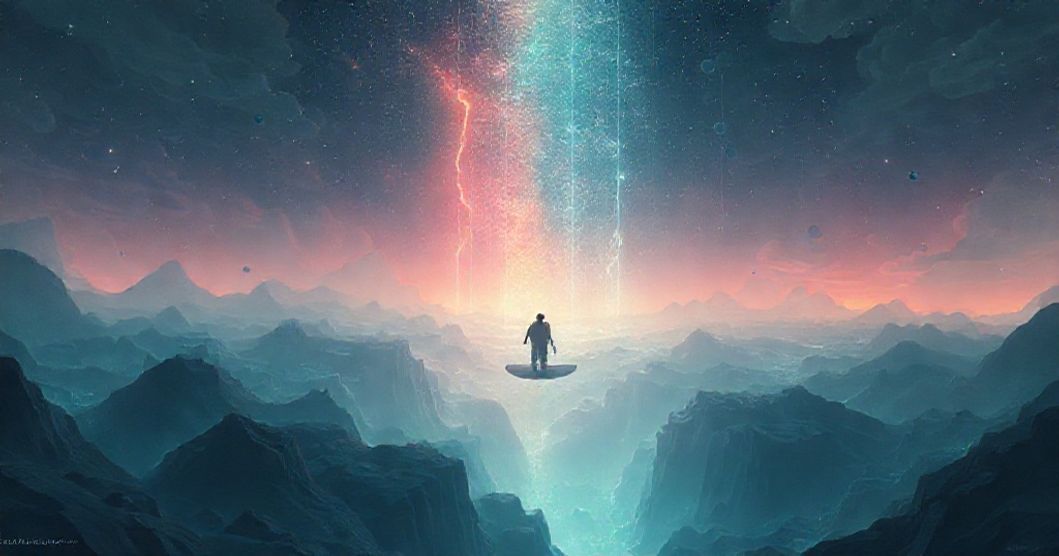
Dreams often serve as psychological mirrors, reflecting our deepest anxieties and aspirations through surreal landscapes that feel simultaneously foreign and deeply personal. This particular dream transports the dreamer into a virtual reality game called Free Fall, where the boundaries between digital and physical reality dissolve into a disorienting descent. The narrative unfolds as follows: the dreamer enters a futuristic VR arcade, drawn to a game that promises an experience unlike traditional amusement parks—one that replaces physical thrills with digital immersion. Once inside, they find themselves in an endless void of dark gray space, surrounded by hundreds of colorful blocks that drift like floating islands in the digital abyss. The dreamer can alter their direction mid-fall, yet each adjustment only amplifies the sense of vertigo. The rules are clear: collision with any block ends the game, while the goal remains elusive—a landing point that never quite materializes. As the fall continues, the blocks shift colors unpredictably, and the soundtrack shifts between nostalgic video game scores, creating an emotional dissonance between the terror of the fall and the unexpected familiarity of the music. The dream ends abruptly as the dreamer wakes before reaching any resolution, left with the lingering sensation of suspended animation and the weight of unfulfilled potential.
Part 2: Clinical Analysis
Symbolic Landscape: The Language of Digital Descent
Want a More Personalized Interpretation?
Get your own AI-powered dream analysis tailored specifically to your dream
🔮Try Dream Analysis FreeThe dream’s core symbol—the act of falling in a virtual reality environment—represents a profound metaphor for modern existential uncertainty. In Jungian psychology, falling dreams often symbolize a loss of control or a fear of life’s unpredictable currents, but the VR context adds a distinctly contemporary layer: the digital realm as both escape and vulnerability. The 'Free Fall' game itself can be read as an archetypal 'test of endurance'—a rite of passage where the dreamer must navigate chaos to find meaning. The colorful blocks serve dual symbolic purposes: as obstacles to be avoided, they represent life’s potential pitfalls, while their shifting colors suggest emotional or psychological states in flux. The inability to discern a pattern in color changes mirrors the dreamer’s experience of navigating ambiguous situations in waking life, where clarity often eludes them. The disorienting music, though seemingly incongruous, introduces a crucial emotional element: video game soundtracks often evoke nostalgia or excitement, suggesting the dreamer’s attempt to find comfort or familiarity in otherwise terrifying circumstances.
Psychological Perspectives: From Jung to Cognitive Science
From a Jungian perspective, the dream reveals the 'shadow' aspect of the dreamer’s psyche—the parts of themselves they may be avoiding or struggling to integrate. The VR game as a container for the dream’s action represents the digital age’s blurring of boundaries between self and technology, suggesting a subconscious dialogue about how we relate to virtual experiences versus real-world challenges. Freud might interpret the falling as a manifestation of repressed anxiety about life’s uncertainties, while the inability to land could symbolize unresolved conflicts or fears of failure. Cognitive psychology offers another lens: the dream processes daily experiences through the lens of digital immersion, where the brain struggles to distinguish between virtual stimuli and real-world stressors. The game’s rules (avoid blocks, find landing) mirror the way we navigate modern life—constantly making choices with unclear outcomes. Neuroscience suggests that dreams help process emotional memories, and the intense emotional charge of this dream may indicate recent experiences that triggered deep-seated fears of instability.
Emotional & Life Context: Navigating Digital Overload and Uncertainty
This dream likely emerges from a period of significant transition or uncertainty in the dreamer’s life. The VR game could reflect a preoccupation with digital experiences—perhaps spending excessive time in virtual spaces, or feeling overwhelmed by the constant stimulation of technology. The 'free fall' sensation might symbolize job changes, relationship shifts, or major life decisions where the dreamer feels adrift. The inability to control the fall despite being able to 'steer' suggests a tension between perceived agency and actual powerlessness—a common experience in modern life where we feel we can 'control' our digital identities but are often at the mercy of external forces. The color-changing blocks could represent the dreamer’s fluctuating emotional states: blue for calm, red for stress, green for hope—each hue reflecting their internal landscape as they navigate life’s challenges. The abrupt awakening before reaching land hints at a subconscious need to process these anxieties without resolution, suggesting the dreamer may be avoiding confronting certain issues in waking life.
Therapeutic Insights: Embracing Uncertainty and Finding Grounding
This dream offers several opportunities for self-reflection and growth. First, it invites the dreamer to examine their relationship with digital experiences: are they a source of comfort or escapism? The falling in a controlled virtual environment might suggest a desire to find safety in predictable systems, yet the dream’s terror reveals the fragility of such control. A practical exercise could involve journaling about moments of 'free fall' in waking life—when did you feel most adrift? What did you do to regain stability? The dream’s emphasis on direction changes suggests adaptability is key; even in chaos, small adjustments can redirect our course. Another exercise: create a 'landing point' visualization—a real or symbolic place that represents stability in your life—and practice returning to it during moments of anxiety. The color-changing blocks might indicate the need to recognize emotional patterns and work with them rather than against them. If the dream reflects digital overload, consider setting boundaries with technology to reconnect with real-world experiences. Finally, the dream’s emotional intensity suggests that acknowledging rather than suppressing fears is essential for growth.
FAQ Section
Q: What does it mean to be able to change direction while falling in the dream?
A: The ability to alter direction symbolizes adaptability and the subconscious belief in agency, even in chaotic situations. It may reflect a desire to take control of circumstances that feel out of your hands.
Q: Why did the blocks change color unpredictably?
A: Color changes often represent emotional states or unresolved issues. The shifting hues suggest your psyche is processing conflicting feelings—perhaps anxiety, hope, and uncertainty all at once.
Q: How can I connect this dream to my waking life?
A: Reflect on areas where you feel 'falling' (unstable, out of control). The blocks represent obstacles; ask if you’re avoiding certain paths or relationships. The landing point symbolizes your goals—can you visualize a clearer path forward?