
Part 1: Dream Presentation
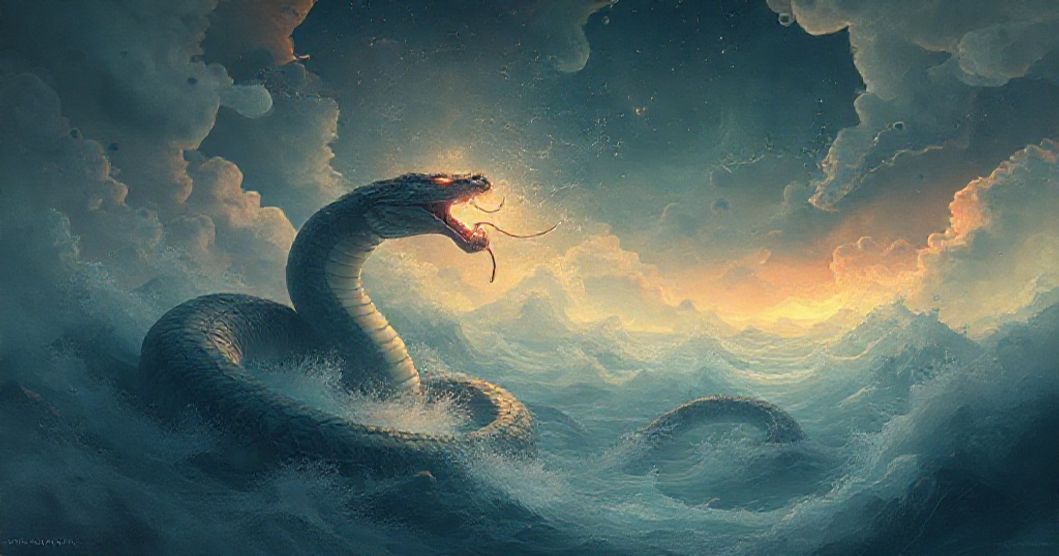
Dreams often surface as cryptic messengers, and for one individual, a recurring theme of snakes has woven itself into both childhood and recent nighttime experiences. In a vivid sleep state, the dreamer found a snake coiled gently across their torso, its head settling precisely on the right eye—a detail charged with significance, as the left eye’s vision impairment creates a perpetual sense of partial awareness. The serpent’s scales glistened faintly, neither aggressively threatening nor overtly benign, yet its stillness on the stomach (the emotional center of the body) stirred an unsettling calm. When the dreamer woke, heart racing, they shared the experience with their mother, who recalled, ‘You used to have those snake dreams as a child, too—always so vivid, always with them on your chest.’ Later, a friend lightheartedly quipped, ‘Satan?’—a comment that, while intended as humor, introduced an unexpected layer of unease. The dreamer, who has long feared snakes viscerally, now seeks to understand why these reptilian symbols persist in their unconscious.
Part 2: Clinical Analysis
Symbolic Landscape: The Serpent as Archetypal Messenger
Want a More Personalized Interpretation?
Get your own AI-powered dream analysis tailored specifically to your dream
🔮Try Dream Analysis FreeThe snake in this dream embodies one of the oldest and most universal symbols in human psychology: transformation. In mythologies across cultures, serpents represent rebirth, healing, and the shedding of old skins—a process of psychological growth. The specific positioning of the snake on the stomach (the 'second brain' or emotional core) suggests these dreams may be processing unresolved emotional states. The right eye, in contrast to the left eye’s vision impairment, hints at a tension between conscious awareness and blind spots: the snake rests where the dreamer can see clearly, yet the left eye’s limitation symbolizes areas of life requiring deeper attention. The childhood recurrence of snake dreams introduces a layer of developmental psychology: perhaps the snake symbolized fears or uncertainties during early childhood, which the unconscious continues to revisit as a means of integration.
Psychological Perspectives: Navigating Jungian and Freudian Lenses
From a Jungian perspective, the snake represents the 'shadow'—the repressed, unconscious aspects of self that demand attention. The dreamer’s fear of snakes may reflect a shadow element: a part of the self they perceive as threatening, chaotic, or 'poisonous.' The recurring nature of these dreams suggests the shadow has not yet been integrated into conscious awareness. For Freud, the snake could symbolize repressed sexual anxiety, though the dreamer’s visceral fear leans more toward anxiety about loss of control—a common Freudian theme in dreams of predatory creatures. Modern cognitive neuroscience offers another framework: dreams process emotional memories, particularly phobias, by replaying them in safe, symbolic contexts. The snake’s presence, while terrifying, may be the brain’s way of desensitizing the fear response through repeated exposure.
Emotional and Life Context: Fear as a Catalyst for Growth
The dreamer’s explicit terror of snakes creates a paradox: why would the unconscious revisit a source of such profound dread? This tension suggests the snake is not literal danger but a metaphor for something else entirely. The mother’s mention of childhood snake dreams implies this pattern began in early development, possibly coinciding with a period of uncertainty or vulnerability. The friend’s 'Satan?' comment, while humorous, taps into cultural associations of snakes with deception or evil—a projection that may mirror the dreamer’s own internalized judgment of their fear as irrational. In waking life, this could relate to areas where the dreamer feels 'blind' (left eye) to their own strengths, while the snake’s presence on the right eye urges them to confront these blind spots with newfound clarity.
Therapeutic Insights: From Fear to Understanding
This dream offers an opportunity for the dreamer to reframe their relationship with fear. Instead of viewing snakes as purely threatening, consider them as guides to buried wisdom or growth. Journaling exercises could help: write about the snake’s texture, the dreamer’s emotions, and what the snake might symbolize in waking life. Mindfulness practices focused on the breath during moments of anxiety can help desensitize the fear response, mirroring how the brain processes repeated dream imagery. The recurring nature of these dreams suggests a call to action: explore what areas of life feel 'coiled' or unresolved, and approach them with the same curiosity the snake’s stillness inspired. Small steps toward confronting these areas—even symbolically in journaling—can lead to profound transformation.
FAQ Section
Q: Why do I keep dreaming about snakes if I’m so afraid?
A: Dreams often process emotions, and snakes may represent fear itself or buried aspects needing attention. Repeated dreams can indicate the mind’s attempt to integrate or resolve these feelings through symbolic repetition.
Q: What does the snake’s position (on the stomach, eye) signify?
A: The stomach represents emotional processing, while the eye symbolizes perception. The right eye’s clarity (contrasting with the left eye’s impairment) suggests confronting blind spots with new awareness.
Q: How can I use this dream for healing?
A: Reflect on what the snake symbolizes in your life (fear, transformation, or something else), practice mindfulness around anxiety, and use the snake’s imagery as a reminder to embrace change with courage rather than fear.