
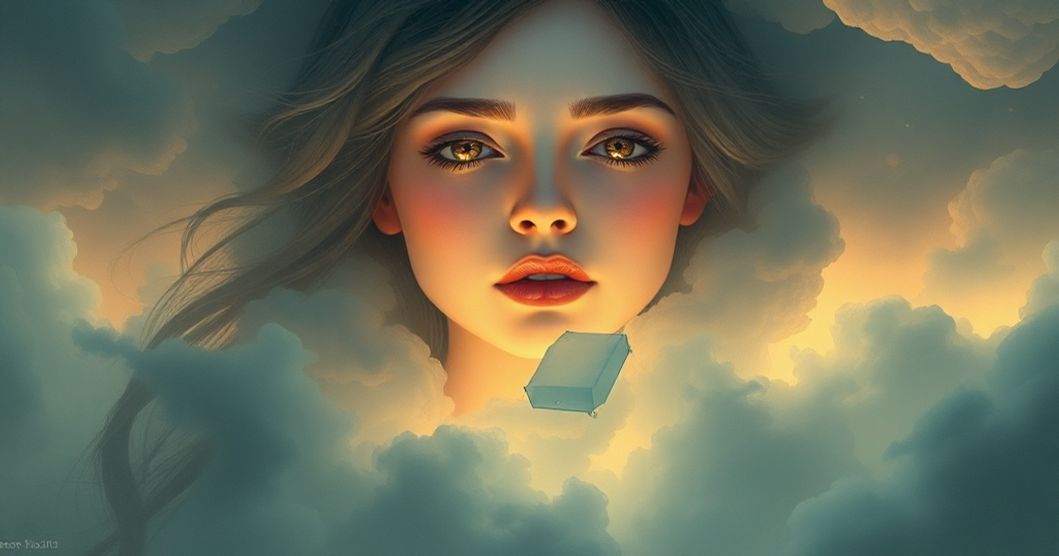
Part 1: Dream Presentation
Dreams have long served as windows into the unconscious mind, revealing truths we may not consciously acknowledge. In this narrative, the dreamer presents a recurring vision of a woman with striking brown-black hair—a figure that appears across two distinct dreamscapes yet remains mysterious in her details. The dreamer’s confusion is palpable, as she notes never having encountered a woman with such hair or being intimate with one, yet the figure’s presence feels oddly familiar. This recurring dream invites exploration into the symbolic language of the unconscious, where archetypal figures often emerge to guide us toward self-understanding.
The rewritten dream unfolds with sensory clarity: the first dream unfolds in a sun-dappled garden where golden light filters through leaves, illuminating strands of the woman’s hair that shift from deep brown to near-black in the dappled sunlight. Her movements are fluid, almost ethereal, as if she floats rather than walks, and her eyes hold a knowing gaze that seems to pierce the dream’s boundaries. In the second dream, the setting transforms into a quiet, old-fashioned library with leather-bound books lining walls that stretch upward into dimness. She stands near a wooden table, one hand resting on a book whose title remains indecipherable, while the other gently touches her hair as if adjusting it self-consciously. The air carries the scent of aged paper and a faint, unfamiliar perfume. When the dreamer tries to approach, she vanishes in a swirl of hair and shadow, leaving only the sensation of a question hanging in the air.
Part 2: Clinical Analysis
Want a More Personalized Interpretation?
Get your own AI-powered dream analysis tailored specifically to your dream
🔮Try Dream Analysis FreeSymbolic Landscape: The Recurring Woman as Psychological Archetype
The recurring female figure in this dream is most likely a manifestation of the anima, a concept from Carl Jung’s analytical psychology that represents the unconscious feminine aspects within men. In Jungian theory, the anima embodies qualities like intuition, emotional depth, and the integration of opposites—qualities that may be emerging in the dreamer’s psyche as part of a process of self-actualization. The woman’s hair, with its rich brown-black hues, symbolizes both mystery and depth; in many cultures, hair represents vitality, identity, and the unconscious mind. The dream’s shifting settings (garden and library) suggest different aspects of the dreamer’s inner world: the garden evokes growth, fertility, and emotional openness, while the library represents knowledge, learning, and the exploration of the self through introspection.
The woman’s partial obscurity is significant—her face remains unseen, indicating that the dreamer may be encountering a part of themselves that feels unfamiliar or inaccessible. This could reflect the dreamer’s relationship with vulnerability or the fear of fully engaging with emotional aspects of identity. Notably, the dreamer’s statement that they’ve never been with a woman may hint at a period of self-exploration or repression regarding aspects of their identity, making the recurring figure a symbolic bridge to these unacknowledged parts.
Psychological Currents: Layers of Meaning in Recurring Dreams
Recurring dreams often signal unresolved psychological material that demands attention. From a Freudian perspective, the woman might represent repressed desires or unfulfilled emotional needs, particularly if the dreamer has unconscious feelings about relationships or intimacy. The fact that the dreamer has never been with a woman could suggest that these feelings are not yet conscious, manifesting symbolically in the recurring figure.
Jungian analysis adds another dimension: the recurring woman may be the anima archetype, appearing to guide the dreamer toward psychological wholeness. In this interpretation, the dreamer’s unconscious is integrating feminine qualities that may have been neglected or repressed. The garden and library settings further support this idea—the garden as a place of growth and new beginnings, the library as a repository of knowledge about the self.
Modern psychological research on recurring dreams highlights their role in emotional processing. When we repeatedly encounter the same symbol, it often indicates that the mind is attempting to resolve a particular issue or integrate new perspectives. The dreamer’s confusion and curiosity reflect the healthy psychological response to these symbolic messages—an invitation to explore rather than dismiss.
Emotional & Life Context: Unpacking the Layers of Identity
The dreamer’s statement that they’ve never been with a woman introduces an intriguing layer of identity exploration. This could relate to gender identity, sexual orientation, or simply the desire for connection. The recurring figure may symbolize a longing for understanding—either of the self or of others. The dream’s settings, too, offer clues: the garden suggests a desire for emotional growth and connection, while the library hints at intellectual exploration of one’s inner world.
In waking life, recurring dreams often mirror unprocessed emotions or unresolved conflicts. The dreamer’s confusion about the woman’s meaning may stem from a period of self-discovery, where they’re beginning to recognize aspects of themselves that feel foreign or unacknowledged. This could be particularly relevant if the dreamer is navigating questions of identity, relationships, or personal growth.
Therapeutic Insights: Engaging with the Dream’s Message
To integrate this dream’s message, the dreamer might benefit from reflective practices that explore the qualities represented by the woman. Journaling exercises could help: writing down how the woman made them feel in each dream, noting any emotions that arose, and reflecting on whether those emotions relate to waking life experiences. Dreamers often project aspects of themselves onto recurring figures, so asking, “What feminine qualities might I be seeking to understand?” can foster self-awareness.
Another approach is to consider the woman as a guide rather than a mystery. In dreams, recurring figures frequently represent aspects of ourselves we need to embrace. The dreamer might explore areas of their life where they feel a lack of connection or depth, and whether these relate to the qualities the woman embodies—intuition, emotional intelligence, or vulnerability.
FAQ Section
Q: Why do I keep having the same woman in my dreams?
A: Recurring dreams often signal unresolved psychological material. This woman likely represents an aspect of your unconscious self, such as feminine qualities, repressed emotions, or unmet needs. Her persistence suggests your psyche is working to integrate these elements.
Q: What does her hair symbolize?
A: Hair in dreams often represents vitality, identity, and the unconscious. Her rich brown-black hair may signify depth, mystery, or aspects of yourself you’re just beginning to explore. Its shifting colors could reflect evolving self-understanding.
Q: How can I use this dream for personal growth?
A: Reflect on emotions the woman evokes—curiosity, comfort, or confusion. Journal about these feelings and connect them to waking life relationships or desires. Consider exploring feminine qualities within yourself, such as intuition or emotional openness, through self-compassionate reflection.