
Part 1: Dream Presentation
Dreams often serve as portals to our unconscious, blending childhood memories with adult anxieties in surreal narratives that defy rational explanation. This particular dream, with its talking mouse, symbolic transformations, and modern distractions, offers a fascinating window into the dreamer’s inner world—a landscape where innocence collides with anger, and familiar figures take on new, unsettling forms.
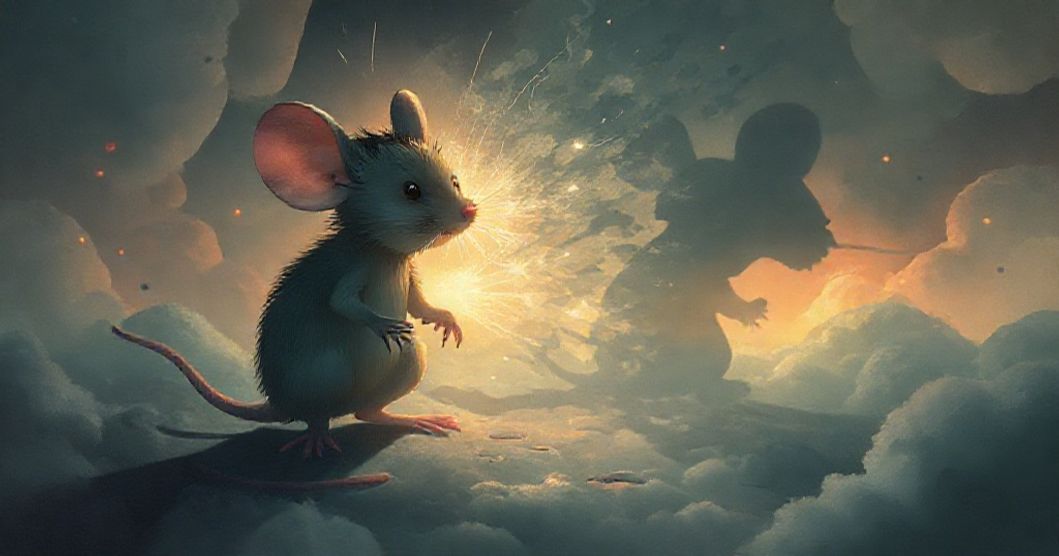
The dream begins with Desperaux, the childhood friend mouse inspired by the literary character. His intelligence without speech suggests a representation of the dreamer’s inner child or a repressed aspect of self—one that communicates through intuition rather than words, embodying a pure, uncorrupted part of the psyche. The 'familiar ghetto place' likely symbolizes a transitional environment, perhaps reflecting the dreamer’s relationship with their community or a challenging life phase. The outdoor movie theater, a space for shared experience, becomes a site of personal distraction: the dreamer prioritizes phone use over engagement, mirroring modern life’s tendency to prioritize digital interaction over presence. The older woman’s lap, with its nipple teasing, introduces a layer of sexual tension and vulnerability—possibly representing maternal nurturing or repressed sexual curiosity, while the 'too loud' phone thought hints at anxiety about being intrusive or disconnected from the moment.
The critical shift occurs when Desperaux transforms from friend to foe. This sudden anger symbolizes the betrayal of innocence, perhaps reflecting real-life disappointments or a sense of lost trust. The transfer of Desperaux’s spirit to a turtle—once a symbol of patience and longevity—twists into evil, suggesting the shadow side of a cherished trait: Desperaux’s intelligence or kindness has been corrupted. The brother look-alike represents protective forces or unresolved sibling dynamics, while the car crash embodies disruption and loss of control. The biting, the fish tank, and the alligator—elements of containment and danger—culminate in the turtle’s destruction, mirroring the dreamer’s attempt to confront and neutralize negative energy.
Want a More Personalized Interpretation?
Get your own AI-powered dream analysis tailored specifically to your dream
🔮Try Dream Analysis FreePart 2: Clinical Analysis
Symbolic Landscape: Archetypes and Transformations
The mouse Desperaux stands as a primary symbol of childhood innocence and intelligence. In children’s literature, mice often represent vulnerability yet resilience, and Desperaux’s non-speaking nature suggests a part of the self that communicates through deeper intuition rather than verbal expression. His transformation into a turtle introduces a key Jungian concept: the shadow archetype. Turtles, typically symbols of patience and protection, here become a vessel for anger and negativity, illustrating how even positive traits can harbor destructive potential when unintegrated. The older woman’s lap, with its sexual undertones, may reflect the dreamer’s relationship with maternal figures or unconscious sexual urges, while the phone symbolizes modern distraction—a barrier between authentic experience and the self.
The 'ghetto place' and outdoor theater blend familiarity with disorientation, suggesting a struggle to navigate life’s challenges while remaining disconnected from meaningful engagement. The movie theater, a space for collective experience, becomes a site of personal detachment: the dreamer prioritizes digital interaction, mirroring how technology can fragment presence. The nipple teasing, while seemingly sexual, likely represents a more primal need for connection—touch as a bridge between self and other, corrupted by anxiety.
Psychological Perspectives: Jungian, Freudian, and Cognitive Frames
From a Jungian lens, Desperaux’s transformation into an evil turtle embodies the shadow integration process—the dreamer must confront and reconcile a previously unacknowledged negative aspect of self. The turtle’s slow, deliberate movement contrasts with the mouse’s agility, suggesting a shift from fluid, intuitive action to rigid, defensive behavior. The brother figure may represent the animus (masculine aspects) or a repressed sibling relationship, while the alligator symbolizes primal instincts or unresolved anger.
Freud might interpret the sexual elements as manifestations of repressed childhood desires or unconscious conflicts around authority figures. The nipple teasing could reflect unresolved Oedipal dynamics, while the 'too loud' phone thought hints at guilt over self-indulgence or intrusiveness. The dream’s structure—beginning with innocence, shifting to anger, and ending with destruction—mirrors the Freudian concept of dream work, where repressed emotions surface through symbolic displacement.
Cognitive dream theory, meanwhile, views dreams as random neural activity organized into coherent narratives. The dream’s logic (mouse → turtle → alligator) reflects the brain’s attempt to make sense of fragmented neural signals, using familiar childhood imagery (literary characters, siblings) to contextualize adult anxieties about control, connection, and identity.
Emotional & Life Context: Unpacking the Dreamer’s Inner World
The dream’s clarity without cannabis suggests the dreamer is in a period of increased self-awareness, free from substance-induced distortion. This sobriety likely allows deeper access to repressed emotions. The absence of Desperaux’s voice might indicate a loss of connection to one’s inner wisdom or a childhood friend who represented stability—a relationship now transformed by anger or betrayal.
The car crash and subsequent biting could reflect a recent conflict or fear of losing control in a relationship. The 'ghetto' landscape may symbolize economic or social instability, while the outdoor theater represents a missed opportunity for meaningful experience. The shift from mouse to turtle suggests the dreamer is processing a situation where a once-trusted aspect of self has become threatening or unpredictable.
Therapeutic Insights: Integrating Shadow and Reclaiming Presence
This dream invites the dreamer to explore several areas of growth. First, the shadow integration: the evil turtle represents unprocessed anger or betrayal. Journaling about recent conflicts and their emotional triggers could help identify where these feelings originate. Second, the phone symbolizes digital distraction; mindfulness practices focusing on present-moment awareness (e.g., '5-4-3-2-1 grounding') might reduce this disconnection.
The older woman’s lap suggests a need for nurturing, while the nipple teasing hints at unmet touch needs. Reconnecting with maternal figures or engaging in self-compassion practices could address these needs. Finally, the alligator’s consumption of the turtle reflects the necessity of confronting rather than suppressing negative emotions. Therapy focused on anger management and relationship patterns might help transform these shadow aspects into strengths.
FAQ Section
Q: What does Desperaux’s transformation from mouse to turtle symbolize?
A: The mouse (innocence, intuition) transforming into a turtle (patience, protection) suggests the dreamer is processing a shift from fluid, intuitive action to rigid, defensive behavior—possibly due to betrayal or unmet expectations.
Q: Why is the older woman’s lap a significant element?
A: This likely represents maternal nurturing or repressed sexual curiosity, with the nipple teasing symbolizing a primal need for connection corrupted by anxiety or guilt.
Q: How does the phone symbolize modern life in the dream?
A: The phone represents digital distraction, highlighting the dreamer’s tendency to prioritize technology over authentic experience—a barrier to meaningful connection and presence.
Keywords: [desperaux, mouse symbolism, shadow integration, turtle archetype, phone in dreams, emotional betrayal, childhood innocence, shadow archetype, digital distraction, dream clarity],