
Part 1: Dream Presentation
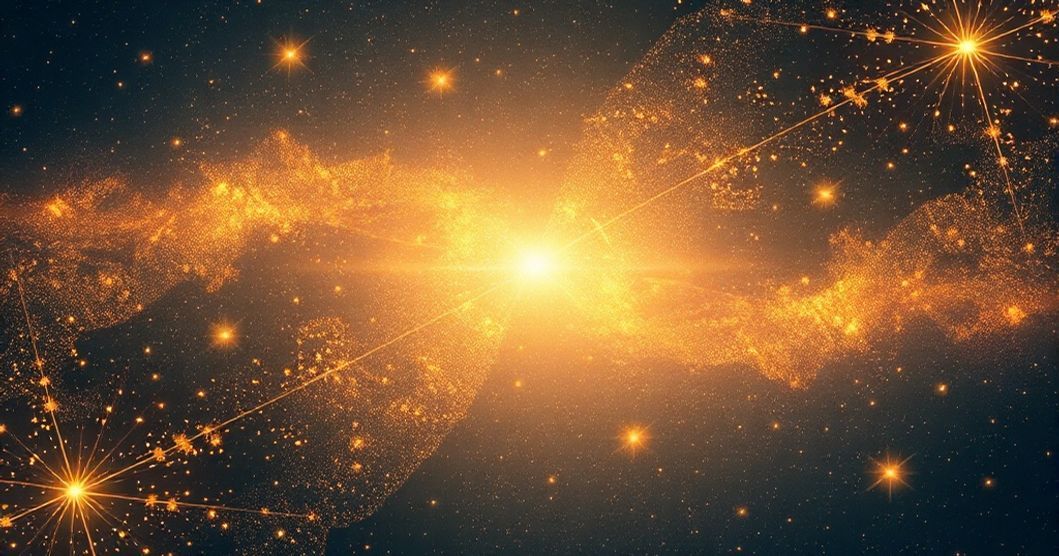
Dreams often arrive as cryptic messengers, bridging the conscious and unconscious realms with imagery that defies literal explanation yet resonates with deep emotional truth. This particular dream, with its golden stardust and cosmic transformation, offers a profound glimpse into the dreamer’s inner landscape—a landscape where urgent purpose, sacred connection, and existential transformation collide.
In the dream, the dreamer finds themselves among colleagues engaged in urgent, purpose-driven work, guiding others through a portal to safety. The dream’s emotional core lies in the paradoxical experience of letting go (vaporizing into stardust) while simultaneously embracing a profound sense of unity and purpose. The golden stardust imagery, paired with the realization that 'we are all one and the universe was us,' suggests a deep longing for connection that transcends individual boundaries. The dream’s emotional arc—from urgent responsibility to cosmic dissolution and finally to peace—reflects a psychological journey toward acceptance, surrender, and recognition of interconnectedness.
Part 2: Clinical Analysis
Want a More Personalized Interpretation?
Get your own AI-powered dream analysis tailored specifically to your dream
🔮Try Dream Analysis FreeSymbolic Landscape: Stardust, Portals, and Cosmic Transitions
The dream’s most striking symbol—the golden stardust—represents multiple layers of meaning. In alchemical traditions, gold symbolizes transformation, enlightenment, and the integration of opposites. Stardust, as the raw material of stars and planets, embodies cosmic origin and the fundamental unity of all matter. The dream’s assertion that 'we are stardust' echoes Carl Sagan’s famous statement, suggesting a primal connection to the universe—a connection often felt in moments of transcendence.
The portal/wormhole imagery introduces themes of transition and boundary crossing. In dreams, portals frequently represent thresholds between states of being—death and rebirth, conscious and unconscious, individual and collective. The urgent task of 'getting as many as we could out of the path' suggests a protective, altruistic impulse, possibly reflecting the dreamer’s desire to preserve or guide others through life’s transitions. The act of 'joining two things that had always been kept apart' hints at a need to reconcile opposing forces within the self or in waking life—perhaps work and personal life, action and surrender, or past and future.
The 'vaporization into stardust' is a powerful symbol of letting go. In dreams, vaporization often represents the dissolution of ego boundaries, a common theme in Jungian psychology’s concept of the 'individuation process'—the journey toward wholeness through integrating conscious and unconscious aspects of the self. The dream’s assertion that 'this was not the end, but the beginning' suggests a recognition of cyclicality and continuity, a theme that resonates with the cyclical nature of cosmic processes.
Psychological Undercurrents: Jungian, Freudian, and Existential Lenses
From a Jungian perspective, this dream reveals elements of the collective unconscious—the shared symbolic language of humanity. The team working toward a common goal reflects the 'shadow' of isolation, as humans have an innate need for community and purpose. The dream’s emphasis on unity over individual survival aligns with Jung’s concept of the 'Self,' the archetypal center of integration and wholeness. The golden stardust, as a symbol of the collective unconscious, speaks to the 'numen'—the numinous quality of the dream, which evokes awe and connection to something greater than oneself.
Freudian analysis might interpret the dream as a manifestation of repressed emotions or unconscious conflicts. The 'urgent task' could represent unacknowledged responsibilities, while the 'vaporization' might symbolize a fear of losing selfhood or identity—a common anxiety in modern life. The contrast between the dreamer’s initial sadness and final peace suggests a resolution of internal conflict, where surrender becomes a source of strength rather than loss.
Existentially, the dream reflects the human search for meaning. The 'important and urgent work' mirrors the existential quest for purpose, while the stardust imagery resolves the tension between finite existence and infinite connection. The dreamer’s experience of 'everything was part of me and I was part of everything' aligns with Viktor Frankl’s assertion that meaning is found in connection and service to something larger than oneself.
Neuroscience adds another layer: dreams process emotional memories and consolidate learning, and this dream’s emphasis on connection suggests the brain is integrating experiences of isolation or disconnection into a narrative of unity. The emotional release (happy tears) upon waking indicates the dream successfully processed a deep-seated emotional need for belonging and purpose.
Emotional Resonance: Purpose, Letting Go, and Waking Life Connections
The dream’s emotional journey—from urgency and sadness to peace and acceptance—reflects the dreamer’s current emotional state. The 'happy tears' suggest a reconciliation with something unresolved in waking life: perhaps a sense of duty unfulfilled, a relationship in flux, or a professional path that lacks meaning. The 'urgent task' may mirror real-life pressures to 'save' or protect others, whether through work, relationships, or personal goals.
The act of 'joining two things that had always been kept apart' hints at a waking desire to bridge gaps—between career and personal life, past and present, or different aspects of identity. The 'portal' could represent a threshold moment in the dreamer’s life—a transition, a new phase, or a relationship shift. The vaporization into stardust, despite initial fear, becomes a source of peace, suggesting the dreamer is ready to embrace transformation, even if it means letting go of the familiar.
In modern life, where isolation and digital disconnection are prevalent, this dream’s message of cosmic unity offers a counterbalance—a reminder that we are not alone. The 'golden stardust' serves as a metaphor for the intrinsic value of all existence, urging the dreamer to recognize their role in the interconnected web of life.
Therapeutic Insights: Embracing Endings and Cultivating Cosmic Awareness
This dream invites several therapeutic reflections. First, the 'vaporization into stardust' suggests that letting go—of control, of identity, of the past—is not an end but a transformation. The dreamer might benefit from journaling about moments in waking life where they felt 'dissolved' into a larger purpose, such as volunteering, caring for others, or pursuing creative work. These moments often reveal the 'golden' aspect of letting go: freedom from egoic concerns and connection to something greater.
Mindfulness practices can help the dreamer cultivate this cosmic awareness in daily life. By focusing on breath and bodily sensations, they can anchor themselves in the present moment, recognizing the interconnectedness of all things. Practices like 'loving-kindness meditation' (sending goodwill to all beings) can reinforce the dream’s message of unity.
The dream also suggests the value of community and purpose. If the dreamer feels isolated in waking life, exploring opportunities to serve a collective goal—whether through a hobby, volunteer work, or creative project—can fulfill the need for meaning expressed in the dream. The 'team' in the dream represents the dreamer’s desire for collaboration, so fostering healthy relationships and shared purpose may reduce feelings of disconnection.
Finally, the dream’s emphasis on 'golden stardust' as both the beginning and end suggests that transformation is a continuous process. The dreamer can embrace this by reframing endings as necessary for new beginnings, whether in relationships, careers, or personal growth. Each 'vaporization' is an opportunity to become part of something larger, even as the self dissolves into the whole.
Navigating the Dreamer’s Journey: Three Key Questions
Q: What does the portal symbolize in this dream?
A: The portal represents a threshold between states of being—perhaps a transition in waking life (career change, relationship shift) or an internal transformation. It suggests that letting go of old identities or ways of being is necessary for growth, much like the dream’s characters moving through to a new phase.
Q: Why might the dreamer feel both sadness and peace upon waking?
A: The sadness reflects the loss of individual identity (vaporization into stardust), while the peace arises from the recognition of cosmic unity. This emotional contrast mirrors the human experience of mourning endings while celebrating newfound purpose, a natural part of the letting-go process.
Q: How can the dreamer apply this 'stardust wisdom' to daily life?
A: The dream encourages embracing impermanence and interconnectedness. Small acts of kindness, mindfulness practices, and recognizing shared humanity can cultivate this awareness. Remembering that 'we are all stardust' reminds us to treat ourselves and others with compassion, as we are all part of the same cosmic family.
The dream’s lasting impact lies in its ability to transform abstract cosmic concepts into tangible emotional experience. By integrating its lessons of purpose, connection, and letting go, the dreamer can move from feeling fragmented to whole, from isolated to connected—a journey illuminated by the golden light of stardust.