
Part 1: Dream Presentation
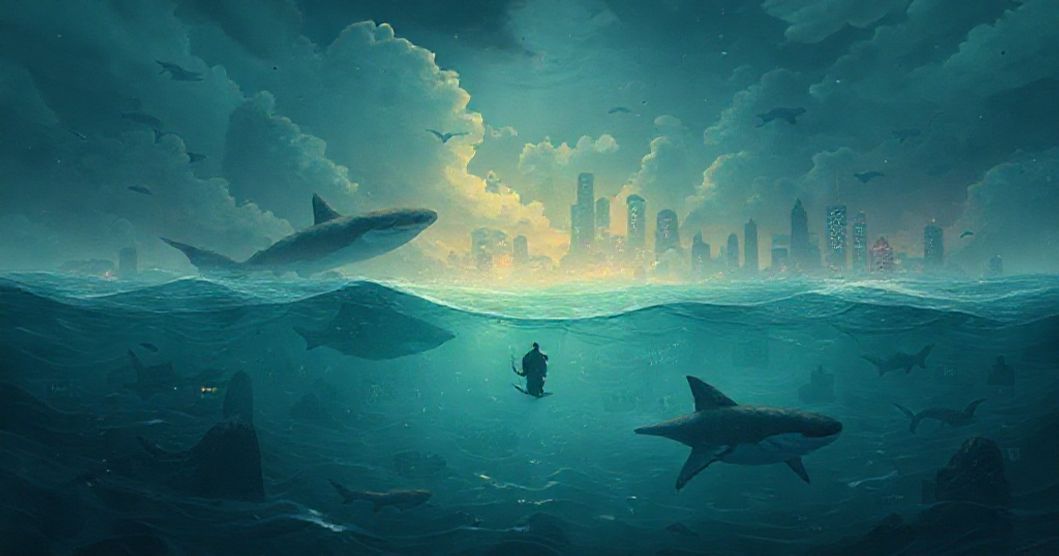
Dreams often arrive unannounced, carrying symbolic messages from our deeper consciousness. Consider this vivid dream experience: the dreamer’s encounter with oceanic realms reveals a landscape where water—both nurturing and threatening—serves as a powerful emotional metaphor. The dream begins with the rare occurrence of an ocean dive, rendered with striking realism, alongside friends and unexpectedly benevolent sharks. This idyllic underwater exploration transitions into turbulent waters, where the dreamer’s attempts to navigate the waves evoke primal fears of drowning and loss of control. The narrative then shifts to a second dream: a once-thriving city submerged by water, with the dreamer’s futile attempt to fly away from the rising tide. Together, these aquatic visions create a psychological tableau rich with archetypal imagery and emotional resonance.
I rarely venture into the realm of oceanic dreams, yet when they appear, they feel profoundly tangible—like waking up with saltwater still clinging to my skin and the weight of the deep beneath my consciousness. Last night’s dream unfolded with startling clarity: I found myself diving alongside friends in the open ocean, our bubbles rising in slow, deliberate patterns as if choreographed by some invisible hand. What struck me most was the presence of sharks—not the predatory creatures of nightmare lore, but beings that seemed to guide us, circling gently and allowing us to touch their sleek, patterned skin as they led us toward the surface. The water glowed with an otherworldly light, shifting from deep indigo to turquoise as we ascended, and the air felt crisp yet humid, carrying the faint scent of distant islands. Then, without warning, the calm dissolved into chaos. The waves rose taller than our boat, their crests white with fury, and I felt an icy dread settle over me as I watched my companions struggle against the currents. I tried to shout reassurance, but my voice was swallowed by the roar. In desperation, I lunged upward, attempting to ‘jump’ through the towering waves as if they were a barrier to be overcome, but the water only closed in around me, heavier and colder with each attempt. I woke with a gasp, heart pounding, still feeling the weight of the ocean pressing down on me. Earlier, I’d dreamed of an entirely different aquatic vision: a vast metropolis, once vibrant and alive, now submerged under a relentless tide. Skyscrapers poked through the water like broken teeth, and I stood on a rooftop, watching streets turn into rivers and people clinging to windowsills. I tried to fly away, arms outstretched, but my feet remained rooted to the wet concrete, the dream ending with a sense of helplessness as the water rose higher.
Part 2: Clinical Analysis
Want a More Personalized Interpretation?
Get your own AI-powered dream analysis tailored specifically to your dream
🔮Try Dream Analysis FreeThe Symbolic Language of Water and Ocean
Water in dreams universally represents the unconscious mind—a fluid, ever-changing realm where emotions and repressed thoughts flow beneath the surface. In this dream, water functions as a dualistic symbol: on one hand, it represents the nurturing, exploratory depths of the unconscious mind; on the other, it embodies the overwhelming, chaotic forces that can disrupt our sense of control. The ocean itself, as a setting, is a classic symbol of the collective unconscious—a vast, mysterious expanse that both allures and terrifies. The dreamer’s description of the ocean as ‘realistic’ suggests a deep connection to their inner emotional landscape, where these symbolic waters feel immediate and authentic.
The sharks, particularly the ‘friendly’ variety, introduce a nuanced layer of symbolism. In dream psychology, sharks often represent primal instincts, repressed anger, or fear of predatory situations in waking life. However, their portrayal here as ‘guides’ rather than threats suggests a more complex dynamic: the dreamer may be encountering these primal aspects of themselves (or their life circumstances) not as dangerous predators, but as potential allies. This friendly shark archetype hints at a relationship with fear that is evolving—perhaps the dreamer is learning to approach intimidating emotions with curiosity rather than dread. The sharks’ guidance during the dive implies that these potentially threatening forces can actually offer direction and protection when approached with the right mindset.
Psychological Perspectives on Dream Elements
From a Jungian perspective, the ocean represents the collective unconscious—the shared, archetypal realm of human experience. The sharks, as both guides and potential threats, may embody the shadow archetype: the parts of ourselves we fear or reject but that contain valuable wisdom. The dreamer’s successful interaction with these sharks suggests a developing integration of shadow aspects—learning to work with rather than fear these unconscious elements. The act of diving alongside friends could symbolize collaboration with one’s social support system in navigating these inner depths.
Freudian theory might interpret the water and sharks through the lens of repressed desires and anxieties. The ocean could represent the ‘oceanic feeling’—a primal, undifferentiated sense of self and connection to the universe. The sharks, as phallic symbols, might represent sexual energy or aggressive impulses. The dreamer’s fear of drowning could stem from repressed feelings of being overwhelmed by these energies, while the attempt to ‘jump through waves’ reflects a defense mechanism—an attempt to control or escape these powerful forces.
Neuroscientifically, dreams during REM sleep process emotional memories and consolidate neural pathways. The dream’s emphasis on water and movement suggests the brain is processing recent emotional experiences related to transition or uncertainty. The shark encounters, in particular, might reflect the brain’s attempt to make sense of ambiguous social situations or interpersonal dynamics—exploring how to navigate relationships with both caution and openness.
Emotional and Life Contextualization
The dual nature of the dreams—ocean exploration followed by wave chaos, then a flooded city—suggests themes of transition and adaptation. The first dream’s emphasis on diving with friends and friendly sharks could reflect a period of collaborative exploration in waking life: perhaps the dreamer is engaged in new projects, relationships, or self-discovery that feel both exciting and uncertain. The shift to turbulent waves and the inability to ‘jump through’ them might signal anxiety about maintaining control in these exploratory endeavors. The fear of drowning is a universal metaphor for feeling overwhelmed by responsibilities, relationships, or life changes.
The second dream, of a flooded city, introduces a different layer of existential threat—the loss of a familiar environment to uncontrollable forces. Water in this context represents overwhelming change, whether literal (climate anxiety, natural disasters) or metaphorical (job loss, relationship upheaval, or societal shifts). The dreamer’s attempt to fly away from the flood mirrors a common human response to crisis: the desire for transcendence, escape, or divine intervention. However, the inability to fly suggests that while escape is tempting, the dreamer may need to confront these challenges directly rather than avoiding them entirely.
The contrast between the two dreams—the controlled, exploratory first dream and the chaotic, overwhelming second—might reflect internal conflict: the dreamer is simultaneously drawn to new experiences and terrified of losing control. The recurring water imagery across both dreams suggests a central preoccupation with emotional states, transitions, and the balance between exploration and security.
Therapeutic Insights and Reflection
This dream offers several opportunities for self-reflection and growth. First, the friendly sharks invite the dreamer to examine their relationship with fear. In waking life, are there situations where they avoid confronting potential threats (or people) out of fear, only to discover they could be allies? Keeping a dream journal to document recurring shark encounters might reveal patterns in how the dreamer navigates challenging relationships or situations.
The attempt to ‘jump through waves’ without success suggests a need to reconsider strategies for dealing with overwhelming emotions. Instead of forcing through difficulties, perhaps the dreamer would benefit from surrendering to the flow temporarily, allowing emotions to move through them rather than resisting. This could involve mindfulness practices focused on water imagery—visualizing oneself floating rather than struggling against currents.
The flooded city dream, with its emphasis on escape attempts, might signal a need to address avoidance behaviors. When faced with change, do they tend to flee rather than adapt? Exploring the source of this fear—whether related to career, relationships, or personal identity—could reveal actionable steps for building resilience. The act of flying in dreams often represents freedom and perspective; the dreamer might benefit from asking: What perspectives or actions could help me ‘rise above’ current challenges rather than fleeing them?
FAQ Section
Q: What does it mean when sharks are friendly in my dreams?
A: Friendly sharks often symbolize integrating primal instincts or fears into positive action. They may represent aspects of yourself you initially feared but now recognize as helpful guides. This suggests a growing self-awareness and willingness to collaborate with your inner resources.
Q: Why do I keep dreaming about water, both calm and turbulent?
A: Water dreams frequently reflect emotional states—calm waters might signal emotional stability, while turbulent waters indicate anxiety or transition. The recurring water theme suggests your mind is processing significant life changes or relationship dynamics requiring attention.
Q: How can I use my dream about the flooded city to understand my waking life?
A: The flooded city may represent overwhelming stress or change. Your attempt to fly reflects a desire for transcendence. Consider: What aspects of your life feel ‘submerged’ or out of control? Exploring these areas with curiosity rather than fear can help you develop resilience strategies.