
Part 1: Dream Presentation
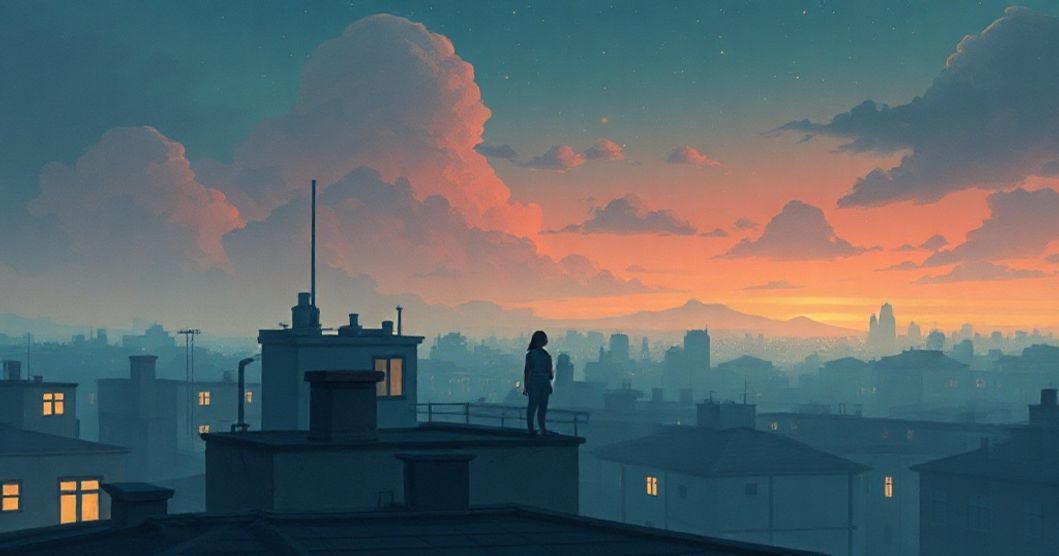
Dreams often serve as portals to our inner worlds, revisiting spaces and emotions we thought long buried. This recurring dream about a childhood home’s rooftop extension is no exception, unfolding with remarkable consistency yet profound transformation across iterations. The dream begins in a familiar setting—the childhood home—where an unusual architectural element appears: a loosely constructed extension perched atop the main roof. This unstable, dusty structure becomes a recurring threshold, symbolizing the boundary between conscious memory and unconscious processing.
The first iteration introduces anxiety as the dreamer climbs to the roof, navigating physical instability and psychological unease. The old, dark room with broken windows and dust motes embodies neglect or forgotten aspects of the self, while the rooftop’s precariousness suggests vulnerability in exploring these hidden spaces. The second dream intensifies this tension: the extension becomes even more unstable, now housing decayed remains of old pets. These non-threatening yet deeply unsettling figures represent unresolved grief or loss, possibly related to childhood pets or other early losses.
The third dream introduces new variables: the mother’s appearance and cryptic advice (“Just climb”), the increasingly unstable roof tilting toward the dreamer, and the transformation of the rooftop’s inhabitants. The once-ghostly remains give way to a boy, his sister, and a cat—innocent, living presences who use the space as a “secret base.” Their final apology and departure suggest resolution or release, yet the dream ends with the dreamer still in the now-brightened, still-ruined room, hinting at unfinished business.
Want a More Personalized Interpretation?
Get your own AI-powered dream analysis tailored specifically to your dream
🔮Try Dream Analysis FreeThis dream’s power lies in its visceral details—the feel of dust, the roof’s tilt, the mother’s calm reassurance—and its ability to blend memory, fear, and hope. The recurring structure, though physically unstable, remains a constant, drawing the dreamer back to confront evolving emotional landscapes.
Part 2: Clinical Analysis
### Symbolic Landscape: The Rooftop as Threshold
The childhood home’s rooftop extension functions as a powerful symbolic threshold in this dream. In Jungian psychology, such “liminal spaces” represent transitional periods in life—between past and present, security and uncertainty. The roof itself, elevated above the main house, embodies the dreamer’s relationship with their inner world: the higher vantage point suggests a desire to see beyond ordinary perspectives, while the instability signals fear of falling or losing balance in life. The structure’s dual nature—both dangerous and accessible—mirrors the dreamer’s ambivalence toward confronting repressed memories or emotions.
The changing state of the roof (stable → unstable → barely holding) reflects the dreamer’s evolving relationship with these themes. The first iteration’s “stable” yet “dark” room suggests initial, tentative exploration of the unconscious; the second’s “decayed pets” introduce grief or loss as a central motif; the third’s “brightened yet broken” space hints at emotional illumination paired with lingering vulnerability.
The boy, sister, and cat represent the dreamer’s inner child archetype—a Jungian concept for the undifferentiated, instinctual self. In the first two dreams, the “decayed pets” may symbolize the dreamer’s relationship with their own childhood self’s needs (the pets as nurturance, care, or lost innocence). The shift to a living boy, sister, and cat suggests a healthier integration of these aspects, with the “secret base” representing a safe space for authentic self-expression.
### Psychological Perspectives: Layers of Unconscious Processing
Freudian theory might interpret the rooftop as a manifestation of the “id”—the unconscious drives and repressed desires—while the mother’s guidance reflects the “ego’s” attempt to resolve internal conflict. The mother’s cryptic instruction (“Just climb”) embodies the tension between resistance and acceptance: she neither explains nor discourages, mirroring how the dreamer’s waking life may struggle with decisive action in uncertain situations.
Jungian analysis, however, frames the dream as a “mandala” of self-integration. The rooftop’s instability symbolizes the shadow self—the repressed or disowned parts of the psyche that demand attention. The three dream iterations represent the dreamer’s psychological journey through the shadow: first confronting it (dark room, decayed pets), then attempting to integrate it (mother’s guidance), and finally finding balance (brightened room with living occupants). The cat, in particular, embodies the “animus” or “anima”—the masculine/feminine aspects of the self—while the boy and sister represent sibling archetypes, possibly reflecting the dreamer’s relationship with their own younger self or unresolved family dynamics.
Neuroscientifically, this recurring dream suggests memory consolidation at work. The brain’s default mode network activates during sleep, processing emotional memories and integrating them into narrative patterns. The changing details (pets → children → cat) indicate the dreamer’s unconscious is “remastering” these memories, gradually resolving emotional conflicts through repetition and variation.
### Emotional & Life Context: Unpacking Childhood and Transition
The recurring nature of this dream strongly suggests it addresses a central emotional theme: the tension between confronting childhood memories and moving forward. The rooftop, a space of play and exploration in childhood, becomes a site of anxiety in adulthood, reflecting the dreamer’s struggle with how to “access” repressed emotions or unresolved relationships. The mother’s appearance in the third dream, despite the dreamer’s prior experience, hints at maternal guidance or approval—a desire for validation in facing difficult truths.
The “decayed pets” likely represent losses or endings from childhood: a pet’s death, a sibling’s absence, or the loss of childhood freedom. These symbols, though not explicitly stated, resonate with common developmental experiences: learning to grieve, accepting change, and finding new meaning in old spaces. The shift to a “living” boy, sister, and cat suggests the dreamer is integrating these losses into a new narrative—one that honors the past without being imprisoned by it.
The “secret base” in the final dream iteration may symbolize a safe space for the dreamer’s authentic self—a place to express creativity, vulnerability, or joy without judgment. The apology and departure of the boy, sister, and cat could represent the dreamer’s unconscious recognizing the need to release old patterns and embrace new ways of being. The bright sunlight breaking through the broken windows signifies emotional illumination, suggesting the dreamer is beginning to see their past with clarity rather than darkness.
### Therapeutic Insights: Navigating the Rooftop Threshold
This recurring dream offers several therapeutic opportunities for the dreamer. First, journaling about the emotional shifts across the three dream iterations can help identify patterns in how they process anxiety. The first dream’s “dark, dusty room” might correspond to avoiding uncomfortable emotions, the second’s “decayed pets” to grief or loss, and the third’s “brightened, living space” to acceptance and integration.
Reflecting on the mother’s role is also crucial. Her cryptic advice (“Just climb”) suggests the dreamer’s unconscious knows the path forward but needs courage to take it. In waking life, this might translate to trusting one’s intuition during uncertainty, even when outcomes feel unstable. The act of climbing itself becomes a metaphor for facing fears and taking risks.
For deeper integration, the dreamer could explore childhood memories related to the rooftop space—was it a place of exploration, fear, or comfort? Connecting these real-world experiences to the dream’s symbolic elements can help untangle the unconscious narrative. Additionally, creating art or writing about the boy, sister, and cat as inner child archetypes might foster self-compassion and understanding.
Therapeutic work might involve helping the dreamer differentiate between the “old self” (represented by the decaying pets) and the “new self” (the living children). This distinction mirrors the process of individuation in Jungian psychology—separating from past identities while retaining core strengths and memories.
### FAQ Section
Q: Why does the roof become increasingly unstable in each dream?
A: The tilting, unstable roof symbolizes the dreamer’s anxiety about life transitions and the tension between confronting the past and embracing new possibilities. It reflects how unresolved emotions create instability in waking life, even as the dreamer attempts to “climb forward.”
Q: What does the shift from pets to a boy, sister, and cat signify?
A: The pets likely represent repressed grief or lost innocence, while the living children and cat symbolize healthier integration of childhood self—suggesting the dreamer is moving from mourning to nurturing their inner child’s needs for connection and safety.
Q: How should the dreamer respond to the “apology and leave” ending?
A: The apology may signify the dreamer’s unconscious acknowledging the need to release old patterns. The leaving suggests the dreamer is ready to move forward, carrying lessons from the past while embracing new emotional landscapes. Journaling about what “apology” feels relevant to your waking life can clarify next steps.