
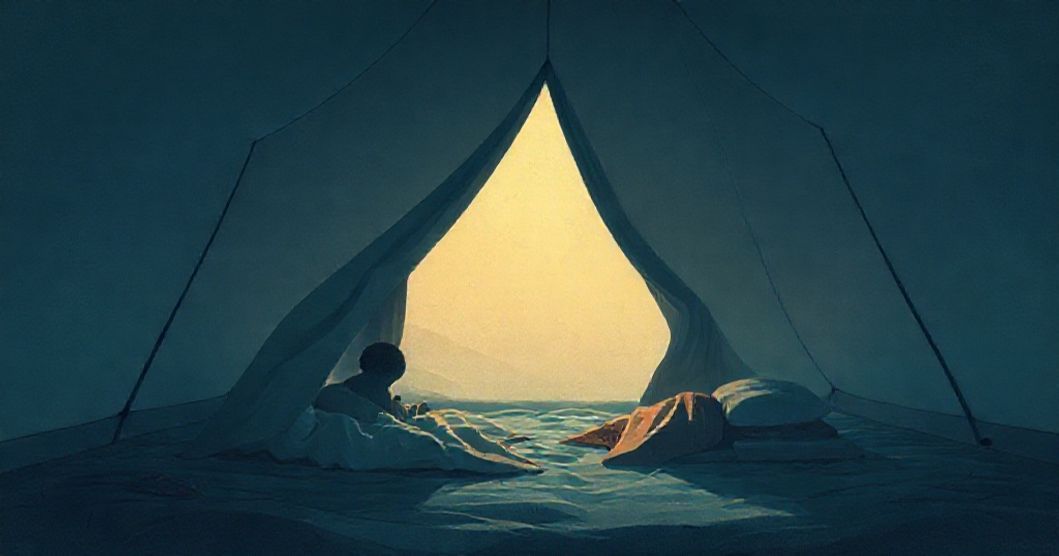
Part 1: Dream Presentation
Dreams often blur the boundary between the conscious and unconscious, transforming ordinary fears into visceral, tangible experiences. This particular dream narrative unfolds in a liminal space—between sleep and wakefulness, between fear and reason—where the line between threat and comfort dissolves into ambiguity. Here is the dream as the dreamer experienced it:
Last night, as I slept in my tent, the world outside seemed to intrude with unsettling clarity. I woke to the sound of rustling—soft, deliberate movements that felt distinctly human, though no one should have been there. A shadow detached itself from the darkness, gliding toward the far end of my tent, and with it came the faint, steady thud of footsteps that echoed through the fabric. My breath hitched; I tried to call out, to move, but my body betrayed me. Every muscle felt locked in place, a heavy weight pressing down on my chest. I could only make small, strangled sounds, my throat tight with fear. The shadow paused, and the rustling ceased as abruptly as it had begun. For a moment, time itself seemed to freeze. I focused on my breathing, forcing air into my lungs in short, ragged gasps, and when I shut my eyes tightly, willing myself to break free, a strange calm settled over me. Gradually, I felt my limbs respond, and I sat upright, heart pounding. In that instant, the shadow resolved into something far more ordinary: the gnarled silhouette of a tree, its branches twisting against the moonlight filtering through the tent flaps. I’m still unsure—was it sleep paralysis, a trick of my overactive mind, or a real, fleeting encounter with something unknown? The ambiguity lingers, tangled with the memory of that stillness and the relief of recognizing the familiar.
Part 2: Clinical Analysis
Want a More Personalized Interpretation?
Get your own AI-powered dream analysis tailored specifically to your dream
🔮Try Dream Analysis FreeThe Symbolic Landscape of the Dream
To unpack this dream, we begin with its core symbolic elements, each carrying layers of meaning. The tent functions as a classic symbol of containment—a personal, intimate space that becomes both sanctuary and prison during sleep paralysis. In dreams, tents often represent boundaries between the self and the unknown, making the shadow’s incursion a powerful metaphor for encroaching fears or vulnerabilities. The shadow itself is a multifaceted symbol: in Jungian psychology, shadows represent repressed aspects of the self, while in folkloric traditions, they can signify malevolent forces or hidden truths. Here, the shadow’s movement toward the tent’s edge suggests an external threat, yet its ultimate resolution into a tree silhouette hints at a natural, non-hostile explanation. This duality—the shadow as both threat and natural form—reflects the dreamer’s internal struggle to distinguish between real danger and perceived danger.
The rustling sounds and human footsteps are particularly significant. In sleep paralysis, auditory hallucinations often occur as the brain misinterprets internal bodily sensations (like the sound of one’s own heartbeat) as external threats. The dream’s emphasis on