
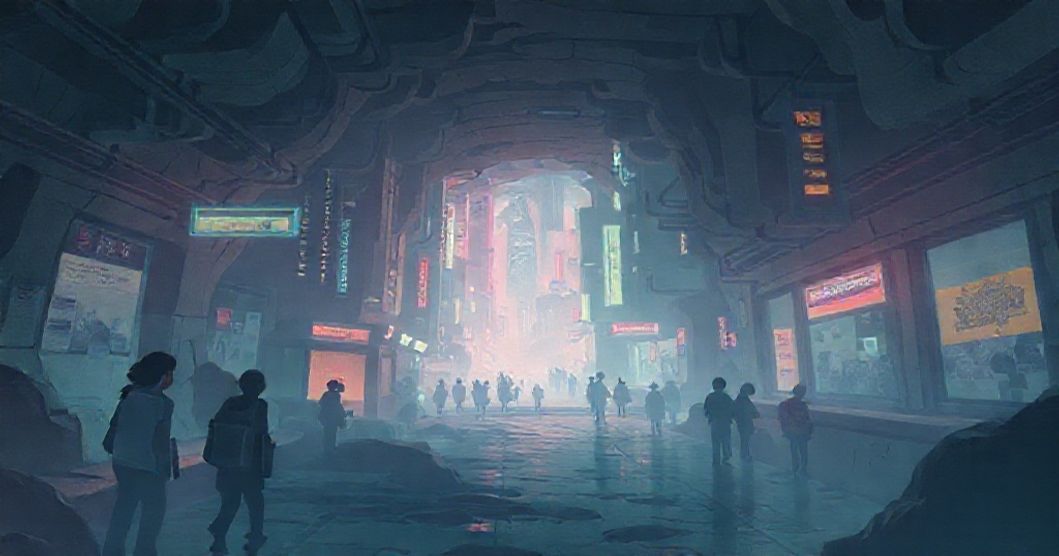
Part 1: Dream Presentation
Dreams often serve as psychological compasses, guiding us through the labyrinth of our unconscious mind. This particular recurring dream offers a rich tapestry of symbolic imagery and emotional conflict, unfolding across two distinct life stages to reveal profound themes of identity, belonging, and resistance. The dream begins with a 16-year-old protagonist fleeing high school to avoid an exam—a scenario charged with youthful anxiety and rebellion against academic pressures. As he descends a staircase into an underground city, he discovers a community of outcasts, each representing marginalized aspects of self or society. His initial imprisonment by 'M,' the 20-year-old leader, reflects feelings of rejection and alienation, while his escape and rescue of a child symbolize both vulnerability and courage. The child’s family, who embrace him as an 'outcast born above,' offers a temporary sense of belonging, yet he ultimately chooses the 'above' world. Five years later, the dream recurs with a transformed protagonist: now a teacher at the same high school, he enters the underground city with purpose, where M’s softened stance and the guards’ recognition suggest a shift in power dynamics. His detailed confession to M about five years of growth and struggle reveals a mature reflection, and M’s plea for him to stay underscores the tension between safety and purpose. The dream ends with his refusal, though this time tinged with longing—a powerful symbol of the ongoing conflict between identity and belonging.
The rewritten dream narrative, as presented above, captures the dreamer’s journey through these symbolic landscapes, preserving every core detail while adding emotional depth and sensory richness. The recurring elements—the staircase, the underground city, M, and the choice to stay or go—create a psychological puzzle that invites exploration.
Part 2: Clinical Analysis
Want a More Personalized Interpretation?
Get your own AI-powered dream analysis tailored specifically to your dream
🔮Try Dream Analysis FreeSymbolic Landscape: The Underground City and Its Inhabitants
The underground city serves as a powerful symbol of the unconscious mind, representing the dreamer’s shadow self—the aspects of identity he has rejected or suppressed. The 'outcasts' who inhabit this realm likely embody marginalized parts of his personality: the rebellious teenager, the vulnerable child, or the disillusioned adult. M, the leader, emerges as a complex figure—initially an antagonist, then a figure of recognition and understanding. This transformation suggests the dreamer’s evolving relationship with his inner critic or shadow aspects. The stairs function as a threshold between conscious and unconscious realms, symbolizing the journey from surface-level concerns (academic pressure) to deeper psychological territory. The cliff and child represent vulnerability and the need to protect one’s inner child—a theme of emotional healing that recurs across both dream iterations. The child’s family, who offer acceptance despite the protagonist’s 'outsider' status, symbolize the dreamer’s desire for connection and belonging, even as he ultimately chooses to return to the 'above' world.
Psychological Perspectives: Jungian and Freudian Lenses
From a Jungian perspective, the underground city embodies the collective unconscious, while M represents the shadow archetype—the repressed, rejected aspects of the self that demand integration. The recurring dream reflects the dreamer’s psychological development over five years, showing how the shadow (M) evolves from an enemy to a figure of recognition. The child symbolizes the animus/animus or the inner child, representing the dreamer’s need to reconcile his youthful rebellion with adult responsibility. The repetition of the scenario across different life stages suggests a 'compulsion to repeat'—a Freudian concept where unresolved conflicts drive recurring dreams. The first dream (16yo) shows the dreamer’s defense mechanisms (running from anxiety), while the second (21yo) reveals mature reflection and integration. The shift from 'fleeing' to 'returning with purpose' indicates the dreamer’s growth, as he now approaches the unconscious with intention rather than fear.
Emotional and Life Context: The Dreamer’s Waking World
The dream likely reflects the dreamer’s current life transition from student to teacher—a period of identity shift and responsibility. The recurring test avoidance in the first dream may symbolize anxiety about academic or professional performance, while the second dream’s role as a teacher suggests a desire to confront these fears head-on. The tension between staying in the underground city (safety, acceptance) and returning to the 'above' world (purpose, responsibility) mirrors real-life conflicts about work-life balance, identity, and belonging. The five-year gap between dreams allows for reflection on how the dreamer has processed these conflicts, with the mature protagonist now choosing between a familiar (but restrictive) role and a new, challenging path. The child in the dream may represent the dreamer’s inner child, longing for safety, while the adult protagonist’s refusal to stay suggests a commitment to growth and purpose.
Therapeutic Insights: Navigating the Dream’s Messages
This dream invites the dreamer to explore the tension between safety and purpose. The recurring nature suggests unresolved issues about identity and belonging that demand attention. A therapeutic approach might involve journaling to explore current feelings of belonging and rejection in waking life. The dreamer should reflect on whether the 'underground city' represents a desire to retreat from adult responsibilities or a need for deeper self-acceptance. Actionable steps include: 1) Exploring both the 'above' and 'underground' aspects of self through journaling and meditation; 2) Identifying specific conflicts between safety and purpose in waking life; 3) Practicing self-compassion to honor both the need for acceptance and the call to growth. The dream suggests that true belonging comes not from avoiding challenges but from integrating all aspects of self, including the 'outcast' parts that feel most alien.
FAQ Section
Q: Why does the dreamer feel both drawn to and repelled by the underground city?
A: The underground city symbolizes both the unconscious and the safety of familiar, marginalized identity. The pull represents a desire for acceptance, while the repulsion reflects a need for purpose and growth.
Q: What does the transformation of M from antagonist to mentor suggest?
A: It suggests the dreamer’s internal shift from seeing aspects of self as enemies to recognizing them as necessary parts of identity that require integration.
Q: How can the dreamer apply the lesson of choosing 'above' over 'underground' in waking life?
A: The choice reflects balancing safety with purpose. The dreamer should honor both needs by acknowledging the value of self-acceptance while pursuing meaningful growth and connection.