
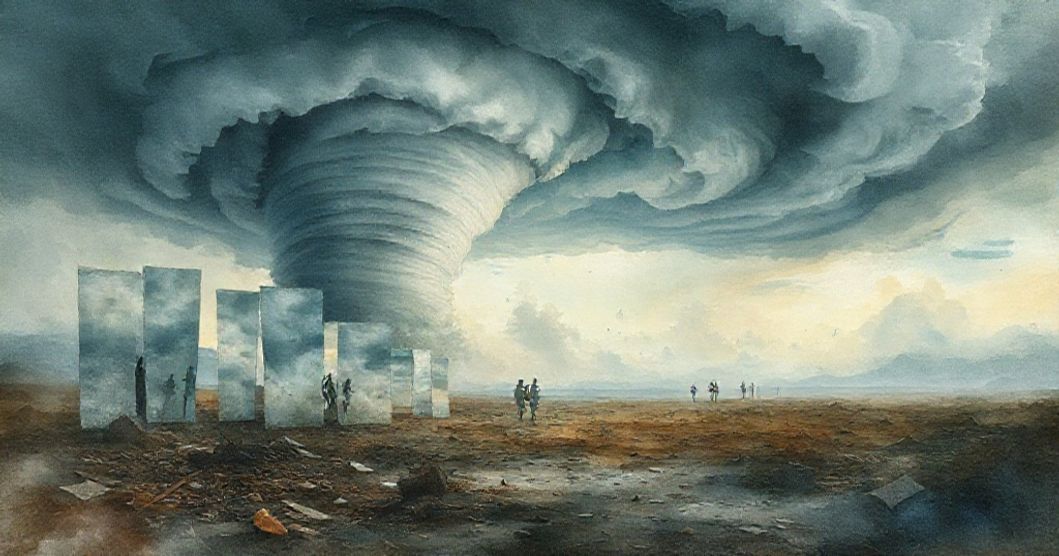
Core Symbols: The Twisted Mirror of Your Inner Storm
Tornadoes in dreams arrive as swirling, unpredictable forces, their funnel shapes both terrifying and mesmerizing. Unlike static symbols, tornadoes blend destruction with movement, mirroring the chaotic energy of unresolved emotions. In dream imagery, the funnel itself often represents a concentrated pressure point—maybe a relationship, career shift, or personal belief that feels 'sucking you in' without warning. The debris scattered in tornado dreams isn’t random; it’s a visual metaphor for the fragments of your life you’re struggling to piece together.
The 'mirror' aspect of tornado dreams becomes clearer when you consider their dual nature: they destroy but also clear space. This duality reflects Jung’s concept of the 'shadow' archetype—tornadoes as both the shadow’s destructive power and its necessary role in purging old patterns. A dream where a tornado passes through your childhood home might not just signal fear of losing roots; it could mirror the need to 'clear out' outdated family dynamics or self-limiting beliefs.
Psychology Lens: Tornadoes as Emotional Processing Machines
Want a More Personalized Interpretation?
Get your own AI-powered dream analysis tailored specifically to your dream
🔮Try Dream Analysis FreeFrom a psychological perspective, tornado dreams tap into the brain’s REM sleep processing, where emotional memories are consolidated. The amygdala, our brain’s 'fear center,' activates during tornado dreams, amplifying feelings of vulnerability—yet this intensity is the subconscious’s way of demanding attention. Freud would likely interpret tornadoes as repressed anger or anxiety, while Jung emphasized their role in the collective unconscious, where the 'destructive archetype' represents humanity’s primal need to shed what no longer serves us.
Neuroscience adds another layer: during REM sleep, the prefrontal cortex (our logical, planning center) is temporarily suppressed, allowing the limbic system (emotions, memories) to process unintegrated feelings. A tornado dream might be your brain’s attempt to 'storm-clean' emotional debris—like sorting through a cluttered closet by shaking it violently. The swirling motion isn’t random; it’s the brain’s algorithm for reorganizing stress responses.
Life Triggers: When Tornado Dreams Reflect Real-Life Storms
Family dynamics often surface in tornado dreams, especially when relationships feel unstable. If you’ve recently argued with a sibling or parent, a tornado tearing through a family home in your dream might mirror those unresolved tensions. The 'family' in these dreams isn’t always literal; it can represent chosen family, community, or even your internal family of self-critical thoughts.
Life transitions—moving cities, ending relationships, or starting new careers—also trigger tornado imagery. A dream where you’re driving a car toward a tornado might reflect the 'loss of control' that comes with uncertainty. Consider someone who quit a stable job to pursue art: their tornado dream might show the exhilaration and terror of 'clearing space' for creativity, even as the storm rages.
Modern triggers include digital overload and constant change. In a world of 24/7 notifications and shifting social norms, the brain struggles to process information, and tornadoes emerge as a metaphor for that overwhelm—like data swirling into a mental funnel, threatening to 'suck' you into chaos.
What To Do Next: From Dream to Action
Start with short-term reflection: When you wake from a tornado dream, note details without judgment. Was the tornado approaching or retreating? Who was with you? What emotions did you feel—powerless, angry, or oddly calm? This data helps your subconscious communicate specifics. For example, a dream where you direct the tornado might reveal suppressed anger needing expression.
Medium-term experimentation involves creating 'emotional anchors.' If your dream felt chaotic, try daily rituals that restore order—like 10 minutes of intentional breathing before bed or a physical activity that channels energy (yoga, running). These small acts can reduce the 'tornado energy' in your waking life by giving your brain a sense of control.
Long-term integration means processing the deeper message. Journaling about recurring tornado dreams can reveal patterns: Do they follow arguments with a specific person? Career stress? If so, schedule time to address those issues directly. Remember: tornadoes clear space for new growth—your job is to identify what needs 'clearing' and what new foundation to build.
FAQ
Q: What does a tornado dream mean if I have no family in my life? A: Even without literal family, tornado dreams often reflect internal family dynamics—self-criticism, unresolved childhood patterns, or the need to 'cleanse' relationships with yourself. The 'family' in the dream might represent your inner voice or societal expectations.
Q: Are tornado dreams always about fear? A: No. While fear is common, tornado dreams can also symbolize empowerment—you might feel in control of the storm, indicating confidence in navigating life changes. The direction (approaching vs. fleeing) and your actions (fighting vs. accepting) reveal the emotional tone.
Q: How do I tell if a tornado dream is different from a hurricane dream? A: Tornadoes feel personal and focused, like a spotlight on one issue. Hurricanes feel more systemic, representing overwhelming external forces (work, health). A tornado in your home vs. a hurricane outside your window hints at internal vs. external stressors.
Q: Can recurring tornado dreams mean something specific? A: Recurring tornadoes often signal unaddressed trauma or repetitive patterns. If you’ve had the same dream for years, it may be your subconscious urging you to confront a fear or relationship that’s stuck in a 'cyclone' of tension. Schedule time to explore these themes with a trusted friend or journaling.
Q: Is there a cultural meaning to tornado dreams? A: In Indigenous traditions, tornadoes are seen as 'wind spirits'—messengers of change. In Norse mythology, storms symbolized Odin’s ravens delivering omens. Today, tornado dreams bridge ancient and modern: they’re both primal warnings and modern reflections of our need to adapt to chaos.