
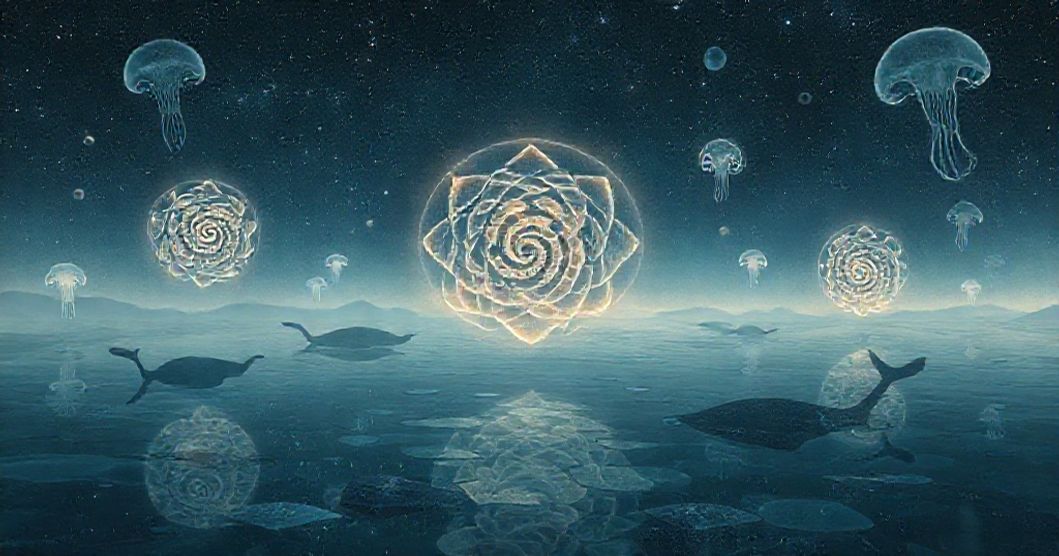
Core Symbols: Pine Cones as Dream Sigils and Night Mirrors
In dreams, pine cones rarely appear randomly—they function as sigils, intentional symbols etched into the subconscious landscape. Botanically, pine cones are both protective and generative: the female cone, with its spiraled scales, cradles seeds of future growth, while the male cone releases pollen as a symbol of intention and transmission. This duality makes them powerful emblems of potentiality and purpose in dream imagery. When these cones appear as sigils, they often signal the subconscious is processing unspoken intentions or unacknowledged desires for growth.
Culturally, pine cones have deep roots in ancient symbolism. In Greek mythology, the pine was sacred to Dionysus, the god of transformation and revelry, with its cones representing the cycle of death and rebirth. Alchemically, they symbolized the 'prima materia'—the raw spiritual essence waiting to be refined. In modern dreamwork, this translates to dreams of pine cones acting as 'mirrors of the night'—reflecting not just literal events but the emotional and psychological states that lie beneath the surface. Compare this to the fluid symbolism of jellyfish, which float as metaphors for adaptability, or the whale's deep-sea journey, which speaks to emotional depth—each symbol contributes to a larger symbolic language the unconscious uses to communicate.
Psychology Lens: Jungian Growth and Neurocognitive Processing
Want a More Personalized Interpretation?
Get your own AI-powered dream analysis tailored specifically to your dream
🔮Try Dream Analysis FreeFrom a Jungian perspective, the pine cone aligns with the 'Self' archetype—the center of the psyche that integrates opposites and guides individuation. The spiral pattern of pine cone scales, reminiscent of the Fibonacci sequence, mirrors the unconscious's tendency to seek order and meaning in chaos. This aligns with Jung's view that dreams are 'messages from the unconscious' rather than random neural activity, with symbols like pine cones acting as bridges between conscious and unconscious realms.
Freud, however, might interpret pine cone dreams through the lens of repressed desires—suggesting the cone's closed or open state could reflect blocked or fulfilled sexual energy. Yet modern neuroscience offers a complementary view: during REM sleep, the brain processes emotional memories, and the amygdala activates, attaching emotional valence to imagery. If pine cones appear during REM cycles, they may be the brain's way of encoding growth-related emotions—perhaps from a recent challenge or unmet goal. This scientific perspective adds nuance to the symbolic: it's not just about repressed desires but about how the brain organizes emotional experiences into meaningful patterns.
Life Triggers: When Pine Cone Dreams Surface
Pine cone dreams often emerge during periods of personal transition, especially when life feels like it's in a 'growth phase.' A career shift, relationship change, or spiritual exploration can trigger these symbols, as the subconscious seeks to make sense of new intentions. For example, someone starting a new creative project might dream of pine cones, reflecting the need to 'plant seeds' of potential while protecting them from uncertainty.
The other keywords in your query—jellyfish, whale, spider, and sheep—intersect with pine cone symbolism in fascinating ways. A dream with both pine cones and jellyfish might signal a tension between structure (pine cones) and adaptability (jellyfish), urging balance between planning and flexibility. Whale imagery, with its deep-sea journey, could contrast with the pine cone's upward-reaching spiral, representing the tension between exploring the depths of emotion and reaching for higher goals. Meanwhile, spider symbols (spiritual sigils) often tie to creation and order, mirroring the pine cone's role as a container of potential.
Sheep, with their symbolism of innocence and following, might appear alongside pine cones to highlight the tension between staying true to one's path (sheep) and embracing growth (pine cones)—a common theme in midlife transitions where identity shifts.
What To Do Next: Navigating the Subconscious Message
When you wake from a pine cone dream, start by noting the cone's state: open or closed, isolated or clustered, and its surroundings. Open cones suggest clarity of intention, while closed ones may signal blocked energy. Ask yourself: What areas of my life need 'cradling' (protection) or 'release' (pollen-like transmission)? This reflection is your first step toward integrating the dream's message.
In the medium term, consider creating a personal sigil inspired by the pine cone imagery. Draw a simple spiral or scale pattern on paper, then place it somewhere visible—a notebook, desk, or wall. This intentional act can help externalize the subconscious's need for growth and intention, turning the dream symbol into a daily reminder.
Long-term integration involves aligning your actions with the dream's themes. If the dream occurred during a career change, ask: Am I 'planting seeds' of my new direction or letting fear keep me closed? If it emerged during a spiritual exploration, reflect on whether your daily habits reflect the growth the pine cone symbolizes. This process transforms the dream from a passive symbol into an active guide for emotional and psychological growth.
FAQ: Decoding Pine Cone Dreams
Q: What does a closed pine cone in dreams signify? A closed pine cone often reflects blocked energy or unexpressed intentions. It may indicate fear of growth or holding back potential—an invitation to explore what's preventing you from 'opening up' to new opportunities.
Q: How do pine cone dreams connect to other nature symbols? Pine cones balance the fluidity of jellyfish (adaptability) and the depth of whales (emotional exploration). Together, they suggest life requires both structure (pine cones) and flexibility (jellyfish), or grounding (pine cones) and depth (whale).
Q: Are pine cone dreams more common in certain life stages? Yes—they often appear during 20s-30s (career/identity shifts) or midlife (redefining purpose). The subconscious uses natural symbols to process transitions, making pine cones a 'growth signal' for these pivotal periods.