
The Stoic Victim and the Hacksaw: A Young Dreamer’s Violent Nightmare and Its Symbolic Resonance
Part 1: Dream Presentation
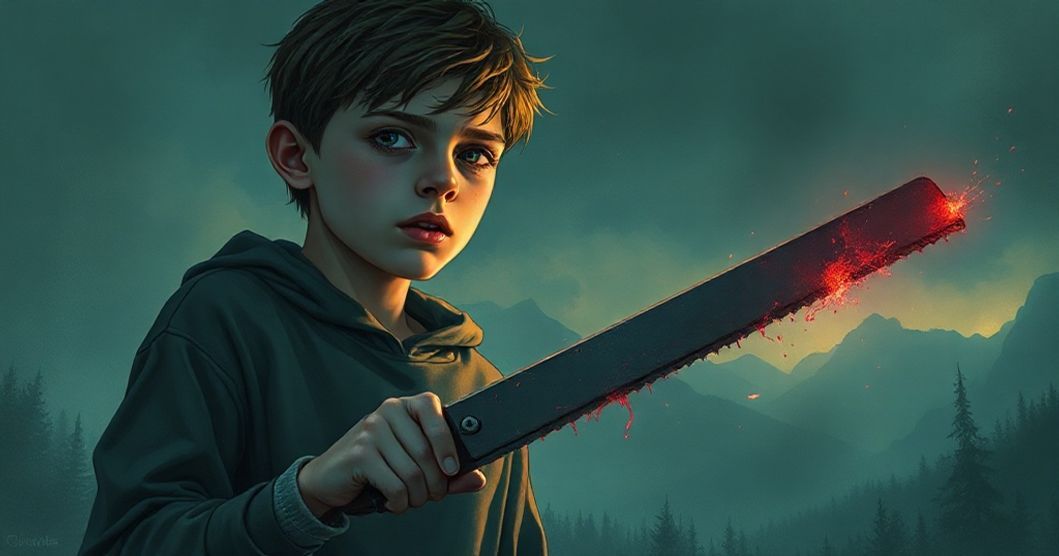
Dreams often manifest as cryptic narratives that reflect our deepest anxieties, even in childhood. This particular dream, vividly recalled by a 10-year-old, offers a window into the developing psyche’s struggle to process fear, power, and vulnerability. In the dream, a stark, minimally furnished room bathed in pale white light becomes the stage for a disturbing tableau: a Korean man is strapped to a wooden chair bolted to the floor, his limbs rigid in bindings. A figure in black moves with predatory precision, first questioning the man, then using a knife to scrape his teeth and a hacksaw to threaten dismemberment. The man maintains eerie stoicism throughout, while the dreamer watches in horror, waking drenched in sweat as the saw approaches the groin. The violence is visceral, yet the dreamer’s perspective remains detached—a key element suggesting psychological processing rather than literal prediction.
Part 2: Clinical Analysis
Symbolic Landscape: Unpacking the Dream’s Visual Language
Want a More Personalized Interpretation?
Get your own AI-powered dream analysis tailored specifically to your dream
🔮Try Dream Analysis FreeThe dream’s symbolic elements reveal layers of emotional and developmental significance. The white room functions as a powerful metaphor for psychological purity and existential vulnerability: its clinical sterility suggests an environment stripped of complexity, while its blankness mirrors the dreamer’s developing sense of self and boundaries. The Korean man’s stoicism introduces cultural and emotional dimensions—his calm exterior may represent the repression of fear or the burden of maintaining composure in overwhelming situations, a common theme in childhood as identity formation begins. The wooden chair embodies entrapment and powerlessness, symbolizing the dreamer’s fear of losing control over one’s body or environment. The knife and hacksaw represent primal fears of bodily harm and existential threat, but their specific use—scraping teeth, sawing in half—amplifies the dream’s surreal horror, suggesting a deeper anxiety about fragmentation or loss of self.
Psychological Undercurrents: Developmental and Theoretical Perspectives
From a Jungian lens, this dream may reflect the shadow archetype—the repressed, darker aspects of the psyche that emerge during times of psychological growth. The black-clad figure embodies the shadow’s threatening nature, while the stoic victim represents the dreamer’s own capacity for resilience and endurance. Freud would likely interpret the violence as a manifestation of repressed anger or fear, possibly stemming from unresolved conflicts with authority figures or experiences of powerlessness. For a child, the mind processes new experiences through symbolic imagery, and this dream may represent the fear of bodily harm common in early childhood development, when children first recognize vulnerability. Neuropsychologically, dreams consolidate emotional memories, and this nightmare could be the brain’s way of integrating fears related to safety, control, and identity formation.
Emotional and Life Context: A Child’s Developing World
At age 10 or 11, children face significant developmental milestones: growing independence, exposure to complex social dynamics, and the first inklings of cultural identity. The dream’s violence may stem from anxiety about bodily integrity—a fundamental concern as children begin to understand their own physical boundaries. The Korean man’s presence introduces questions about cultural identity and how external differences might trigger fear or fascination. Additionally, the dreamer’s exposure to media or real-world violence (even indirectly) could contribute to this imagery, though the dream’s specificity suggests deeper personal themes. The silent screams and gore reflect the child’s fear of not being heard or understood during moments of distress, a common anxiety as self-expression begins to emerge.
Therapeutic Insights: Navigating Childhood Fears
This dream offers valuable insights for the dreamer, now an adult reflecting on childhood experiences. First, it signals the importance of emotional literacy—allowing space for fear without judgment. The stoic victim’s resilience might represent the dreamer’s own capacity to endure challenges, even when feeling trapped. For parents, if a child experiences similar nightmares, validating their emotions without minimizing the fear is key. The dream also suggests the need to examine how cultural identity is processed, as the Korean man’s figure may symbolize the dreamer’s emerging sense of self in a diverse world. Journaling about recurring themes, discussing emotions with trusted adults, and engaging in creative outlets to process fear can help integrate these symbolic messages into healthy emotional expression.
FAQ Section
Q: Why did the Korean man remain stoic in the dream?
A: His stoicism likely represents the dreamer’s unconscious recognition of resilience or the pressure to appear unyielding in difficult situations, possibly reflecting cultural values or personal identity struggles.
Q: Is this dream a sign of future violence or aggression?
A: No—dreams of violence in childhood typically reflect fear, not future behavior. They signal the mind’s natural processing of developmental anxieties, not a prediction of harm.
Q: How can I help my child process similar nightmares?
A: Validate their feelings, encourage safe expression of fear, and create a calm environment. Use open-ended questions to explore the dream’s emotions rather than literal content, fostering emotional resilience and healthy coping mechanisms.