
Part 1: Dream Presentation
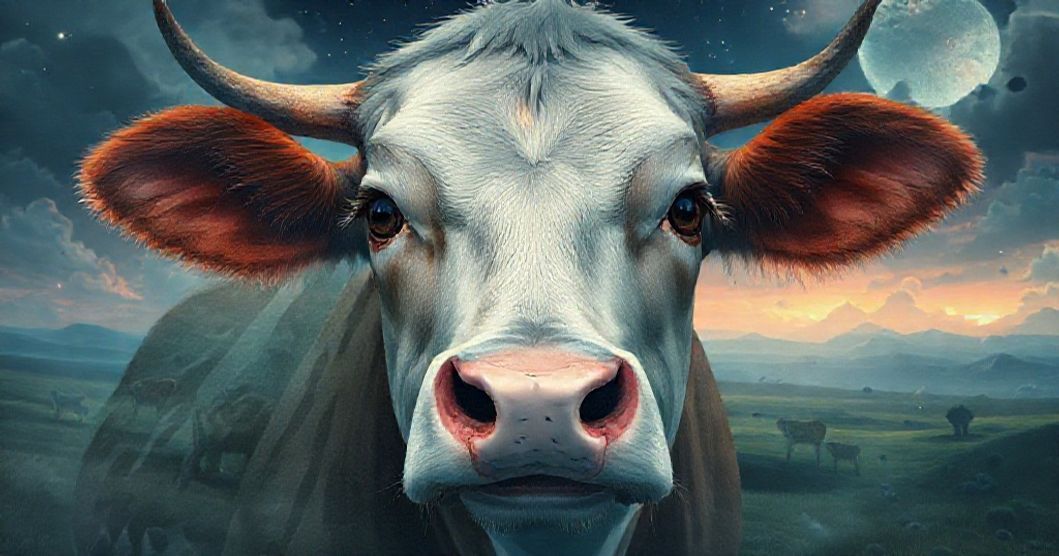
Dreams often arrive unannounced, carrying symbolic messages from our deeper consciousness. Consider this vivid dream experience: it begins in a shadowy realm where time warps and reality frays—an analogue horror scene unfolds before me: a cow, its form distorted by unnatural speed, charged relentlessly toward an unseen figure. This wasn’t any ordinary bovine; its eyes had been ripped away, replaced by empty sockets that glistened with an eerie, unblinking darkness. I felt the terror in my bones as I watched it, knowing without reason that silence was my only defense against its blind, predatory focus. The creature’s movements were both fluid and frantic, as if driven by a primal, ravenous energy that defied the gentle nature of cattle.
Then the dream shifted abruptly to a domestic scene: I found myself in a dimly lit apartment, water lapping at my ankles in a strange, ankle-deep pool that seemed to have no logical source. Huddled on the floor, I clutched tightly to a parental figure—warm and reassuring, though I couldn’t be certain if it was my mother or father, the lines blurred by dream logic. The air felt thick with dread, yet there was also a strange comfort in that embrace, as if even fear could be softened by familiar presence. The cow monster lurked just beyond the threshold, its silent approach a threat I felt in every fiber of my being.
The dream’s narrative fractured again, merging two disparate worlds in a disorienting collage. I found myself in a forested area, where characters from My Hero Academia moved with the fluidity of anime action figures. Deku swung from tree branches using his signature rope-like appendages, his movements precise and determined. Nearby, delivery drivers in crisp uniforms worked amid a scene of chaos—they cleaned up debris left by what appeared to be an 'overblot,' a term I recognized from the show, though in this context it felt like a physical manifestation of emotional collapse. Strangely, the setting included a cluttered mix of childhood and pop culture: My Little Pony: Friendship is Magic toys scattered near discarded manga volumes and superhero merchandise. This incongruous collection of symbols—magical ponies, heroic anime characters, and mundane delivery workers—created a surreal tableau that defied logic yet felt viscerally real in the dream’s context. The scene dissolved as abruptly as it had appeared, leaving me gasping awake with my heart pounding against my ribs.
Part 2: Clinical Analysis
Want a More Personalized Interpretation?
Get your own AI-powered dream analysis tailored specifically to your dream
🔮Try Dream Analysis FreeSymbolic Landscape: Unpacking the Dream’s Imagery
The central symbol—the blind, predatory cow—represents a primal fear or threat that has been stripped of sight yet retains its capacity for violence. In dream symbolism, cows often connect to nourishment, stability, and fertility, but here it has been transformed into a creature of terror. The missing eyes suggest a loss of perception or awareness in the face of danger—a visual metaphor for how we might 'turn a blind eye' to our own vulnerabilities or the threats we face. This inversion of the cow’s typical gentle symbolism aligns with Jung’s concept of the 'shadow archetype,' where familiar symbols take on unexpected, often threatening forms to alert us to unconscious aspects we’ve neglected.
The water in the apartment scene carries multiple layers of meaning. Ankle-deep water often symbolizes emotional immersion or the feeling of being overwhelmed by deeper, unconscious forces. Its presence in a domestic space suggests that our emotional life is infiltrating our sense of safety—a common theme in dreams of home invasion. The parental figure, whether mother or father, embodies the protective, nurturing aspect of the self, the part that seeks security amid chaos. The act of hugging this figure during the cow’s intrusion reflects a primal need for safety and connection, a psychological anchor in the face of overwhelming fear.
The surreal transition to the anime-inspired world introduces another layer of symbolism. The 'overblot' from My Hero Academia refers to a character’s emotional overload or loss of control, a concept that translates to the dream’s chaotic cleanup scene. Delivery drivers represent the mundane, practical aspects of life—they are the ones who 'deliver' structure and order in the face of collapse. The juxtaposition of My Little Pony toys with superhero merchandise suggests a tension between childish innocence and adult responsibility, or perhaps the dreamer’s engagement with different aspects of their identity through media.
Psychological Perspectives: Blending Theories to Understand the Dream
From a Freudian lens, the cow could represent repressed anger or aggression, transformed into a monstrous form to avoid conscious awareness. The 'blind' quality might reflect a denial of reality or an inability to see clearly in waking life. The overblot, with its connotation of emotional collapse, aligns with Freud’s emphasis on the manifest content of dreams as disguising underlying repressed desires or anxieties.
Jungian psychology offers a complementary perspective, framing the dream as a communication from the collective unconscious. The cow could embody the 'shadow' of the dreamer’s psyche—the aspects of self they’ve rejected or ignored. The unexpected shift to anime and children’s media might represent the integration of different life stages or personality components. Jung believed dreams function as 'compensations,' balancing conscious awareness with unconscious contents, suggesting this dream might be addressing a need for integration between practical adult concerns and the more playful, imaginative parts of the self.
Cognitive neuroscience provides another framework, positing dreams as a byproduct of neural activation during REM sleep, processing emotional memories and information. The dream’s chaotic transitions could reflect the brain’s attempt to make sense of fragmented emotional experiences, combining disparate memories and anxieties into a cohesive narrative. The presence of familiar pop culture references suggests the dreamer’s recent engagement with these media, which their brain processes and incorporates into nighttime imagery.
Emotional & Life Context: Uncovering the Dreamer’s Internal Landscape
This dream likely reflects the dreamer’s current emotional state—perhaps feeling overwhelmed by responsibilities, facing unexpected threats in waking life, or struggling with maintaining clarity amid chaos. The parental figure represents a desire for security and protection, suggesting the dreamer may be seeking comfort during a period of uncertainty. The 'overblot' reference hints at feeling emotionally drained or 'overloaded' by daily pressures, while the delivery drivers’ cleanup work symbolizes the effort to maintain order in the face of collapse.
The inclusion of childhood media (My Little Pony) alongside superhero imagery suggests a tension between nostalgia for simpler times and the complexity of adult life. The dreamer may be navigating a transition period, perhaps moving from one life phase to another, and the dream is processing these changes through familiar cultural touchstones. The cow’s attack on the home represents a threat to the dreamer’s sense of safety, possibly related to recent changes or anticipated challenges.
Therapeutic Insights: Practical Takeaways from the Dream
The dream invites several reflective practices for the dreamer. First, journaling about the emotions triggered by the cow and the parental figure can help identify areas of vulnerability. Asking: 'What aspects of my life feel threatening or overwhelming right now?' and 'Where do I seek security and connection?' can bring clarity to waking concerns.
The presence of the overblot and cleanup crew suggests the need to address emotional overload before it becomes unmanageable. The dream encourages setting boundaries around responsibilities and learning to 'clean up' emotional messes before they escalate—perhaps through mindfulness practices, prioritization, or establishing healthier routines.
For integration, the dreamer might benefit from creating a 'symbol inventory'—identifying recurring images (cow, water, parental figure) and reflecting on their personal associations. This inventory can reveal patterns in their emotional landscape and guide self-care practices. The transition between horror and anime elements suggests the need to acknowledge both the fears and the playful, hopeful aspects of oneself.
FAQ Section
Q: Why did the cow have no eyes?
A: The missing eyes symbolize a loss of clarity or awareness in the face of threats, suggesting the dreamer may be 'blind' to certain challenges in waking life.
Q: What does the water in the apartment represent?
A: Ankle-deep water often signifies emotional immersion or feeling overwhelmed by unconscious forces, indicating the dreamer’s emotions are infiltrating their sense of safety.
Q: Why mix My Hero Academia with My Little Pony?
A: This juxtaposition reflects tensions between adult responsibilities and childlike wonder, or integrating different aspects of identity through media engagement.