
Part 1: Dream Presentation
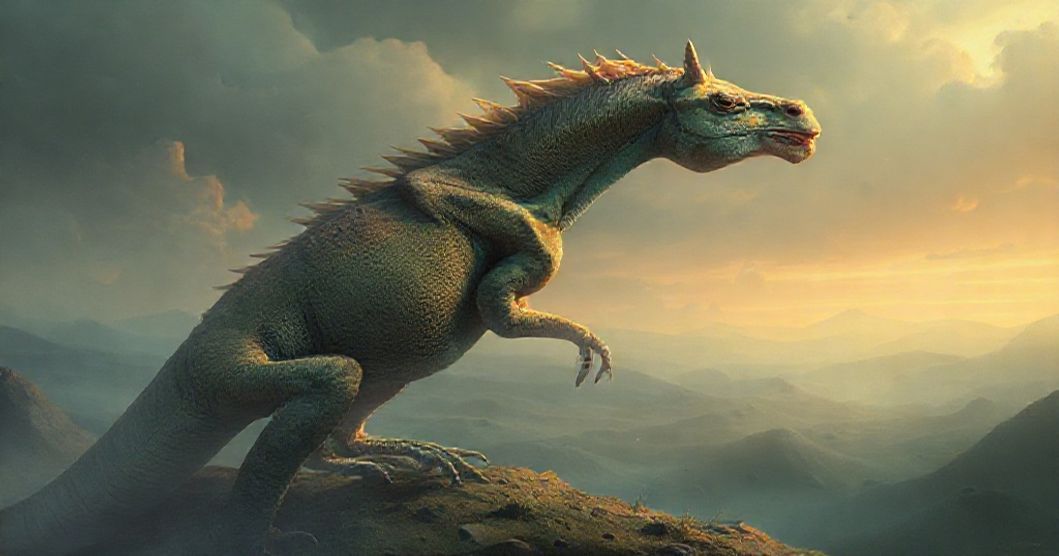
Dreams often serve as a bridge between our conscious awareness and the deeper, often unsettling, landscapes of our unconscious mind. In this particular dream, the dreamer finds themselves in a liminal savannah-marsh environment—a space that exists between water and land, stability and flux, reflection and transition. Here, the dreamer encounters small, lizardlike creatures that move with surprising agility, their scaly bodies and wet, leathery faces creating an uncanny fusion of the familiar and the alien. What makes this dream particularly intriguing is the revelation that these creatures are not simply reptilian beings but the far-future descendants of horses, a connection that blurs evolutionary timelines and challenges conventional understanding of identity and change.
The dream begins with the dreamer in a liminal savannah-marsh biome, where tall grasses in muted beige hues sway without the presence of wind, creating a stillness that feels both comforting and unnatural. This setting immediately establishes a sense of transition, as savannahs and marshes represent thresholds between environments, much like the dreamer may be navigating a similar threshold in waking life. The creatures themselves are described with precise sensory details: roughly the length of two human hands, scurrying and hopping with a jerky, almost frog-like movement, yet covered in fine scales that shimmer faintly. Their most striking feature is their faces, likened to 'wet, leathery lasagna slices'—a description that is simultaneously grotesque and strangely specific, evoking a texture that is both organic and processed, familiar yet off-putting.
To the left of the dreamer stands a figure resembling SCP-6080, an entity from the SCP Foundation universe known for its uncanny, otherworldly nature. In the dream, this figure’s presence is less about the specific SCP lore and more about embodying an 'uncanny familiarity'—someone or something that should be known yet feels alien, suggesting the dreamer’s relationship with the unknown aspects of their psyche or waking life. This figure’s role in the dream is crucial: it provides the interpretive lens, declaring the creatures as 'far future descendants of horses,' a statement that recontextualizes the dream’s imagery and introduces the central theme of evolutionary transformation.
Want a More Personalized Interpretation?
Get your own AI-powered dream analysis tailored specifically to your dream
🔮Try Dream Analysis FreePart 2: Clinical Analysis
Symbolic Landscape: Decoding the Dream Elements
The savannah-marsh biome serves as a powerful symbol of liminality, representing transitions, uncertainty, and the integration of disparate elements. In dream psychology, such landscapes often reflect the dreamer’s internal state of flux—perhaps navigating a major life change, career shift, or emotional transition where old patterns are dissolving and new ones are emerging. The lack of wind in the swaying grasses further emphasizes this stillness, suggesting a period of waiting or preparation for change.
The lizardlike creatures themselves are a fascinating blend of reptilian and equine traits, though the dream explicitly frames them as equine descendants. This fusion of reptile and horse imagery hints at the dreamer’s unconscious processing of evolutionary themes—both literal (human evolution from reptilian ancestors) and metaphorical (personal evolution). Reptilian imagery often connects to primal instincts, survival mechanisms, and the 'animal' parts of the psyche, while horses symbolize freedom, power, and spiritual connection. By merging these, the dream suggests a tension between retaining core aspects of identity while adapting to new realities.
The wet, leathery faces described as 'soggy lasagna slices' introduce a layer of the uncanny—the familiar (lasagna, a processed food) rendered grotesque and unnatural (wet, leathery, and lifeless). This texture evokes both vulnerability and resilience: wetness suggests moisture, perhaps emotional depth or vulnerability, while leathery texture implies protection, adaptation, and survival. The lasagna comparison adds a domestic, almost mundane element to the otherwise alien creature, creating a dissonance that mirrors the dreamer’s own experience of blending the mundane and the profound in waking life.
Psychological Undercurrents: Theoretical Perspectives
From a Jungian perspective, this dream reflects the process of individuation—the integration of disparate parts of the psyche into a whole. The SCP-6080 figure embodies the shadow archetype, representing aspects of the self that feel alien or threatening yet are essential for wholeness. The 'far future horses' can be seen as the animus archetype evolving into a more adaptive, reptilian form, suggesting the dreamer’s need to embrace more primal, instinctual aspects of their personality.
Freudian theory might interpret the dream as a manifestation of repressed desires or fears related to adaptation and survival. The 'lizard horses' could represent the dreamer’s unconscious wish to evolve beyond current limitations, while the uncanny texture of the creatures reflects repressed anxieties about bodily changes or the loss of control over one’s identity. The lasagna-like texture, in particular, might symbolize the dreamer’s relationship with processed or 'unnatural' aspects of life—perhaps feeling that certain parts of their identity have become 'soggy' or lost their original form.
Cognitive neuroscience offers another lens: dreams as a byproduct of neural activity processing memories and sensory information. The dream’s imagery likely connects the dreamer’s knowledge of evolutionary biology (horse evolution from early mammals, which themselves evolved from reptilian ancestors) with more primal memories or fears of transformation. The brain’s tendency to combine disparate sensory inputs (lasagna texture, reptilian features, horse ancestry) creates the dream’s surreal narrative, as the mind synthesizes unrelated information during REM sleep.
Emotional Landscape: Waking Life Connections
The dream’s imagery strongly suggests themes of adaptation and change in the dreamer’s waking life. The liminal savannah-marsh environment may reflect a period of transition—perhaps a career change, relationship shift, or relocation where the dreamer feels in flux. The 'far future horses' could symbolize the dreamer’s fear of obsolescence or the need to adapt to new roles, responsibilities, or expectations.
The uncanny SCP-6080 figure hints at unresolved relationships or personal dynamics where someone or something feels both familiar and threatening. This could represent a person in the dreamer’s life who embodies conflicting traits—someone who is both supportive and alienating, or a situation that evokes both comfort and discomfort.
The wet, leathery faces might reflect the dreamer’s experience of emotional vulnerability or exposure—perhaps feeling 'wet' or exposed in certain situations, yet 'leathery' in their attempts to protect themselves. The lasagna texture adds a layer of processing: the dreamer may be grappling with how to maintain their sense of self while adapting to new circumstances, feeling that their identity is being 'processed' or transformed in ways that feel unnatural.
Therapeutic Insights: Reflective Practices
This dream invites the dreamer to explore themes of evolution and adaptation with curiosity rather than fear. The first step is to reflect on current life transitions: Are there areas where the dreamer feels the need to evolve, adapt, or shed old identities? The 'lizard horses' suggest that growth may involve embracing both the familiar and the alien within oneself, even when it feels uncomfortable.
Journaling exercises can help unpack the dream’s symbolic layers. The dreamer might ask: What aspects of my life feel like they’re 'evolving' beyond recognition? or Where in my waking life do I feel like I’m navigating a liminal space between two states? By mapping these questions to specific life areas, the dreamer can begin to integrate these insights.
The uncanny SCP-6080 figure suggests the importance of confronting rather than avoiding the 'uncanny' parts of oneself or relationships. In therapy, this might involve exploring how the dreamer relates to people or situations that feel simultaneously familiar and threatening, and whether these relationships require boundaries or deeper understanding.
Finally, the dream’s emphasis on evolutionary transformation encourages the dreamer to view change as a natural, even necessary, process. Practices like mindfulness meditation can help the dreamer sit with uncertainty during transitions, recognizing that growth often requires embracing the 'wet, leathery' uncertainty of new experiences rather than clinging to the comfort of the familiar.
FAQ Section
Q: Why would the dream depict horses as evolving into reptilian creatures?
A: This likely reflects the dreamer’s unconscious processing of evolutionary themes—perhaps feeling the need to adapt or evolve in waking life, or struggling with identity shifts that feel both necessary and alien.
Q: What does the 'wet, leathery lasagna face' symbolize?
A: This texture suggests vulnerability (wetness) and resilience (leathery protection), representing the dreamer’s experience of feeling exposed yet determined to adapt, with the 'lasagna' element adding a layer of processed, unnatural transformation.
Q: How does the SCP-6080 figure enhance the dream’s meaning?
A: The uncanny figure embodies the 'shadow self'—familiar yet alien, suggesting the dreamer’s relationship with unresolved aspects of themselves or relationships that evoke both comfort and discomfort, requiring deeper exploration rather than avoidance.