
The Recurring Nightmare of Sleep Paralysis and the Demonic Entity: A Clinical Analysis
Part 1: Dream Presentation
Dreams often serve as windows into the unconscious mind, revealing psychological truths we may struggle to articulate while awake. For this eighteen-year-old dreamer, a recurring nightmare since adolescence has evolved into a psychological labyrinth of sleep paralysis, demonic imagery, and an inescapable sense of being trapped. This dream, with its specific details and emotional intensity, offers a rich canvas for exploring the intersection of unconscious fears, developmental transitions, and sleep physiology.
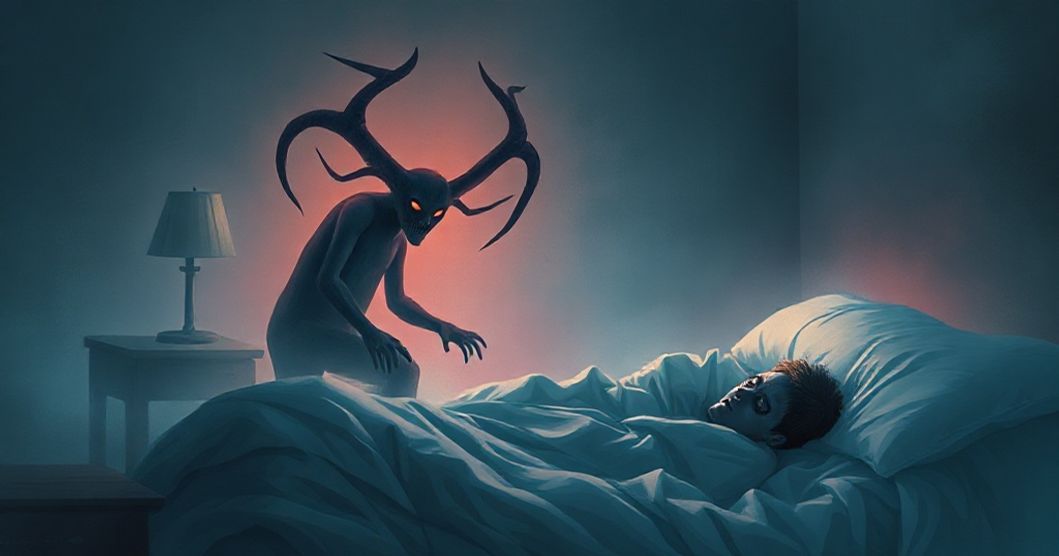
I woke with a gasp, heart pounding, as another iteration of the nightmare concluded. This recurring dream has haunted me since I was fifteen, now eighteen years old, and it shows no signs of abating. In each version, I find myself outside my childhood home, searching desperately for a parking spot for my father’s car. The street is eerily quiet at night, yet the usual availability of spaces has vanished—everywhere I look, there are no spots to be found. As I fixate on this impossible task, my vision suddenly blurs, colors bleeding into one another like watercolor on wet paper. Panic surges through me as I realize something is profoundly wrong; my body begins to fail, and I feel myself collapsing. When I 'wake up,' I’m not in my bed but still in that same dream, paralyzed in a state of sleep paralysis. My limbs won’t respond to my commands; I can’t move a finger or speak above a whisper. I try to call for help, to summon my father, but my voice is a faint squeak, barely audible. When he appears, it’s not my real father at all—his features are distorted, shifting like shadows, and beside him stands a demonic entity, its presence cold and oppressive. It hisses, 'Be quiet,' and I feel its invisible weight pressing down on my chest. I beg for help, but no one hears. This has repeated over a hundred times now, each time with slightly different details—different scenarios, different people—but the core remains the same: the search for parking, the blurry vision, the collapse, the paralysis, the demonic presence. I’ve learned to recognize the loop: if I wiggle a toe or a finger, I might briefly escape into my real body, only to be pulled back into that endless cycle of terror when I try to sleep again. The fear has become so overwhelming that I dread closing my eyes, knowing I’ll be trapped in that nightmarish loop once more.
Part 2: Clinical Analysis
Want a More Personalized Interpretation?
Get your own AI-powered dream analysis tailored specifically to your dream
🔮Try Dream Analysis FreeSymbolic Landscape of the Dream
The recurring elements in this dream carry significant symbolic weight. The search for a parking spot for one’s father reflects themes of responsibility, caretaking, and the pressure to provide for others—a common developmental challenge during adolescence when identity formation intersects with emerging adulthood responsibilities. The 'impossible' parking situation symbolizes feeling overwhelmed by life’s demands, as if there are no clear paths forward or solutions to be found. The blurry vision represents uncertainty and loss of clarity, signaling the dreamer’s struggle to see their way forward in waking life. The collapse and passing out embody surrender, powerlessness, and the inability to cope with overwhelming anxiety.
The sleep paralysis itself is a biologically real phenomenon, occurring when the brain’s REM sleep atonia (temporary muscle paralysis) persists during partial wakefulness. Psychologically, it represents a powerful symbol of being trapped, both literally in the dream and metaphorically in waking life. The demonic entity, a recurring figure in nightmares, is not merely a supernatural threat but an archetypal representation of the dreamer’s inner demons—unresolved fears, guilt, or repressed emotions. Its demand to 'be quiet' speaks to the dreamer’s sense of being silenced, unheard, or unable to express their needs in waking life.
Psychological Perspectives on the Recurring Dream
From a Jungian perspective, this recurring nightmare can be seen as a compensation for unconscious needs. The demonic entity represents the shadow archetype—the parts of the self we fear or reject. The father figure, though distorted, may symbolize the dreamer’s relationship with authority, protection, or the fear of disappointing a parent. The looping pattern reflects the repetition compulsion, a defense mechanism where the mind reenacts unresolved conflicts to process them consciously.
Freudian analysis would likely interpret the dream as a manifestation of repressed anxieties related to adolescent responsibilities, sexual development, or fear of failure. The parking search for the father could represent unconscious guilt about not meeting parental expectations or fear of taking on adult roles prematurely. The demonic presence may symbolize the dreamer’s repressed anger or hostility toward authority figures.
Cognitive psychology views the recurring dream as a way the mind processes trauma or stress. The high frequency (100+ occurrences) suggests the dream is a self-reinforcing cycle where the emotional intensity of the nightmare strengthens the neural pathways associated with fear, creating a feedback loop that’s difficult to break. Neuroscience explains sleep paralysis as a temporary disruption of the brain’s transition between sleep and wakefulness, where the dreamer’s hyperaroused state amplifies the terror.
Emotional and Life Context of the Dream
The dream’s onset at age fifteen coincides with significant developmental shifts: increased academic pressure, emerging independence, and the transition from childhood to adulthood. The recurring nature of the dream suggests it’s addressing unresolved emotional issues from this period. The father figure in the dream likely represents the dreamer’s need for protection and guidance during this vulnerable time. The distortion of the father’s features may symbolize the dreamer’s fear of losing the security of childhood or the uncertainty of adult relationships.
The dreamer’s fear of the demonic entity and the sense of being trapped in a loop mirror feelings of powerlessness in waking life. This could relate to academic stress, social anxiety, or fear of future responsibilities. The inability to distinguish between dream and waking life suggests a deep psychological investment in the dream’s narrative, using it as a vehicle to process these complex emotions.
Therapeutic Insights for Breaking the Cycle
Dream journaling can help identify patterns and potential waking triggers. By recording specific details of each dream iteration, the dreamer can uncover connections to real-life stressors or unprocessed emotions. Grounding techniques practiced before sleep, such as the 5-4-3-2-1 method (noting five things you see, four you feel, etc.), can reduce hyperarousal and prevent the dream from escalating into sleep paralysis.
Cognitive Behavioral Therapy (CBT) offers effective strategies for breaking cycles of fear. The dreamer can practice challenging catastrophic thoughts about the demonic entity, reframing them as symbolic representations of manageable anxieties. Exposure therapy, where the dreamer gradually confronts the fear in a controlled environment, can reduce its power.
Improving sleep hygiene is crucial. Consistent sleep schedules, avoiding stimulants before bed, and creating a calming pre-sleep routine can reduce the likelihood of sleep paralysis. Mindfulness meditation before sleep may help the dreamer recognize the transition from wakefulness to sleep, reducing the terror associated with the paralysis.
FAQ Section
Q: Why does this dream feel so real and persistent?
A: Recurring dreams often stem from unresolved psychological conflicts. The sleep paralysis phenomenon itself (a temporary neurological condition) amplifies the dream’s realism, creating a self-reinforcing cycle of fear and hyperarousal.
Q: Is the 'demonic entity' purely symbolic?
A: Yes, in clinical terms, demonic imagery typically represents psychological projections of fear, guilt, or repressed emotions. It may symbolize inner struggles rather than literal supernatural threats, though the emotional terror is very real.
Q: How can I differentiate between the dream and waking life when I'm in the loop?
A: Grounding techniques (focusing on physical sensations) and reality checks (pinching yourself or checking for objects) can help. Maintaining a consistent sleep schedule and reducing pre-sleep anxiety may also break the cycle.