
Part 1: Dream Presentation
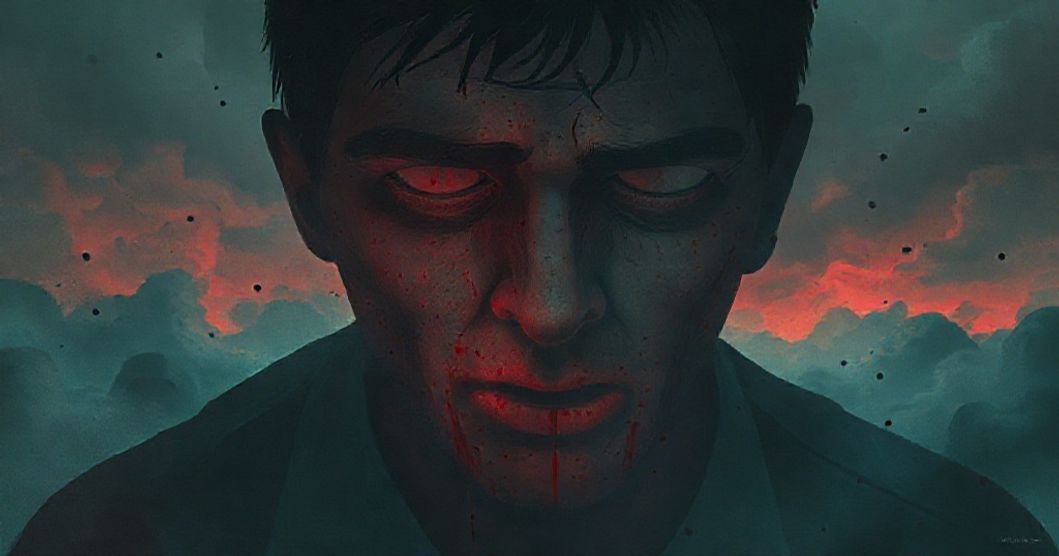
Dreams have a way of plunging us into visceral landscapes where fear and survival collide, as this nightmare vividly demonstrates. My mind’s theater opened with the chaos of a zombie apocalypse, its familiar tropes of decay and threat giving way to something more personal and intimate: a prison of blood and identity loss. The dreamer finds themselves among others, all captured by creatures that drain blood, reducing them to 'barely alive' status over years of captivity. The designation 'Number 1' and room 345 strip away individuality, replacing it with a bureaucratic label—a stark symbol of dehumanization. Escape attempts fail repeatedly, only to be followed by relocation to affluent neighborhoods, where the safety of wealth becomes another layer of irony, as the threat persists even in supposed haven. The nightly knock, the countdown, and the complicit silence of strangers and law enforcement amplify the dream’s core message: some fears feel inescapable, even when we think we’ve escaped.
Part 2: Clinical Analysis
Symbolic Landscape: The Language of Captivity
Want a More Personalized Interpretation?
Get your own AI-powered dream analysis tailored specifically to your dream
🔮Try Dream Analysis FreeThe blood-draining creatures represent a primal fear of vulnerability—of having one’s life force, energy, or identity systematically depleted. In dreamwork, vampires often symbolize those who 'suck' emotional energy from us in waking life: toxic relationships, draining jobs, or self-destructive habits. The 'Number 1' designation and room 345 are more than labels; they’re architectural metaphors for psychological entrapment. Numbers in dreams often carry numerological significance: 1 represents singularity, new beginnings, or ego; 345 (3+4+5=12, a number of completion and cycles) suggests a system designed to repeat indefinitely. The three-year captivity mirrors the unconscious mind’s way of processing prolonged stress—three years as a threshold, a period where time itself becomes a prison.
The affluent neighborhoods and motels symbolize the dreamer’s search for safety in external validation or material success, only to find the same threat persists. This is the 'false escape'—believing that wealth or status can protect us from deeper fears, only to discover they’re universal. The human meat fed to captives represents internal consumption: eating away at one’s sense of self, identity, or values, while the arrow’s partial harm (not killing, but wounding) speaks to the dreamer’s fear of incomplete resolution—of surviving trauma but never fully healing.
Psychological Currents: Jungian and Freudian Perspectives
From a Jungian lens, the creatures embody the shadow self—repressed aspects of the dreamer’s psyche that feel predatory and inescapable. The shadow often manifests as a threat we cannot fully name, but in this case, it’s literalized as blood-draining captors. The recurring escape attempts represent the dreamer’s unconscious drive for individuation, while the failure to escape reflects the shadow’s persistence until integrated. Freud might interpret the captivity as a manifestation of repressed anxiety about powerlessness: the inability to control one’s life, the feeling of being at the mercy of external forces.
Neuroscientifically, this dream aligns with threat simulation theory, where the brain processes survival fears during REM sleep. The vividness of the dream—waking up crying—suggests activation of the amygdala, the brain’s threat-detection center, processing deep-seated anxieties about safety and identity.
Emotional and Life Context: The Unconscious as Mirror
The dream likely reflects waking life stressors where the dreamer feels trapped in a cycle they cannot break. The three-year captivity might mirror a job, relationship, or situation that has drained energy for years, leaving them feeling dehumanized (Number 1, not a person). The complicit cops and indifferent strangers suggest fear of judgment or the feeling that no one will believe the dreamer’s truth—common in situations of gaslighting or marginalization.
The arrow’s partial harm hints at a fear of facing trauma directly: the dreamer knows they’re being hurt but cannot fully confront it, leading to a cycle of partial healing. The 'rich neighborhood' paradox—safety and danger coexisting—might reflect the dreamer’s internal conflict: wanting to believe that success or status will protect them, while intuitively knowing it cannot.
Therapeutic Insights: Unpacking the Dream’s Lessons
The dream invites the dreamer to explore areas of life where they feel 'blood-drained'—emotionally, physically, or spiritually. Journaling to identify these 'draining systems' (relationships, jobs, habits) is a first step. The recurring escape attempts suggest a deep desire for agency; even in dreams, the will to escape persists, so in waking life, small acts of autonomy (choosing a new route, setting boundaries) can reclaim a sense of control.
The arrow’s partial harm is a call to confront fears directly, not just manage them. The dreamer might need to process the 'countdown' anxiety by creating intentional rituals that mark completion and new beginnings. The human meat symbolizes the need to 'reclaim' one’s true self from situations that consume it—perhaps by setting boundaries or seeking support.
FAQ Section
Q: What does the recurring escape and capture symbolize?
A: It represents the unconscious’s ongoing struggle with a persistent issue—whether a relationship, job, or habit—that feels inescapable. The cycle urges the dreamer to address root causes, not just symptoms.
Q: Why does the arrow symbolize partial harm?
A: The arrow’s non-lethal nature suggests the dreamer fears incomplete resolution—surviving trauma but not fully healing. It urges facing fears directly, not numbing them.
Q: What might the rich neighborhood represent?
A: It symbolizes the illusion of safety in external validation or material success. The dreamer may seek security in wealth/status but find deeper fears persist, highlighting the need for internal resilience.