
Part 1: Dream Presentation
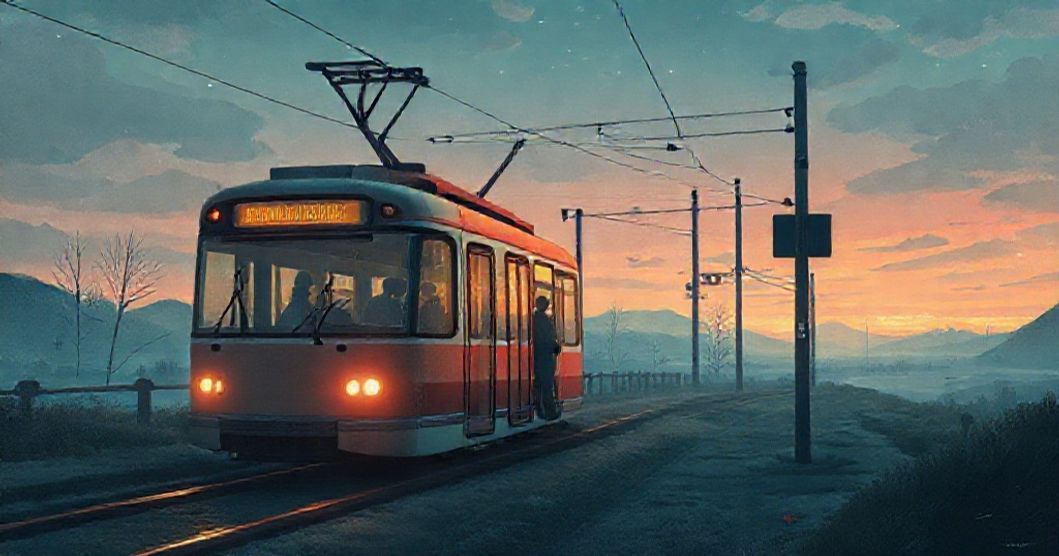
Dreams often serve as portals to our unconscious conflicts, revealing tensions we barely acknowledge in waking life. In this particular dream, a Norwegian tram journey becomes the stage for a profound emotional crossroads—a liminal space where the dark of night, the cold of winter, and the warmth of unspoken feelings collide. The scene opens on a crowded tram bound for mountain slopes after the first snowfall, its interior thrumming with anticipation. Outside, darkness swallows the world, creating an atmosphere of mystery and uncertainty that mirrors the dreamer’s internal state.
The dreamer sits beside a colleague—a woman with whom they share complicated feelings. She wears skiing gear, her goggles obscuring her eyes but somehow amplifying the intimacy of her voice, which speaks directly into the dreamer’s mind rather than through the air. Though she avoids the word "love," her confession carries its weight, triggering a visceral, almost physical response: a smile that quivers with joy yet remains silent, as if the dreamer fears speaking aloud the truth of their feelings. When she asks, "Are you still unsure if I’m too old, too set in my ways?" the dreamer responds with a primal, non-verbal gesture—pressing helmets together, brushing noses—a tender, almost desperate attempt to connect without words. This moment crystallizes the dream’s core tension: a desire for deep emotional intimacy versus the fear of vulnerability, and the conflict between two potential paths.
The dream’s final layer reveals the dreamer’s waking conflict: a colleague with "a heart the size of a ship" versus a girlfriend of the same age. The choice feels stark: love without biological children, or family without the profound connection to the colleague. The Norwegian tram, with its journey toward the mountains, becomes a metaphor for this journey into the unknown—a space where the dreamer confronts what their heart truly craves versus what society or practicality demands.
Want a More Personalized Interpretation?
Get your own AI-powered dream analysis tailored specifically to your dream
🔮Try Dream Analysis FreePart 2: Clinical Analysis
The Symbolic Landscape of the Dream
The tram itself functions as a powerful symbol of transition and choice. In dream imagery, trams often represent controlled movement toward a destination, yet the darkness outside suggests an unknown future. The first snowfall, a recent event in the dreamer’s waking life, introduces themes of new beginnings and vulnerability—qualities the dreamer may associate with the colleague’s potential relationship. The packed tram, filled with skiing gear, embodies the dreamer’s preparation for emotional challenges, as if they’re gearing up to face something significant.
Helmets serve dual symbolic purposes: protection and concealment. The dreamer and colleague wear them, creating a barrier between them while simultaneously bringing them physically close. This paradox reflects the dreamer’s desire for closeness without full exposure—a common theme in relationships with unresolved boundaries. The nose-brush, a non-sexual yet deeply intimate gesture, bypasses verbal communication to express raw, primal connection. It’s as if the dreamer is saying, "I want to be close to you without words, without the fear of rejection or judgment." Her avoidance of "love" highlights the dreamer’s unconscious struggle with labeling their feelings—perhaps they feel love but lack the words to articulate it, or fear the weight of that label.
Psychological Undercurrents: Jungian and Freudian Perspectives
From a Jungian perspective, the colleague represents the dreamer’s Anima archetype—the feminine aspect of the unconscious that embodies soulful connection and emotional depth. The Anima often appears as a "soulmate" figure, triggering our deepest longings for meaning and completeness. The dreamer’s current girlfriend, by contrast, may represent the Shadow—the unconscious aspects of self that are more socially acceptable but less aligned with the Anima’s call. The age question she poses taps into the Shadow’s fear of incompatibility and worthiness, a common Jungian theme of integrating youthful ideals with adult realities.
Freud would likely interpret the dream as a fulfillment of repressed wishes. The dreamer’s complicated feelings for the colleague, combined with the current relationship, create unconscious tension. The dream’s non-verbal communication (her speaking in the mind, the nose-brush) bypasses censorship, allowing the expression of forbidden desires without the anxiety of waking life. The darkness of the tram mirrors the dreamer’s repression of these feelings, while the mountains symbolize the "higher" ground of emotional fulfillment.
Neuroscientifically, dreams process emotional data during sleep, consolidating memories and resolving conflicts. The dreamer’s brain may be working through the cognitive dissonance of two potential relationships, using the tram journey as a metaphor for the transition between these paths.
Emotional and Life Context
The dreamer’s conflict reflects a classic midlife or relationship crossroads: the tension between immediate emotional fulfillment and long-term stability. The colleague’s "heart the size of a ship" suggests the dreamer values emotional depth and authenticity, while the girlfriend represents conventional compatibility. The age question she asks—"Are you still unsure if I’m too old?"—reveals the dreamer’s fear of choosing someone who might feel "too old" for societal norms, yet the dreamer’s own attraction to her suggests this is a projection of their internalized age anxiety.
The existential choice—the dreamer’s conflict between "love of my life and no biological children" versus "family but not the love"—highlights a modern dilemma: society’s emphasis on both love and family, yet the reality that these may require trade-offs. The dreamer’s unconscious is processing this choice by creating a symbolic journey through a Norwegian tram, a literal representation of moving toward one path or the other.
Therapeutic Insights and Integration
For the dreamer, this dream offers an opportunity to explore values clarification without judgment. Journaling exercises could help unpack the specific qualities they seek in a relationship: Is it the profound connection with the colleague, or the stability and compatibility with the girlfriend? Reflective questions like, "What would my life look like if I chose the colleague?" or "What fears am I avoiding by staying with the girlfriend?" can bring clarity.
The dream’s non-verbal communication suggests the dreamer may need to express emotions more directly in waking life. The nose-brush, a primal gesture, hints at the power of physical connection without words—a reminder that sometimes actions speak louder than words in relationships.
The tram as a transitional space suggests the dreamer is on the verge of making a choice, even if they haven’t acknowledged it. Therapy could help explore the unconscious narratives around these relationships, particularly how the dreamer’s family history or past relationships influence these current choices.
FAQ Section
Q: Why did the dream focus so much on the colleague rather than the current girlfriend?
A: Dreams often highlight figures representing unconscious needs rather than conscious relationships. The colleague may embody the