
Part 1: Dream Presentation
Dreams often revisit our most significant emotional landscapes, blending past triumphs and hidden anxieties into surreal narratives. This particular dream weaves together childhood identity, adult professional transitions, and the primal fear of losing control—all set against the unsettling backdrop of a grade school track and an unexpected encounter with a witch.
I found myself back in a dream with a college acquaintance—a frat brother with whom I’d once shared a complicated relationship. We’d both pursued the same girl in our youth; he’d been with her first, declaring her body ‘good’ before I later, drunk, joined in. We’d never discussed it openly, but the unspoken agreement to keep it secret had created an awkward distance between us, now 12 years past. In the dream, he’d unexpectedly secured a job with my father—a man with modest business ventures that had yet to thrive. When he asked where I lived, I admitted I still resided with my dad, unaware he’d secured employment under my father’s roof. The irony of this professional entanglement felt both comical and unsettling. Our reconciliation was short-lived as we wandered to my old grade school, stepping onto the familiar 200-meter track. Once a symbol of my athletic triumphs—where as a freshman I’d run a 4:35 mile, outpacing varsity seniors and winning league finals—I now struggled to complete even a single lap, the track’s familiar curves feeling alien and oppressive.
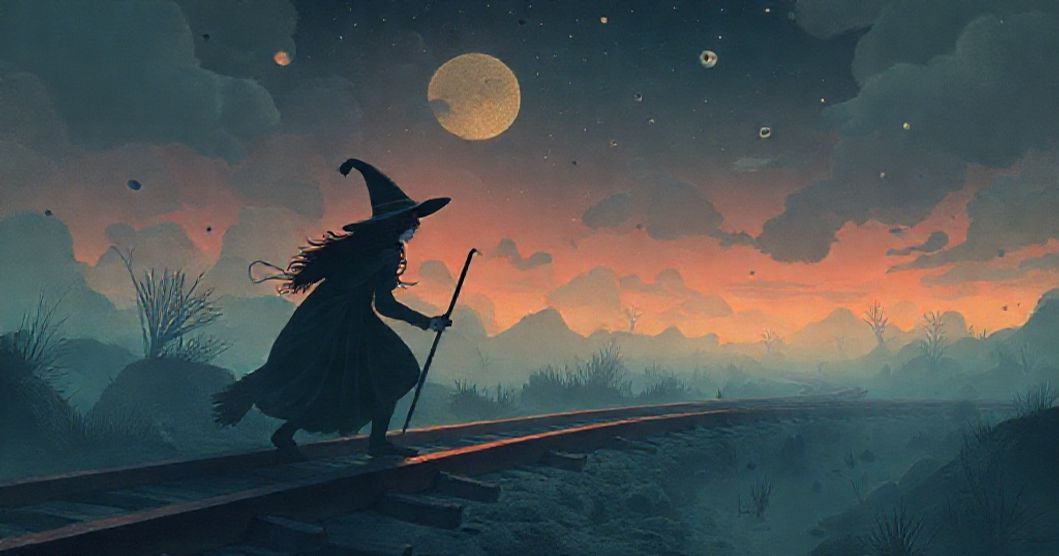
Halfway around, we encountered disturbing sights: small animals—rabbits, squirrels—suspended on sticks, their lifeless forms a macabre offering. At the tree’s base, beneath sprawling roots, an inlet led to a hidden space, and I remembered a prior, identical dream with something profoundly disturbing beneath this oak. My friend wanted to explore, but I warned him against it: ‘A witch lives there.’ He ignored me, and there she was—a teenage girl with black hair, dressed in a dirty, druidic outfit reminiscent of Vikings’ nature-worshipping characters. She greeted him with a hypnotic allure, and I felt the Midsommar-esque dread of being lured into something malevolent. When she crawled from her hut, I shouted at him to flee, but she confronted me, accusing me of interference. Her mother, a typical suburban woman, arrived to pick her up, and the girl immediately framed me: splashing blood on my clothes and producing ‘witchcraft materials’ from my pocket, falsely claiming I was the practitioner. In a panic, I threatened to bring my friends to expose her, triggering her manic transformation. She cursed me, drawing a runic formation with blood and writing ‘CURSE’ in bold letters, giggling maniacally as she declared I was ‘fucked’ forever. When I bluffed about powerful allies, she saw through it instantly.
Want a More Personalized Interpretation?
Get your own AI-powered dream analysis tailored specifically to your dream
🔮Try Dream Analysis FreeAs we walked away, I pleaded for her to relent, but she refused. Her mother, surprisingly, allowed me to join them in their car, where I continued to beg. Then, without warning, a log hurtled from an oncoming truck, shattering the windshield and impaling the mother—yet she remained unharmed. The witch, in the backseat, was decapitated instantly. I woke to call my mother, telling her of the accident, only to realize the mother was alive and the witch dead, her severed head a stark reminder of my subconscious’s darkest projections.
Part 2: Clinical Analysis
Symbolic Landscape: The Witch, Track, and Boundary of Self
The grade school track functions as a powerful symbol of dual identity: once a source of triumphant self-confidence, it now represents the fragility of that identity in adulthood. The 4:35 mile—a time that marked athletic prowess and ‘conquering the world’—contrasts sharply with the dreamer’s current struggle to complete even a lap, reflecting anxiety over lost purpose or diminished capabilities. The track’s grassy expanse, once a field of victory, becomes a liminal space where past glories collide with present insecurities.
The witch under the tree embodies a complex archetype: a figure of nature-based spirituality (druidic, hippie attire) who represents the dreamer’s repressed or misunderstood aspects. Her confrontation with the mother—appearing as a ‘normal suburban mom’—suggests an attempt to normalize chaos, while the witch’s framing of the dreamer as the ‘real witch’ reveals the fear of being falsely accused or misjudged. The mother’s apparent indifference to her daughter’s witchcraft hints at the dreamer’s own tendency to minimize or ignore threatening emotions.
The blood splatter and curse serve as symbolic accusations, transference of blame, and existential dread. The runic formation and the word ‘CURSE’ highlight the dreamer’s fear of irreversible consequences in their creative and professional life—a fear amplified by the sudden rise of AI tools in music production, where even long-established skills feel vulnerable to technological disruption.
Psychological Undercurrents: Shadow Work and Creative Anxiety
From a Jungian perspective, the witch represents the dreamer’s shadow self—parts of the psyche repressed or disowned. The witch’s allure, combined with the dreamer’s inability to stop the friend from entering her domain, suggests a fear of being seduced by external forces or losing control over one’s path. The frat brother, a stand-in for competitive dynamics, embodies the dreamer’s own internal rivalry—both in youth and in adulthood, where success (or lack thereof) is measured against others.
Freud’s theory of dream work illuminates the repressed sexual tension between the dreamer and the frat brother, symbolized by the shared girl. The ‘secret’ they kept mirrors the dreamer’s current struggle to reconcile personal values with professional compromises, particularly in a creative field where algorithms now compete with human-made art. The AI music tools, which generate comparable work in seconds, represent the unconscious fear of being ‘outrun’ or rendered obsolete—a primal anxiety in creative professions.
Neuroscientifically, the dream consolidates recent emotional stressors: the transition to game development, the pressure to ‘break through’ creatively, and the comparison to AI’s rapid progress. The track, once a locus of conscious achievement, becomes a site of unconscious processing, where the dreamer must reassert control over their identity and creative direction.
Emotional Crossroads: Reclaiming Childhood and Adult Identity
The dream’s timing aligns with the dreamer’s professional pivot from music production to game development—a period marked by both excitement and uncertainty. The track, once a symbol of athletic identity, now reflects the loss of that identity and the search for new purpose. The witch’s curse mirrors the existential threat of ‘failing’ in this new venture, where AI-generated content threatens to overshadow human creativity.
The shared history with the frat brother reveals unresolved competitive dynamics: the dreamer’s initial success (beating seniors) versus the brother’s eventual return to haunt the dreamer’s professional life. This dynamic extends to the present, where the dreamer’s fear of being outmaneuvered by AI tools or industry rivals manifests as the witch’s accusation of ‘fucking’ the dreamer’s life.
The mother’s presence, normalizing chaos, suggests the dreamer’s own attempt to rationalize or accept anxiety-inducing situations—a defense mechanism against overwhelming feelings of loss of control.
Therapeutic Insights: From Curse to Empowerment
The dream offers an opportunity to reclaim agency over creative identity. The track, once a symbol of forced victory, can now be reframed as a space for intentional self-expression. The witch, rather than an external threat, represents internalized anxieties about creative worth and the fear of being outpaced by technology. By recognizing this, the dreamer can separate real challenges from existential projections.
Reflection exercises include journaling about past athletic triumphs and their relevance to current creative pursuits, identifying specific comparisons to AI tools as triggers for anxiety, and practicing boundary-setting in professional relationships. The dream’s ‘curse’ can be reinterpreted as a call to action: to define one’s unique value proposition in an increasingly automated world.
FAQ Section
Q: What does the witch’s druidic attire symbolize?
A: The witch’s nature-themed outfit represents the dreamer’s connection to primal, instinctual aspects of creativity and identity—elements they may have neglected in favor of conventional professional paths.
Q: Why does the mother appear indifferent to her daughter’s witchcraft?
A: The mother’s indifference reflects the dreamer’s tendency to normalize or minimize threatening emotions, avoiding confrontation with deeper anxieties about creative vulnerability.
Q: How does the track symbolize the dreamer’s identity struggles?
A: The track’s dual role—triumph vs. struggle—mirrors the dreamer’s current transition: from a ‘champion’ mindset to one of adaptation, where past successes no longer define present worth.