
Part 1: Dream Presentation
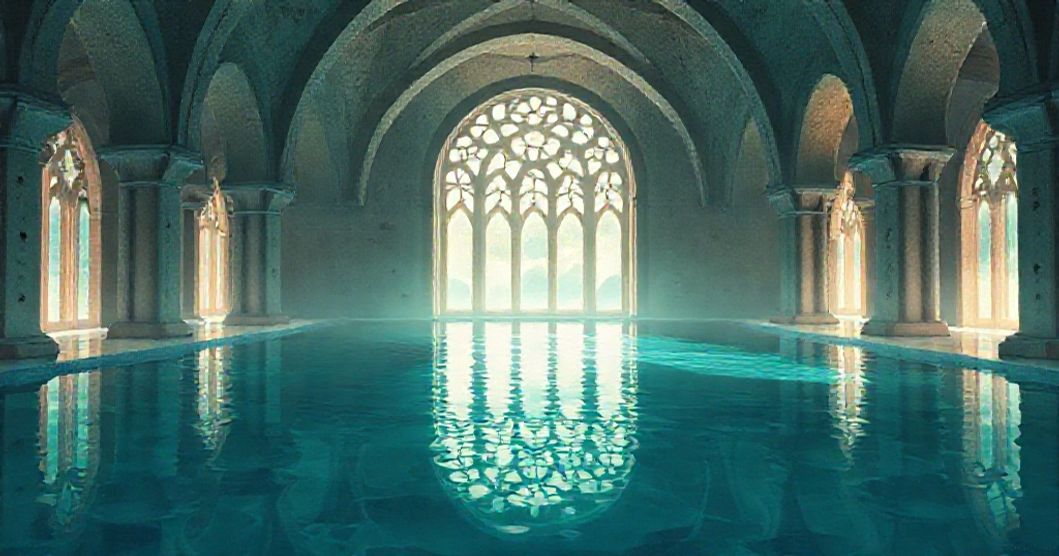
Dreams often materialize as portals into the unconscious, and this particular dream offers a richly symbolic threshold space—a poolroom that transcends its ordinary associations to become a metaphorical landscape of the mind. Unlike the typical billiards hall, this dream’s poolroom stretches upward with cathedral-like grandeur, its vastness evoking both the overwhelming power of the unconscious and the comfort of a familiar yet uncanny space. The blue or purple lighting casts an otherworldly glow, neither fully day nor night, suggesting a liminal emotional state where boundaries between clarity and confusion blur. The water pooling on stone tiles introduces fluidity and movement, while the absence of windows creates a paradoxical enclosure—both confining and expansive. As the dreamer stands at this threshold, the tension between the visible (the illuminated poolroom) and the invisible (the dark expanse beyond) mirrors the ongoing dialogue between conscious understanding and the mysteries of the unconscious.
The rewritten dream narrative captures this liminal quality: a poolroom hallway with cathedral height, blue/purple lights, water on stone tiles, and no windows, evoking a space that feels simultaneously familiar and alien. The water’s presence beneathfoot suggests an emotional undercurrent, while the cathedral height hints at transcendence, and the lack of windows emphasizes internal focus over external reference points. This setting invites exploration of the dreamer’s relationship to their inner world and the unknown.
Part 2: Clinical Analysis
Want a More Personalized Interpretation?
Get your own AI-powered dream analysis tailored specifically to your dream
🔮Try Dream Analysis FreeSymbolic Landscape of the Poolroom
The poolroom itself functions as a primary symbolic element—a threshold space between two realms. In dreamwork, such liminal spaces (between rooms, halls, or physical boundaries) typically represent transition points in the dreamer’s psychological life. The poolroom, a place associated with leisure and social interaction in waking life, here becomes a space of internal exploration rather than external engagement. Its cathedral-like height introduces verticality—a key symbol of transcendence and the elevation of consciousness, suggesting the dreamer may be navigating a period of personal growth or spiritual questioning.
The blue/purple lighting carries significant emotional resonance. Blue often symbolizes calmness, stability, and depth, while purple blends mystery with royalty and transformation. Together, these colors suggest a dreamer experiencing complex emotional states—perhaps a mix of melancholy and introspection, or the tension between rationality and intuition. The lighting’s otherworldly quality (neither fully blue nor purple) reinforces the dream’s liminal nature, where emotional states are in flux rather than fixed.
Water, a recurring symbol in dreams, appears here as a fluid presence on the stone tiles. In dream psychology, water universally represents the unconscious mind—its fluidity, depth, and ability to carry emotional currents. The pooling water in this dream suggests unresolved emotions or thoughts that the dreamer may be navigating rather than avoiding. Unlike a stagnant pool, the rippling water implies movement and change, indicating that these emotions are not static but in a state of flux, requiring attention and processing.
The stone/concrete tiles represent stability and grounding in contrast to the water’s fluidity. This juxtaposition symbolizes the dreamer’s need to maintain emotional stability while allowing for the natural flow of feelings and thoughts. The tiles’ cool, solid texture suggests a foundation of resilience, while the water’s presence hints at the necessity of acknowledging and working with emotional fluidity rather than suppressing it.
The absence of windows is particularly significant. Windows typically symbolize connection to the external world, insight, and perspective. Their absence here creates an enclosed space, suggesting the dreamer may be temporarily turning inward, focusing on internal exploration rather than external validation or influence. This enclosure can also represent psychological boundaries—the dreamer may be creating a safe space to process emotions without external distractions or judgments.
Psychological Undercurrents: Jungian and Freudian Perspectives
From a Jungian perspective, the poolroom as a collective unconscious space reflects the dreamer’s engagement with the Self—the central archetypal figure representing wholeness. The cathedral height embodies the transcendent nature of the Self, while the water represents the collective unconscious, with its depth and mystery. The lack of windows aligns with Jung’s concept of the ‘shadow’—the hidden aspects of the personality that require integration rather than external projection. The poolroom, as a threshold space, invites the dreamer to confront these shadow elements without the comfort of external reference points.
Freudian theory might interpret the poolroom as a repressed desire for leisure and pleasure, with the water symbolizing sexual energy or repressed urges. However, the dream’s uncanny quality (the unexpected water, the lack of windows) suggests a more complex dynamic than simple wish fulfillment. The poolroom, typically a space of social interaction, becomes a solitary threshold, reflecting the dreamer’s internal processing rather than external gratification. The water’s presence could also represent the dreamer’s attempt to ‘dive into’ their emotions rather than surface-level engagement.
Modern cognitive dream research frames dreams as problem-solving mechanisms, where the brain processes emotional information and unresolved conflicts during sleep. The poolroom’s symbolic elements may represent the dreamer’s current challenges: maintaining stability (tiles) while navigating emotional fluidity (water), and the tension between internal focus (no windows) and external exploration. The cathedral height might reflect the dreamer’s elevated perspective or spiritual questioning, suggesting they are seeking meaning beyond immediate circumstances.
Emotional and Life Context: Unpacking the Dreamer’s Psychological State
This dream likely emerges during a period of transition or uncertainty in the dreamer’s waking life. The poolroom’s liminal quality suggests they are navigating a threshold—perhaps a career change, relationship shift, or personal milestone where the future feels both expansive (cathedral height) and uncertain (dark other side). The blue/purple lighting hints at emotional complexity: a blend of mystery and melancholy, or perhaps the dreamer is experiencing a period of introspection after a period of external focus.
The water on the floor may symbolize emotional overwhelm or the need to process feelings that have accumulated without conscious awareness. The dreamer might be avoiding or numbing these emotions, as the water is present but not overwhelming, suggesting a tentative engagement with emotional material. The lack of windows could indicate a desire to withdraw from external pressures, creating a safe space for self-reflection—a psychological retreat during a time of external chaos.
The cathedral height introduces a paradox: while the space feels vast and expansive, it lacks clear boundaries (no windows), creating an enclosed transcendence. This mirrors the dreamer’s experience of feeling both free and confined simultaneously—perhaps in a job that offers creative freedom but limited structure, or in a relationship that feels both nurturing and restrictive.
Therapeutic Insights: Navigating the Poolroom of Self
For the dreamer, this dream offers several therapeutic insights. First, the poolroom as a threshold space invites reflection on current life transitions. The dream suggests that growth requires both acknowledging emotional fluidity (water) and maintaining stability (tiles), rather than choosing one over the other. The cathedral height encourages embracing the vastness of the unconscious, recognizing that complexity and uncertainty are natural parts of self-exploration.
Practical exercises to integrate this dream’s message include journaling about ‘internal poolrooms’—spaces where you feel both confined and free. Ask yourself: What emotions or thoughts are flowing through this internal space? How can you maintain stability while allowing for emotional movement? Another exercise is to visualize the poolroom’s water as a mirror, reflecting emotions you’ve been avoiding, and ask what these reflections reveal about your current needs.
The lack of windows suggests the value of internal focus during periods of uncertainty. Consider creating a physical ‘no-window’ space in your life—a dedicated time for reflection without external distractions. This could be a daily meditation practice, journaling session, or quiet walk where you turn inward rather than outward.
FAQ Section
Q: What does the cathedral height symbolize in this dream?
A: Cathedral height represents the tension between transcendence and enclosure—the dreamer’s experience of feeling both vast and confined. It suggests a spiritual or existential dimension to their current life, where they’re navigating growth while maintaining a sense of groundedness.
Q: Why is water significant in a poolroom setting?
A: Water symbolizes the unconscious mind—its fluidity, depth, and emotional currents. In this dream, it represents unresolved emotions or thoughts requiring attention, with the rippling surface suggesting these emotions are dynamic and changing.
Q: How should I interpret the absence of windows?
A: Windows symbolize external connection and perspective. Their absence suggests the dreamer is temporarily prioritizing internal exploration over external validation, creating a safe space for self-reflection during a period of transition or uncertainty.