
Part 1: Dream Presentation
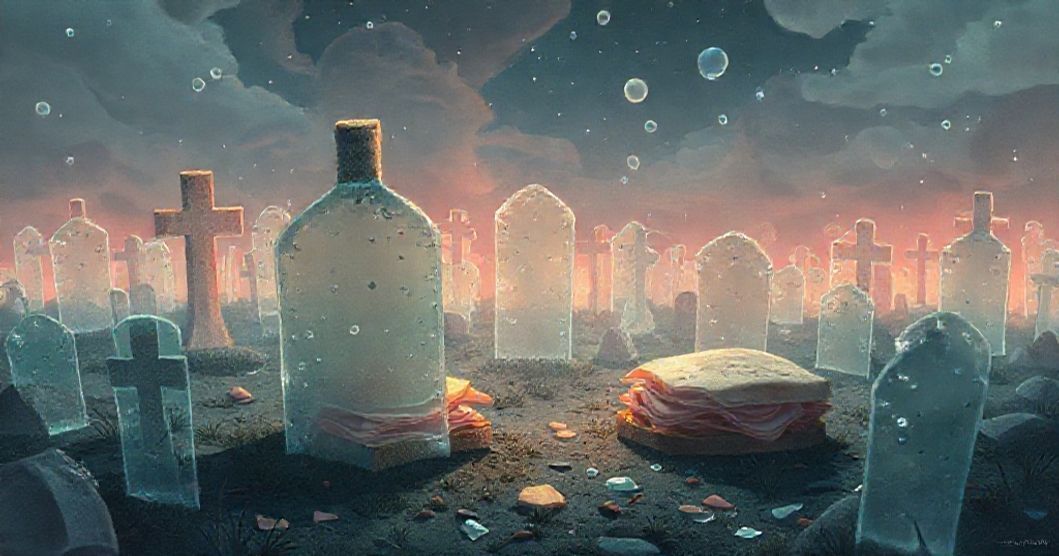
Dreams have long served as the unconscious mind’s cryptic scribblings, blending the mundane with the macabre to create narratives that defy literal explanation yet resonate with emotional truth. This particular dream, with its striking juxtaposition of a glass graveyard and the unexpected task of making ham sandwiches, offers a compelling tableau for exploring the interplay between mortality, memory, and daily responsibility. The dreamer navigates a surreal landscape where ancient tombstones tower like silent sentinels, glass coffins preserve bodies in an unnatural stillness, and the act of preparing sandwiches becomes both a duty and a point of tension between curiosity and compliance.
The rewritten dream narrative—detailing the vast, eerie graveyard with its overcast sky and heavy air, the shimmering glass structure containing preserved figures, and the abrupt transition to a dim room filled with ingredients for sandwiches—captures the dreamer’s internal conflict. The glass coffins, though beautiful in their preservation, evoke unease through their transparency and the paradox of frozen time; the sandwiches, mundane yet urgent, represent the weight of daily obligations that demand attention even as the mind yearns to explore deeper mysteries. This narrative sets the stage for a rich psychological exploration, where each element carries symbolic weight far beyond its literal appearance.
Part 2: Clinical Analysis
Want a More Personalized Interpretation?
Get your own AI-powered dream analysis tailored specifically to your dream
🔮Try Dream Analysis FreeSymbolic Landscape: The Glass Graveyard and Its Inhabitants
The graveyard serves as a foundational symbol of mortality, memory, and the unconscious mind’s engagement with buried emotions. In dreamwork, graveyards often represent areas of the psyche where the past resides—memories, experiences, or relationships that have been “laid to rest” yet retain emotional significance. The glass coffins elevate this symbolism: glass is both transparent and impenetrable, suggesting the dreamer’s attempt to see into their past while maintaining a boundary that prevents full engagement. The perfectly preserved bodies within these coffins symbolize elements of self or relationships that the dreamer has “frozen” in time—perhaps unprocessed grief, unacknowledged trauma, or cherished memories that feel precious but no longer alive in the present moment. Their serenity contrasts with the dreamer’s underlying unease, hinting at a tension between honoring the past and moving forward.
The transition to the room with ham sandwiches introduces a stark contrast between the macabre and the mundane. Sandwiches, as a food item, traditionally symbolize nourishment, connection, and sustenance—both physical and emotional. In this context, they take on additional layers: the act of making sandwiches becomes a metaphor for the dreamer’s need to “feed” something within themselves or others, whether through care, routine, or responsibility. The unseen guests amplify this theme, suggesting that the dreamer feels obligated to fulfill external expectations while simultaneously grappling with internal mysteries.
Psychological Currents: Jungian, Freudian, and Cognitive Perspectives
From a Jungian perspective, the glass graveyard represents the collective unconscious—a repository of shared human experiences, archetypes, and buried memories. The glass coffins embody the shadow self, those aspects of identity we have repressed or avoided, yet which remain visible through the dream’s imagery. The dreamer’s conflict between exploring this shadow (the glass coffins) and fulfilling a mundane duty (making sandwiches) reflects the tension between individuation—the process of integrating unconscious elements—and the ego’s need for structure and routine.
Freudian analysis might interpret the dream as a manifestation of repressed conflicts related to mortality and the fear of loss. The glass coffins could symbolize the dreamer’s attempt to control or preserve something fragile (a relationship, a memory) against the inevitable passage of time, while the sandwiches represent the ego’s need for immediate gratification or “nourishment” that conflicts with deeper, more painful truths. The act of making sandwiches in a dream space that feels both absurd and urgent aligns with the Freudian concept of “dream work,” where the unconscious disguises repressed desires through symbolic imagery.
Cognitively, the dream can be viewed as a processing mechanism for recent experiences. The dreamer may have been reflecting on mortality, loss, or change, and the brain is synthesizing these themes through familiar, everyday imagery (sandwiches) to make them more digestible. The glass coffins, with their unnatural clarity, suggest the dreamer is trying to “see through” the fog of daily life to understand deeper existential questions about legacy, memory, and purpose.
Emotional & Life Context: Confronting the Past While Nourishing the Present
The dream’s imagery likely reflects the dreamer’s current life context, where they may be navigating a period of transition or reflection on mortality. The glass coffins could symbolize relationships or aspects of self that feel “preserved” but no longer alive—perhaps a past career, a lost friendship, or a version of self that has been abandoned. The tension between exploring these preserved elements and fulfilling immediate responsibilities (the sandwiches) suggests the dreamer feels pulled between honoring the past and moving forward.
The emotional tone of the dream—serene yet unsettling, beautiful yet disturbing—mirrors the dreamer’s internal landscape. The graveyard’s stillness contrasts with the urgency of the sandwich-making, representing how the unconscious may present both the need for stillness (processing) and action (engagement). This duality suggests the dreamer is in a phase of life where they are simultaneously grieving or honoring the past while trying to maintain present-moment functionality.
Actionable Integration: Bridging the Macabre and the Mundane
This dream invites several practical reflections for the dreamer. First, journaling exercises can help unpack the specific elements: What relationships or memories feel “preserved” in glass-like clarity? What daily responsibilities feel like “sandwiches”—necessary yet disconnected from deeper purpose? This reflection can illuminate areas where the dreamer is avoiding deeper emotional work while fulfilling external duties.
Mindfulness practices, particularly around the tension between “seeing” and “doing,” can help integrate these themes. When faced with urgent tasks that feel disconnected from larger meaning, pause to ask: What deeper truth might this task be helping me process? This practice bridges the gap between the dream’s symbolic imagery and waking life, transforming routine into purposeful engagement.
Reflective Closing: The Unseen Guests and the Self
The unseen guests in the dream highlight the social dimension of responsibility—the need to nourish relationships and communities while tending to one’s own inner world. The dream suggests that this balance is not always easy; the unconscious may present it as a stark choice between exploration and duty, yet the reality is more nuanced. By acknowledging both the necessity of the sandwiches (daily care) and the allure of the glass graveyard (deeper understanding), the dreamer can begin to integrate these seemingly conflicting aspects of self.
FAQ Section
Q: What does the glass in the dream symbolize beyond its literal meaning?
A: Glass represents transparency and preservation—how we can see into our past/present/future while maintaining a boundary that prevents full immersion. It suggests the dreamer is processing emotions through a lens of clarity while protecting themselves from emotional overwhelm.
Q: Why is the graveyard described as “vast” and “unsettling” rather than terrifying?
A: This suggests the dreamer is approaching mortality not with fear but with curiosity and acceptance. The stillness reflects a willingness to confront the past without immediate panic, indicating psychological resilience in the face of existential questions.
Q: How might the act of making sandwiches repeatedly in the dream relate to waking life?
A: The repetition suggests the dreamer is in a phase of life where certain responsibilities feel inescapable, yet they lack meaning. The dream urges reflection on whether these duties are nourishing or numbing, inviting a reevaluation of purpose within routine.