
Part 1: Dream Presentation
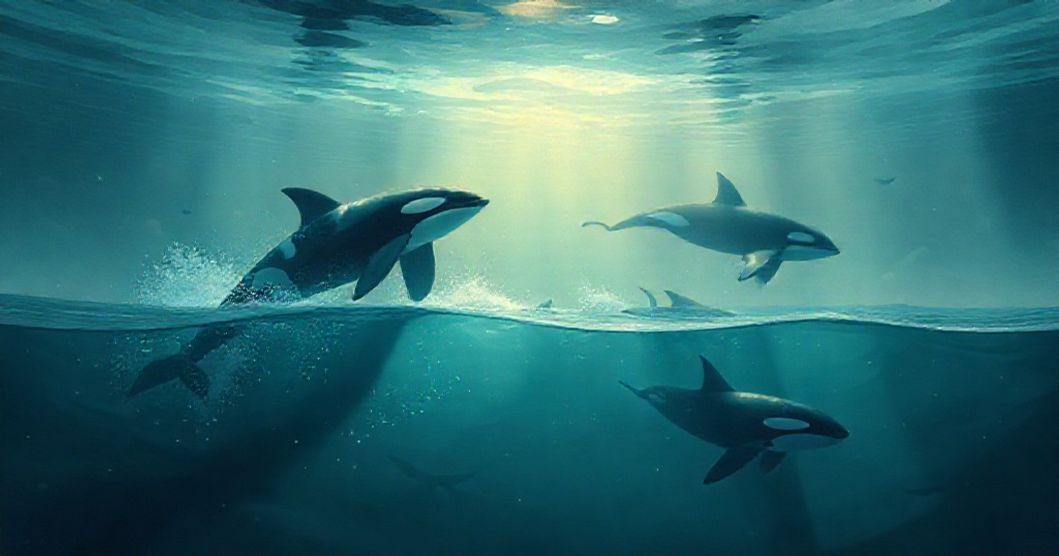
Dreams often serve as portals to our unconscious, revealing truths we might otherwise overlook. This particular dream, vivid and emotionally charged, offers a rich landscape for exploration. Last night, despite my usual array of dreams, one experience lingered with remarkable clarity. I found myself on a small boat alongside my sister, an erratically behaving driver, and another individual I couldn’t quite place. We were navigating from a massive, rocky outcrop—attached to the mainland like a giant gray sentinel—into a narrow stream that emptied into the ocean through a series of metal drains. As we traveled, I noticed a small, wet, and forlorn dog stranded on one of these drains, its expression one of sadness and desperation. I called out to the driver, begging for help, but he was too focused on speed to respond, our boat surging onward. Soon, we entered the open ocean, and the dream shifted dramatically. There, in the middle of the water, the orcas appeared—majestic, powerful, and utterly captivating. Just as I began to process their presence, one orca swam close, gently nibbling my leg as if testing my reaction. I felt a strange mix of fear and fascination, wondering what this encounter might signify, but no answers came in the dream. The driver, sensing my unease, accelerated wildly, diving repeatedly into the water (which wasn’t deep enough to justify such recklessness). Each time we submerged, an orca matched our pace, swimming nose-to-nose with us as we ascended toward the surface. This happened three times, each encounter more intense than the last. During one dive, an orca brushed against my thigh, its movement almost playful, almost tender—a kiss rather than an attack. As the dream ended, I felt both amazed and slightly terrified, yet deeply drawn to these magnificent creatures. I’ve been left wondering what message this dream might hold.
Part 2: Clinical Analysis
Symbolic Landscape: Interpreting the Dream’s Visual Elements
Want a More Personalized Interpretation?
Get your own AI-powered dream analysis tailored specifically to your dream
🔮Try Dream Analysis FreeThe dream’s symbolic landscape is rich with imagery that reflects the dreamer’s inner world. The boat represents life’s journey, with the driver embodying a sense of control or lack thereof—his erratic behavior suggesting uncertainty or external pressures. The large rock mountain attached to the mainland symbolizes stability and rootedness, yet the act of leaving it hints at a desire for change or escape from familiar boundaries. The stream with drains leading to the ocean introduces themes of transition and purification, as drains often symbolize passage between realms or emotional states. The stranded dog on the drain is a powerful symbol of vulnerability and unmet needs; its presence and the dreamer’s attempt to help while the driver ignores it suggest a conflict between compassion and the urgency of moving forward.
The orcas themselves are central to the dream’s meaning. These majestic creatures embody primal power, intuition, and the unconscious mind—Jung might view them as archetypal representations of the shadow or the animus/animus, aspects of the self that demand recognition. Their size and wild nature contrast with the dreamer’s simultaneous fear and fascination, reflecting a relationship with the unknown that is both threatening and alluring. The repeated underwater encounters, where orcas match the boat’s speed and swim nose-to-nose, symbolize a deepening connection with one’s inner depths, as well as the dance between control and surrender.
Psychological Undercurrents: Theoretical Perspectives
From a Jungian perspective, this dream may represent the integration of the shadow self—those parts of ourselves we fear or reject. The orcas, with their wild, untamed nature, could symbolize these hidden aspects that demand attention. The driver’s erratic behavior might reflect the dreamer’s internal conflict between the need to control (represented by the boat) and the pull toward the unknown (the orcas). Freud’s lens might interpret the orca encounters as symbolic of repressed desires or anxieties about intimacy, with the “nibbling” and “kissing” suggesting a mix of attraction and fear of engulfment.
Cognitive dream theory offers another angle, suggesting dreams process unresolved waking concerns. The repeated underwater interactions could represent a pattern of facing fears repeatedly until they are integrated. The dreamer’s simultaneous fear and enthrallment with the orcas mirrors the human experience of confronting powerful emotions or situations that feel both dangerous and transformative. The three underwater encounters may signify three distinct aspects of this process: initial fear, growing familiarity, and eventual acceptance.
Emotional and Life Context: Waking Connections
To understand this dream, we must consider the emotional and life contexts that might trigger such imagery. The driver’s erratic behavior could reflect the dreamer’s relationship with someone in waking life who feels unpredictable or out of control—perhaps a professional, family member, or friend. The inability to help the dog may symbolize unaddressed responsibilities or guilt about not intervening in a difficult situation. The orcas’ presence, both threatening and beautiful, might connect to the dreamer’s relationship with their own power or the fear of unleashing it.
The dream’s emotional tone—frightened yet enthralled, amazed yet slightly terrified—suggests a deep internal tension. The dreamer is drawn to something powerful and unknown, even as it challenges their sense of safety. This duality often arises during periods of significant life change, where the unconscious processes the tension between staying in familiar territory and embracing new experiences. The orcas’ playful “kissing” of the thigh, rather than aggressive attack, indicates a potential for reconciliation between fear and attraction—a sign that the dreamer is open to integrating these opposing forces.
Therapeutic Insights: Practical Reflections
This dream offers several insights for personal growth. First, it invites the dreamer to examine areas of life where they feel torn between control and surrender. The driver’s behavior might signal a need to reassess how they respond to external pressures—perhaps learning to balance action with compassion, as the dreamer did by trying to help the dog despite the driver’s urgency. The orcas’ repeated encounters suggest that confronting fears directly leads to deeper understanding; the three underwater experiences could represent three stages of this process: initial fear, engagement, and integration.
Practical reflection exercises might include journaling about recurring themes of control and vulnerability in waking life. The dreamer could ask themselves: “Where do I feel out of control, and where do I need to surrender?” Visualization practices could help integrate the orcas’ energy into daily life—imagining moments of strength and intuition when facing challenges. Additionally, exploring the relationship with the “driver” figure in waking life might reveal patterns of allowing others to dictate their path, suggesting the need to reclaim agency while maintaining openness to guidance.
FAQ Section
Q: What does the repeated underwater interaction with orcas signify?
A: The orcas matching your speed and swimming nose-to-nose during underwater dives suggests a pattern of confronting fears repeatedly until they become familiar. This could indicate a need to integrate these challenges into your waking life.
Q: How should I interpret the orca’s “kissing” of my thigh?
A: This tender interaction likely represents a positive, playful integration of power and vulnerability. It suggests you can embrace your inner strength without losing your sense of self-compassion.
Q: What does the stranded dog symbolize in this context?
A: The dog represents unmet needs or overlooked compassion. It may indicate a call to balance action (the driver’s speed) with empathy, recognizing that even in life’s rush, small acts of care matter.
Q: Why did the dream end with you feeling both terrified and enthralled?
A: This duality reflects the human experience of growth through confronting the unknown. It suggests you’re on the verge of integrating opposing emotions, finding strength in vulnerability and vice versa.
Q: How can I apply this dream to my waking life?
A: Use the orcas’ energy as a reminder to embrace life’s wild, powerful moments while maintaining self-awareness. The driver’s behavior invites you to reassess control patterns, balancing action with compassion.
Q: What if I have recurring dreams about orcas?
A: Recurring orca dreams often signal unresolved issues related to power, intuition, or transformation. Consider working with a therapist to explore these themes in depth, using journaling and visualization to integrate their lessons.