
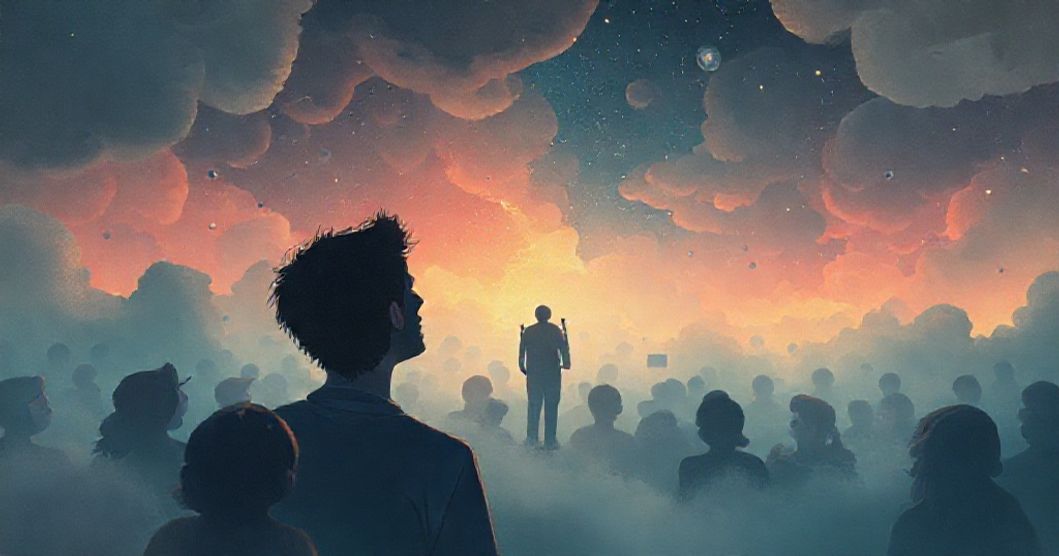
Part 1: Dream Presentation
Dreams often serve as mirrors reflecting the intricate interplay between our conscious intentions and the mysterious workings of our unconscious mind. In this particular nocturnal narrative, the dreamer encountered a striking paradox: the experience of surprise within a world they believed they had entirely created. The dream unfolded in two distinct yet thematically linked scenes that blurred the boundaries between narrative design and spontaneous revelation, inviting profound questions about the nature of dream consciousness.
The first scene materialized as a protest outside an IVF clinic. The air crackled with tension, demonstrators gathered in silent defiance, their signs held aloft in stark contrast to the clinical white of the building. I observed from a distance, feeling the weight of their purpose without fully grasping its personal significance, as if the clinic represented something both sacred and controversial in my subconscious landscape. The sounds of the crowd, though indistinct, carried an undercurrent of urgency—a murmur of voices and the occasional raised chant.
The second scene shifted abruptly to a bedroom where two characters from a television show I’ve been watching were asleep in bed. These characters, who in the show are navigating the emotional and physical journey of in vitro fertilization, appeared vulnerable and at rest beneath soft, dimly lit covers. Suddenly, a loud, insistent banging shattered the stillness—the sound of fists or stones against glass. The male character stirred, his eyes widening as he rose from sleep. He moved toward the window with deliberate, hesitant steps, then pulled back the blinds. What he (and I, as the dream observer) saw was a visceral continuation of the protest scene: the very same IVF demonstrators now outside his window, pelting it with stones. The shock registered instantly—the dreamer (me) felt a jolt of surprise, as if this connection between the distant protest and the personal intrusion was not something I had anticipated when I first conjured the dream.
Want a More Personalized Interpretation?
Get your own AI-powered dream analysis tailored specifically to your dream
🔮Try Dream Analysis FreeAs the dream concluded, I found myself grappling with how such a revelation could occur within a dream I believed I was directing. The experience raised fundamental questions: How can the creator of a dream simultaneously be surprised by its unfolding? What does this paradox reveal about the nature of dream consciousness?
Part 2: Clinical Analysis
Symbolic Landscape: Unpacking Dream Imagery
The dream’s symbolic landscape is rich with layered meanings that invite exploration beyond surface-level observations. The IVF clinic protestors represent a powerful archetype of collective judgment and moral conflict—fertility treatments often spark passionate debate between those who view them as life-giving and those who see them as ethically questionable. In this dream, the protestors materialize as both external critics and internal conflicts, their presence outside the clinic and then at the bedroom window suggesting an inescapable confrontation with these tensions.
The TV show characters, navigating IVF in their fictional lives, serve as a bridge between the dreamer’s external experiences and internal processing. When they appear in the dream, they are asleep—representing vulnerability and the unconscious mind’s natural state of receptivity. The window, a threshold between interior and exterior spaces, becomes a portal through which these symbolic tensions intrude, with stones as a more aggressive form of communication than words alone. Stones, traditionally symbols of protection or aggression in dreams, here function as a disruptive force, shattering the safety of the bedroom and forcing confrontation with the dreamer’s own attitudes toward fertility, choice, and societal judgment.
The dream’s surprise element itself is a powerful symbol. In waking life, surprise often indicates something unexpected or unacknowledged breaking into awareness. In dreams, this can represent the unconscious’s tendency to reveal aspects of ourselves we are not yet ready to confront—even if we believe we are "creating" the dream. The dream’s structure, where the protest scene precedes the bedroom confrontation, suggests a narrative chronology that the dreamer later questions, revealing how the mind constructs coherence retroactively—a phenomenon known as confabulation in dream psychology.
Psychological Perspectives: Layers of Dream Interpretation
To understand this dream, we can draw from multiple psychological frameworks that illuminate different aspects of its meaning. From a Freudian perspective, the IVF clinic and protestors may represent repressed anxieties about fertility, societal judgment, or the pressure to conform to certain reproductive norms. The characters from the TV show, appearing in the dream, could be projections of the dreamer’s own desires or fears about similar experiences, as the unconscious often incorporates external media into its symbolic language.
Jungian psychology offers a complementary lens, suggesting the dream reflects the collective unconscious’s archetypal themes around creation, destruction, and the shadow self. The protestors might embody the shadow aspect of societal attitudes toward reproductive choices, while the window/stone imagery represents the shadow’s intrusion into the dreamer’s conscious awareness. Jung also emphasized synchronicity, and the connection between the protest scene and the bedroom confrontation could be seen as a meaningful coincidence—a symbolic "message" from the unconscious to the conscious mind about unresolved tensions.
Cognitive neuroscience provides another perspective, viewing dreams as a byproduct of the brain’s information processing during sleep. The dreamer’s confusion about the dream’s chronology aligns with research showing that dreams often construct false memories or confabulate narrative coherence, even when the original experience was fragmented. The feeling of surprise, in this context, may stem from the brain’s attempt to make sense of disconnected neural activity by retroactively assigning meaning to the sequence of events—a natural function of the brain’s narrative construction during sleep.
Emotional & Life Context: Fertility, Creation, and Self-Awareness
The dream’s focus on IVF suggests a deep engagement with themes of creation, choice, and societal pressure. The dreamer may be personally navigating fertility challenges, considering IVF, or reflecting on the broader cultural debates surrounding reproductive technology. The TV show characters, who are also going through IVF, serve as a mirror for the dreamer’s own emotional state—perhaps anxiety about the process, fear of judgment, or hope for a desired outcome.
The paradox of being both dream creator and dreamer experiencing surprise reveals a tension between the conscious self’s desire to control or understand the dream and the unconscious’s autonomous storytelling. This tension often arises when we project our waking self into the dream, assuming we direct its course entirely—a common misconception. The dreamer’s three potential explanations highlight this internal conflict: the separation of creator and experiencer, the construction of narrative chronology, or the presence of surprise as a qualitative feeling without conscious intent.
In waking life, this could reflect the dreamer’s broader experience of feeling caught between different aspects of self—perhaps between the rational, controlling self and the vulnerable, reactive self. The protestors’ intrusion into the private bedroom space mirrors how external pressures (from society, media, or personal expectations) can feel invasive, even when we believe we are in control of our internal world.
Therapeutic Insights: Embracing the Unconscious’s Wisdom
This dream offers several therapeutic insights for the dreamer. First, it suggests the importance of recognizing the limits of conscious control over our internal experiences, even in dreams. The feeling of surprise can be a signal that the unconscious has insights or emotions we are not yet acknowledging in waking life. The IVF clinic and protestors may be urging the dreamer to examine their attitudes toward reproductive choices, societal judgment, or personal vulnerability.
Reflective exercises could include journaling about current attitudes toward fertility, examining media consumption (particularly the TV show’s portrayal of IVF), and exploring how external pressures influence self-perception. By bringing these unconscious tensions into conscious awareness, the dreamer can begin to process conflicting emotions rather than experiencing them as external intrusions.
For long-term integration, the dream encourages developing a more fluid relationship with the unconscious—recognizing that dreams are not passive creations but collaborative expressions of our entire psyche. This requires a shift from trying to "direct" dreams to becoming more receptive to their messages, even when they reveal aspects of ourselves we find surprising or uncomfortable.
FAQ Section: Clarifying Dream Mysteries
Q: Why would the dreamer feel surprised if they "created" the dream?
A: Dreams involve the unconscious mind, which operates independently of conscious control. Even if you perceive yourself as directing the dream, the unconscious often introduces unexpected elements, creating the illusion of surprise while still being part of the dream’s construction.
Q: How does the TV show characters' presence affect the dream’s meaning?
A: TV characters in dreams often represent projections of your own desires, fears, or current life themes. Their inclusion here suggests the dreamer is processing similar fertility experiences or societal pressures, using the show as a narrative vehicle for deeper personal reflection.
Q: What does the stone-throwing at the window symbolize?
A: Stones represent forceful, inescapable communication—your unconscious may be urging you to confront uncomfortable truths about fertility, judgment, or personal boundaries that feel invasive in waking life. The window as a threshold emphasizes how these issues intrude into your private life.