
Part 1: Dream Presentation
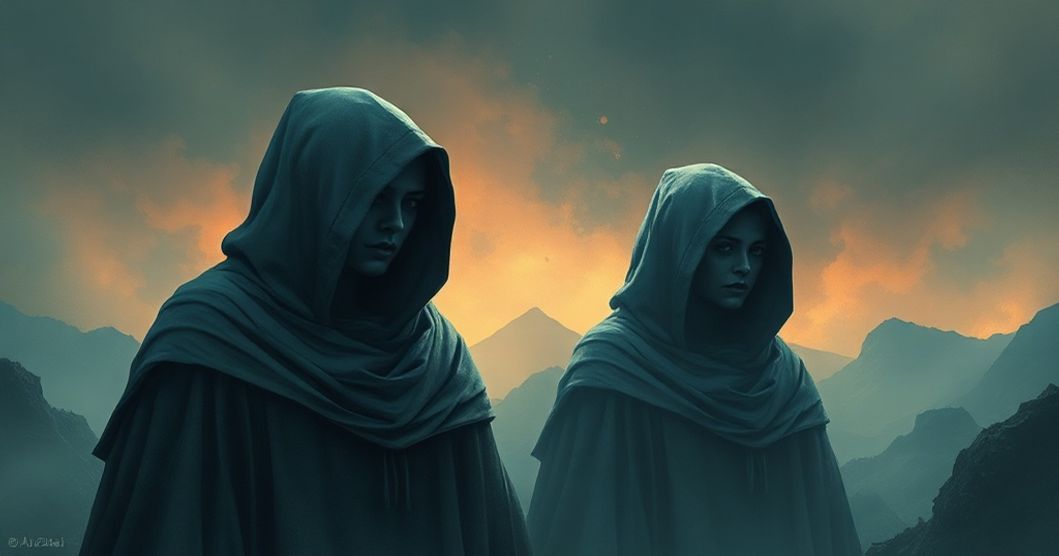
Dreams often serve as mirrors to our inner landscape, reflecting unconscious fears, desires, and unresolved questions. In this case, the dreamer’s recurring encounters with hooded figures in garden settings reveal a powerful symbolic language that demands exploration. The garden, a space of growth and reflection in waking life, transforms into a threshold between conscious awareness and the unconscious in this dream. The hooded figures, their faces hidden yet presence palpable, introduce mystery and uncertainty, while their deliberate movement and prayer-like gesture suggest a complex interplay of protection and supplication.
The dream unfolds in a garden bathed in moonlight, its dew-kissed paths and jasmine-scented air creating a sensory landscape that blends familiarity with unease. The hooded figures move slowly, hands clasped in a gesture that evokes both reverence and accusation. Their silent gaze and subsequent departure mirror the dreamer’s internal dialogue: a confrontation with the unknown followed by a tentative release of tension. The lingering fear upon waking suggests this encounter carries emotional weight, signaling that whatever these figures represent, they touch on deeply personal themes.
Part 2: Clinical Analysis
Want a More Personalized Interpretation?
Get your own AI-powered dream analysis tailored specifically to your dream
🔮Try Dream Analysis FreeThe Symbolic Language of Hooded Figures and Garden Spaces
Hooded figures in dreams often embody the shadow archetype—a Jungian concept representing repressed aspects of self. These figures’ anonymity strips away societal masks, revealing raw, unfiltered parts of the psyche. The hood, in particular, functions as a barrier between the conscious and unconscious, hiding what the dreamer may avoid facing in waking life. The garden setting amplifies this liminal quality: gardens symbolize growth, transition, and the boundary between the natural world and human construction. In this dream, the garden becomes a threshold space where the dreamer confronts inner truths.
The prayer-like gesture introduces psychological duality. Hands clasped in supplication suggest a plea for guidance or protection, while their rigid posture hints at judgment or accountability. This tension reflects the dreamer’s relationship with vulnerability—simultaneously seeking support and fearing exposure. The figures’ movement, deliberate and unhurried, mirrors the slow process of self-discovery; their departure signals both resolution and lingering uncertainty.
Psychological Frames: Understanding the Unconscious Encounter
From a Jungian perspective, these hooded figures may represent the shadow self—parts of the psyche the dreamer has disowned or suppressed. The garden, as a liminal space, becomes a meeting ground between conscious awareness and the shadow, where the dreamer must engage with these hidden aspects. The shadow’s appearance in dreams often arises when the unconscious demands integration of these neglected parts, and the hooded figures’ silent scrutiny may symbolize this call to self-examination.
Freudian theory offers another lens: the figures could represent repressed fears or unresolved conflicts. The intense fear experienced during and after the dream aligns with Freud’s emphasis on dreams as disguised expressions of unconscious anxieties. The figures’ anonymity might symbolize the dreamer’s inability to name or address specific fears, rendering them more powerful and threatening.
Modern neuroscience frames dreams as threat simulation—a evolutionary adaptation where the brain rehearses potential dangers during sleep. In this case, the hooded figures may represent a simulated threat, triggering the amygdala’s fear response. This aligns with the dream’s lingering emotional impact, suggesting the brain is processing a real, unacknowledged fear in waking life.
Emotional Resonance: Unpacking the Lingering Fear
The dream’s emotional core lies in the tension between fear and recognition. The hooded figures’ presence isn’t merely terrifying; it’s unsettling in its ambiguity, leaving the dreamer with a sense of unspoken judgment. This echoes real-life experiences where uncertainty triggers anxiety—perhaps the dreamer faces a situation requiring spiritual or emotional discernment. The garden, typically a safe space, becomes threatening, reflecting internal conflict between comfort and growth.
The figures’ deliberate movement and eventual departure mirror the dreamer’s relationship with vulnerability. One figure leaves, suggesting partial resolution, while the second lingers, indicating unresolved tension. This duality hints at a struggle between confronting fears and seeking safety—a common dynamic during periods of personal growth or transition.
Therapeutic Insights: Bridging Dream and Waking Life
This dream invites the dreamer to explore the unknown aspects of self that feel threatening yet necessary for integration. Journaling exercises can help unpack the figures’ meaning: writing down emotions triggered by the dream and associating them with waking life themes (e.g., career uncertainty, spiritual questioning). Reflecting on the garden’s role—perhaps a place of past growth or unmet potential—can reveal areas needing attention.
Mindfulness practices that cultivate self-compassion can reduce the fear associated with shadow encounters. By acknowledging the dream’s message without judgment, the dreamer begins to see the figures not as enemies but as guides. Meditative visualization, where the dreamer imagines approaching the figures with curiosity rather than fear, can transform the dream’s tension into dialogue.
FAQ Section
Q: What does it mean to dream of hooded figures watching me?
A: Hooded figures often symbolize unknown aspects of self or spiritual inquiry. They may represent the shadow archetype, urging you to confront suppressed fears or truths. The