
Part 1: Dream Presentation
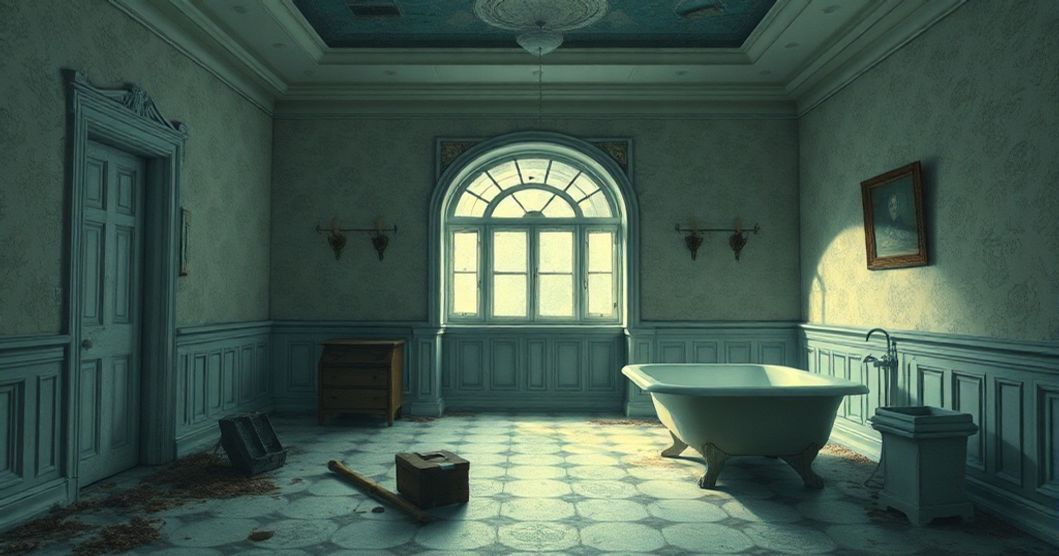
Dreams often serve as portals to our unconscious, revealing truths we might not yet name in waking life. Two weeks ago, I encountered such a portal in a dream that blended historical evocation with personal mystery. In the dream, I found myself in an abandoned Eastern European palace, its once-grand structure reduced to exposed foundations, the remaining bricks scattered like forgotten memories across a dusty, uneven floor. The air hung thick with the scent of aged stone and dust, every step kicking up a fine, gray haze that settled on surfaces like a forgotten veil. In my hand, I clutched a heavy crowbar, its surface a dark greyish-red that seemed to absorb light, its weight a constant reminder of physical effort even in sleep. I walked slowly, drawn by an inexplicable urgency, through the palace’s decaying halls, my breath steady yet increasingly labored as if I carried a weight beyond the crowbar itself. Then, without warning, I stopped before a massive, ancient bathtub—dirty, its porcelain pitted with age, and slick with a layer of grime and grease that glistened under the faint, diffused light filtering through the palace’s broken windows. The tub sat alone in the middle of this derelict space, as if placed there by some forgotten hand. I stood completely still, my own body surprisingly clean despite the surrounding dust and the crowbar’s heavy presence, yet I could feel my breath coming in heavy, labored gasps, as if the weight of the moment itself was pressing against my chest. I had no idea what this scene meant, but the dream lingered in my mind like an unsolved puzzle, its details too vivid to dismiss.
Part 2: Clinical Analysis
Symbolic Landscape: The Palace and Foundations
Want a More Personalized Interpretation?
Get your own AI-powered dream analysis tailored specifically to your dream
🔮Try Dream Analysis FreeThe abandoned Eastern European palace serves as a powerful symbol of historical identity and neglected potential. In dream imagery, palaces often represent the self as a constructed identity—once grand, now in decay. The exposed foundations suggest a search for core truths beneath surface appearances, a common theme in dreams of self-exploration. Eastern European architecture, with its rich historical layers, may evoke ancestral or cultural roots, suggesting the dreamer is confronting questions of heritage or legacy. The dust and decay symbolize a past self or environment that has been left behind, its grandeur now diminished yet still present in memory.
The crowbar, a tool of force and transformation, carries multiple symbolic weights. Its dark greyish-red hue hints at emotional intensity or repressed energy—red often signifying passion or anger, while the greyish tone suggests emotional distance or unprocessed grief. In dream work, tools typically represent the dreamer’s agency: the crowbar here may symbolize the desire to actively shape one’s future or confront obstacles. The physical heaviness of the crowbar, despite being held in sleep, mirrors the perceived burden of responsibility or past obligations the dreamer may carry.
The bathtub, a site of both physical and emotional cleansing, becomes particularly intriguing in this context. A large, dirty, greasy tub in an abandoned palace creates a paradox: the dreamer is clean while the tub is unclean, suggesting a tension between self-perceived purity and environmental decay. Baths in dreams often signify emotional rebirth or the need to shed old skin, but the tub’s neglect here hints at a forgotten or avoided process of purification. Its placement in the middle of the palace, isolated and forgotten, suggests the dreamer may be avoiding a critical act of self-reflection or emotional release.
Psychological Undercurrents: Jungian and Contemporary Perspectives
From a Jungian perspective, the “older self” (21-22 years old) represents the shadow self—the aspects of personality we’ve disowned or left behind. The palace as a collective unconscious space houses archetypal forces: the crowbar could be the active psyche attempting to excavate buried truths, while the bathtub symbolizes the integration of the unconscious feminine or masculine aspects needing recognition. The dreamer’s physical cleanliness amidst decay aligns with Jung’s concept of the “integrated self,” maintaining core values even as the external world crumbles.
Freudian theory might interpret the crowbar as repressed aggressive energy or the dreamer’s attempt to break free from societal constraints, while the bathtub could symbolize unresolved childhood conflicts or anal fixation—though modern dream analysis tends to move beyond literal Freudian interpretations. Cognitive neuroscience offers another lens: dreams process recent emotional experiences, and the two-week timeframe likely relates to a period of significant transition (e.g., career shifts, relationship changes, or identity exploration). The palace’s decay may reflect the dreamer’s internal sense of instability or disconnection from their past.
Emotional and Life Context: The Dreamer’s Inner Landscape
The dream’s emotional tone—heavy breathing, isolation, and confusion—aligns with waking life experiences of uncertainty or transition. The “older self” figure suggests reflection on identity development: at 21-22, many people stand at a crossroads, questioning who they are becoming versus who they were. The abandoned palace could represent a past environment or social context that no longer feels authentic, prompting the dreamer to confront whether they’ve outgrown certain roles or relationships.
The crowbar’s weight might mirror real-world pressures: the burden of responsibilities, the fear of making the wrong choices, or the effort required to pursue personal goals. The dreamer’s physical cleanliness despite the palace’s decay hints at resilience—maintaining integrity even in chaotic circumstances. This could reflect the dreamer’s unconscious belief that they are fundamentally good or pure, even as external circumstances feel unclean or overwhelming.
The bathtub’s uncleanliness in a forgotten space suggests the dreamer may be avoiding emotional work. Perhaps there are relationships, past mistakes, or emotional patterns that need attention but feel too difficult to address directly. The dream’s urgency—the heavy breathing, the sudden stop before the tub—implies the psyche is signaling that avoidance is no longer possible.
Therapeutic Insights: Embracing the Unconscious Call
This dream invites the dreamer to recognize their active role in shaping their future while honoring their past. The crowbar urges intentional action: it’s not enough to feel burdened by the past; the dream suggests the need to act on those feelings, whether through setting boundaries, pursuing neglected passions, or confronting unresolved issues. The bathtub, despite its dirtiness, signals an opportunity for emotional purification—even small acts of self-reflection can begin the process of cleansing.
Practical reflection exercises include journaling about current life transitions, identifying which “palace spaces” (roles, relationships, environments) feel abandoned, and what tools (the crowbar) the dreamer can use to reclaim purpose. Mindfulness practices, such as breathwork to address the heavy breathing, can help the dreamer connect with their body’s signals of emotional strain.
Long-term integration involves acknowledging that growth requires both action (the crowbar) and reflection (the bathtub). The dream’s message is not one of fear but of invitation: the abandoned palace is not a place of loss but of potential, and the bathtub, though dirty, is a vessel for renewal. By honoring this paradox, the dreamer can move from confusion to clarity, transforming the dream’s mystery into actionable self-awareness.
FAQ Section
Q: Why did I dream about an older self in an abandoned palace?
A: The “older self” represents the self you’re becoming, while the palace symbolizes a past environment or identity you’ve outgrown. The dream reflects questions about legacy, purpose, and whether you’re living authentically.
Q: What does the dirty bathtub symbolize in this context?
A: The unclean tub suggests unresolved emotional issues or past mistakes needing attention. Its location in the palace implies these issues have been neglected, and the dream urges you to address them through self-reflection.
Q: Why was I clean despite the palace’s dust and the crowbar’s weight?
A: Your cleanliness represents your core integrity—you maintain essential values even in chaos. The crowbar’s weight mirrors real-world burdens, while your purity signals resilience amid life’s decay.