
Part 1: Dream Presentation
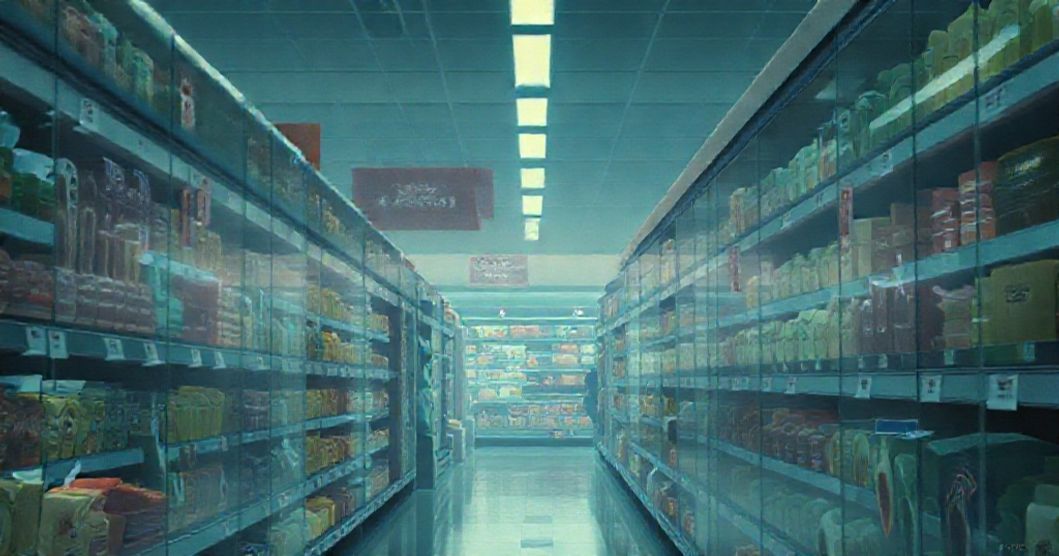
Dreams often infiltrate our consciousness like unexpected shadows, revealing truths our waking minds cannot articulate. This particular dream defies the usual amnesia that blankets most sleep experiences, emerging as a sharp, visceral memory that lingers even after daylight. The dreamer finds themselves in a grocery store produce section—a space of ordinary routine and familial comfort—transformed into a site of primal unease through the introduction of an uncanny figure. Standing beside her mother, the dreamer navigates the familiar act of shopping until maternal fear cuts through the mundane. The older woman’s unblinking gaze, twisted posture, and fixed stare shatter the safety of the grocery aisle, activating the dreamer’s deepest survival instincts. This narrative, while rooted in a specific nightmare, speaks to universal themes of vulnerability, maternal protection, and the uncanny nature of human attention.
The dream unfolds with precise, sensory details: the fluorescent-lit grocery store, the texture of produce, the sound of distant chatter, and the tactile fear of the older woman’s gaze. The dreamer’s initial calm, disrupted by maternal alarm, mirrors the transition from ordinary life to existential threat. The abrupt shift from a safe domestic setting to a space of invasive attention reveals how dreams often repurpose everyday environments to confront our deepest psychological undercurrents.
Part 2: Clinical Analysis
Want a More Personalized Interpretation?
Get your own AI-powered dream analysis tailored specifically to your dream
🔮Try Dream Analysis FreeThe Uncanny Gaze: Symbolism of the Staring Woman
The older woman’s unblinking stare represents one of the most potent symbols in dream psychology: the uncanny presence. Sigmund Freud identified the uncanny as that which “threatens to become something familiar and yet remains alien,” and this figure embodies that paradox. Her twisted posture and fixed gaze violate social norms of eye contact, which typically involve mutual acknowledgment and respect. In dreams, such violations often signal repressed anxieties about judgment, exposure, or loss of control. The woman’s age and gender may also evoke archetypal fears of aging or maternal authority—her stare could symbolize the weight of societal expectations or the critical eye of others. Her positioning “slightly off to the right” introduces spatial dissonance, a common dream motif indicating psychological discomfort with peripheral threats.
The grocery store itself functions as a liminal space—a threshold between public and private, safety and vulnerability. In this setting, the dreamer’s interaction with maternal authority (represented by her mother) intersects with the uncanny figure’s invasive presence, creating a symbolic collision of comfort and terror.
Maternal Fears and the Grocery Aisle: Psychological Layers
Carl Jung’s concept of the shadow archetype offers another lens: the older woman may represent the dreamer’s unconscious shadow—the parts of the self we fear or reject. Her unblinking gaze could symbolize the shadow’s demand for attention, forcing the dreamer to confront aspects of themselves they’ve avoided. Alternatively, the mother’s role as the “indicator” of danger reflects the dreamer’s internalized maternal voice, signaling threats to safety. In Jungian terms, the mother archetype often embodies both nurturing protection and critical discernment, and her terror here may reflect the dreamer’s struggle to reconcile maternal love with the harsh realities of adulthood.
Freudian theory might frame this as a manifestation of repressed anxieties about loss or mortality. The older woman’s age could symbolize the dreamer’s fear of aging or losing loved ones, while the grocery store’s ordinary setting grounds this fear in everyday life. The dream’s abrupt awakening mirrors the ego’s defense against overwhelming unconscious content—our minds cannot process such primal fear without waking.
Emotional & Life Context: Everyday Anxieties in a Nightmare
The dreamer’s comment about rarely remembering dreams but always recalling nightmares suggests a pattern of emotional sensitivity to threat. This pattern often emerges in individuals with heightened amygdala activity, which processes fear and anxiety in sleep. The grocery store scenario, a space of routine and safety, becomes a battleground for deeper anxieties: perhaps recent stress, relationship tensions, or existential uncertainty. The dream’s timing—occurring during a period of psychological vulnerability—amplifies its impact.
The uncanny nature of the woman’s stare may also reflect modern anxieties about digital surveillance or the loss of privacy in public spaces, even in a pre-digital context. The dream’s visceral quality suggests the dreamer is processing something in waking life that feels invasive or judgmental—perhaps criticism from others, self-doubt, or fear of being seen without a mask.
Therapeutic Insights: Processing the Uncanny
Dreams like this offer opportunities for self-reflection rather than literal interpretation. The dreamer might benefit from journaling exercises that explore: What relationships or situations feel “staring” at them with unblinking intensity? What maternal or societal expectations feel oppressive?
Mindfulness practices could help integrate this fear into daily life. By acknowledging the physical sensations of anxiety (racing heart, tight chest) without judgment, the dreamer can develop resilience against such threats. Creative visualization—imagining the woman’s gaze as a source of insight rather than terror—might reframe the nightmare’s message.
Additionally, exploring the maternal relationship could reveal underlying dynamics. Is the dreamer struggling with autonomy versus dependence? Does the mother figure represent protection or constraint? These questions invite dialogue with the maternal archetype within, either through journaling or, if possible, real-world conversation.
FAQ Section
Q: Why did the woman’s unblinking stare feel so threatening?
A: Unblinking eye contact violates social norms of reciprocity and safety, triggering our primal fear of being watched without consent. In dreams, this often symbolizes internalized judgment or repressed anxieties about exposure.
Q: What does the grocery store setting symbolize?
A: The grocery store represents ordinary life and safety, making the nightmare’s intrusion more unsettling. It symbolizes how threats can emerge even in spaces we perceive as secure, reflecting real-world anxieties about unexpected danger.
Q: How should I process this type of recurring nightmare?
A: Focus on grounding techniques for anxiety, journaling to identify patterns, and exploring potential triggers in waking life. The dream’s message is likely about confronting fears rather than literal danger, offering an opportunity for emotional growth.