
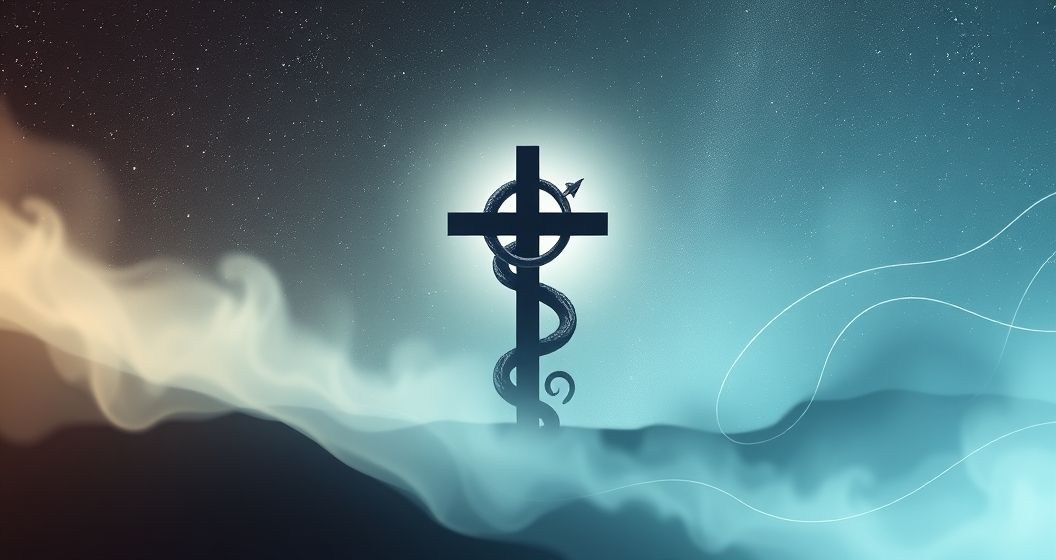
Core Symbols: The Cross, Snake, and Whispering Skies
The cross, as a universal symbol, bridges earth and sky, matter and spirit, representing both sacrifice and renewal. In Christian tradition, it signifies redemption; in Eastern mysticism, it echoes the balance of yin and yang. When paired with a snake, this intersection deepens: the serpent, often linked to transformation (Kundalini energy, Ouroboros) or primal wisdom (Asclepius, the Greek god of healing), introduces tension between spiritual elevation and instinctual self. The snake’s presence beneath the cross suggests a primal force seeking integration with the sacred, while the “whispering skies” elevate the scene beyond the physical, framing it as a dialogue between the conscious and the divine.
Whispers, not shouts, carry the dream’s emotional weight. They represent the subconscious’s soft, intuitive voice—the “still small voice” of intuition or suppressed truth. In dreams, whispers rarely demand action; they invite reflection. The cross beneath the snake might symbolize a spiritual framework (a moral compass, belief system) being tested by primal urges (fear, desire, or unacknowledged power). Together, these elements create a visual metaphor for the human experience: navigating between structure and spontaneity, faith and feeling.
Psychology Lens: Archetypes, Emotions, and the Unconscious
Want a More Personalized Interpretation?
Get your own AI-powered dream analysis tailored specifically to your dream
🔮Try Dream Analysis FreeCarl Jung viewed dreams as messages from the collective unconscious, where symbols like the cross and snake are archetypes—universal images reflecting shared human experiences. The cross could represent the “Self,” the psyche’s attempt to integrate opposites; the snake, the “Shadow,” the parts of ourselves we’ve repressed or feared. Their interaction in the dreamscape mirrors the psyche’s work: integrating light and dark, sacred and profane.
Neuroscience adds another layer: during REM sleep, the amygdala processes emotional memories, while the prefrontal cortex remains quiet. Dreams like this often arise when unresolved emotions (fear of judgment, spiritual doubt) need processing. The snake’s movement—coiling, slithering, or still—reveals emotional tone: calm might signal acceptance, while tension could reflect inner conflict. Whispers, in this context, are the brain’s way of rehearsing how to speak to the Self without waking us fully.
Culturally, the cross-snake motif appears in diverse traditions: Hinduism’s Naga deities (snakes as protectors of sacred sites), Native American pipe ceremonies (smudging as a bridge between worlds), and even Gnostic texts where the serpent is the “divine spark” in humanity. These echoes remind us: this dream speaks to universal spiritual hunger, not just personal belief.
Life Triggers: When the Subconscious Speaks
This dream often surfaces during pivotal life moments: spiritual questioning (Is my path meaningful?), identity shifts (leaving a role, changing values), or emotional upheaval (grief, loss, or unmet expectations). The cross might represent a lost anchor—a belief system, relationship, or purpose—while the snake symbolizes a primal part of you demanding attention: anger, creativity, or suppressed passion.
Consider a recent career shift: the cross could symbolize old professional “rules” you’re rejecting, while the snake represents your untapped creativity. Whispers might urge you to “listen to the quiet voice” of intuition over external validation. Or after a breakup, the cross could be your need for emotional safety, the snake your fear of vulnerability, and the skies your longing for connection.
The key trigger is internal conflict: when the “sacred” (your ideals, values) clashes with the “primal” (your raw, unfiltered self). The dream is the subconscious’s way of saying, “You can’t have one without the other.”
What To Do Next: From Dream to Daily Life
Short-Term Reflection: Unpack the Details
Start by journaling: What did the snake do? Was it coiling protectively, slithering away, or confronting you? How did the cross feel—warm, heavy, or distant? Note emotions: fear, awe, calm? The snake’s color (gold for wisdom, black for shadow) and the sky’s hue (stormy, clear) add clues. Ask: What part of my life feels “sacred” but neglected? What instinctual part of me is trying to speak?
Medium-Term Experimentation: Bridge the Gap
If the cross feels like a lost ideal, revisit it gently: Is there a practice (meditation, art, prayer) that connects you to that value? If the snake is a repressed energy, try creative outlets (dance, writing) to express it. Whispers thrive in stillness—try 5-minute daily “silent listening” to notice small intuitive nudges.
Long-Term Integration: Live the Symbolism
Notice if the cross-snake motif reappears in daily life (logo, art, nature). When it does, pause: What’s the tension here? What balance do I need? Over time, this dream becomes a reminder: spirituality isn’t about perfection but integration—embracing both the “sacred” structure and the “primal” flow.
FAQ
Q: What does it mean if the snake is attacking vs. calm?
A: An attacking snake may signal suppressed anger or fear needing acknowledgment; a calm snake suggests alignment with your values, ready to guide.
Q: Do I need religious belief to interpret this dream?
A: No. The cross is a universal symbol of connection; focus on your personal “sacred” (not dogma) and the snake as your inner wisdom.
Q: How to tell if the whispers are intuition or anxiety?
A: Guidance feels expansive (curious, hopeful); anxiety feels constricting (overwhelming, critical). Ask: Does this whisper invite action or freeze me?