
Part 1: Dream Presentation
Dreams often serve as mirrors reflecting our inner landscapes, and this particular dream offers a complex tapestry of self-perception, anxiety, and resilience. The narrative unfolds in distinct stages, each building upon the last to create a psychologically rich experience.
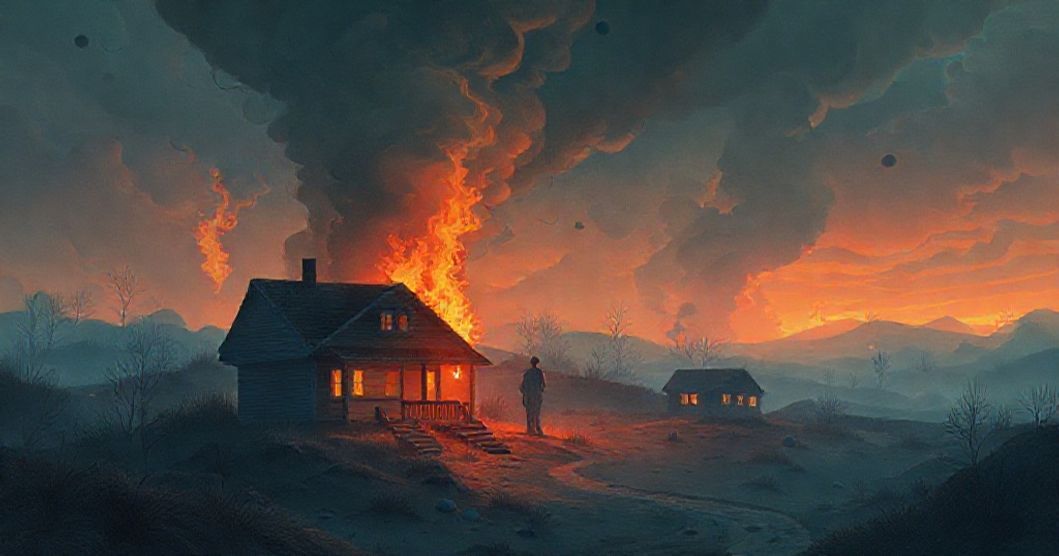
Last night, I found myself observing my own sleeping form from an external perspective—a third-person view that felt both eerily familiar and disorienting. I recognized my body immediately, as though seeing a stranger who somehow mirrored my exact appearance in the real world: the same relaxed posture, the same messy hair, the way I always tuck my arm beneath my pillow when I fall asleep. In the dream, I was in my bedroom, which matched my actual room perfectly—the walls, the faint glow of the nightlight, and most distinctly, the old cassette tape player on my nightstand, playing the same ambient music I often listen to before sleeping. Then, something uncanny happened: I saw my reflection in my phone screen, which lay face-up beside me. But in that reflection, I didn’t just see my sleeping self—I saw a second version of me, standing behind my prone form, watching intently. This felt like a double vision, a split in my perception that made me uneasy yet not truly afraid. I tried to move closer, but my body felt heavy, anchored to the bed as if in the early stages of sleep paralysis. The pressure was familiar, the kind that makes you want to scream but can’t—yet I managed to push through it, breaking free from that liminal state. In an instant, I found myself holding my phone, and when I played the video I’d recorded (or so it seemed), it showed exactly what I’d just witnessed—the same third-person view of my sleeping self, with the mysterious figure behind me. I laughed it off, a mix of confusion and amusement, and decided to return to sleep, curious about what would come next. The dream shifted abruptly to a burning house. Flames roared through the structure, and I could see someone trapped inside—a vague figure I couldn’t identify clearly. Panic surged, but I acted with a clarity that felt both dreamlike and urgent. I rushed through the inferno, navigating smoke and flames, and found the person just as they were about to be overcome. Together, we escaped safely. When I woke up again within the dream, the house stood with a massive hole burned through the roof directly above my bedroom, yet my belongings—my books, clothes, and mementos—remained untouched, perfectly preserved. Finally, I was on the roof of the house, watching as family members worked to repair the damaged roof. The hole had been patched with new material, and the structure was being rebuilt. We stood together, surveying the progress, a sense of relief settling over me despite the chaos that had preceded it.
Part 2: Clinical Analysis
Symbolic Landscape: Decoding the Dream’s Core Imagery
Want a More Personalized Interpretation?
Get your own AI-powered dream analysis tailored specifically to your dream
🔮Try Dream Analysis FreeThe dream’s first striking element is the third-person self-observation—a powerful symbol of psychological detachment and self-exploration. In dream work, viewing oneself from an external perspective often represents the emergence of the observer self—a part of the psyche that can step back from habitual patterns and behaviors. The