
Part 1: Dream Presentation
Dreams often manifest as unexpected visual poetry, blending colors and shapes that defy waking logic yet whisper profound truths. This dream, experienced during a nap, unfolded as a surreal encounter with geometric forms and vivid hues that seemed to materialize from the boundary between sleep and wakefulness. The dreamer first encountered a sky transformed into an electric hot pink, a color that immediately shifts from ordinary to extraordinary. This unnatural hue, paired with the subsequent appearance of a structured hexagon and golden lines, creates a visual narrative rich with symbolic potential. The hexagon, with its precise six-sided geometry, emerges against the pink backdrop, while the gold lines—described as art deco in style—flow outward from it, suggesting a connection between form and energy.
The dreamer’s description captures the sequence: first the hot pink sun (or sky), then the transition to seeing the hexagon and gold lines, with the pink background resolving into a cloud-like form. The art deco aesthetic adds a layer of intentional design and order, contrasting with the dream’s inherently dreamlike quality. The hexagon’s position “behind the eye” introduces a self-referential element, suggesting the dreamer’s perception of this symbolic structure as an internal, rather than external, experience.
Part 2: Clinical Analysis
Want a More Personalized Interpretation?
Get your own AI-powered dream analysis tailored specifically to your dream
🔮Try Dream Analysis FreeSymbolic Landscape: Colors, Geometry, and the Eye
The dream’s core elements carry rich symbolic weight. The hot pink sun/sky represents intense emotion, creativity, or suppressed passion—colors associated with energy and urgency in dream psychology. Pink often signifies emotional depth, while its unexpected hue (not the expected yellow or blue of the sun) suggests a distortion of ordinary perception, signaling a subconscious processing of intense feelings. The navy blue hexagon, with its six sides, is a shape of profound symbolic significance: hexagons appear in nature (honeycombs, snowflakes) as symbols of order, balance, and the intersection of structure and beauty. In dreams, they often represent the sixth chakra (third eye), signifying intuition, inner vision, or the need for clarity in one’s perspective.
The gold lines, described as art deco, evoke luxury, refinement, and the illumination of insight. Art deco itself emerged in the 1920s as a celebration of modernity, geometry, and elegance, blending art and technology. In dreams, gold typically symbolizes value, enlightenment, or the “golden thread” of awareness. The lines flowing from the hexagon suggest these insights or energies emanating from a structured, internal source—the hexagon as a container for these luminous thoughts or emotions.
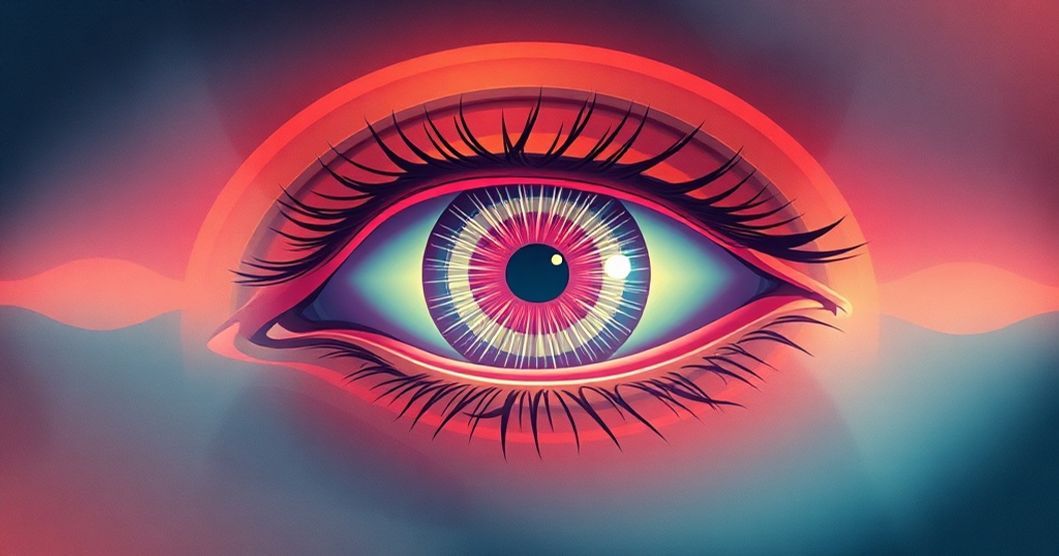
The eye imagery, with the hexagon “behind the eye,” introduces a meta-layer of self-awareness. The eye is a universal symbol of perception, consciousness, and the “witness” of experience. Positioning the hexagon behind the eye suggests the dreamer’s awareness of this symbolic structure as an internal, rather than external, phenomenon—a representation of how they view their own perception and the insights it generates.
Psychological Currents: Jungian, Freudian, and Cognitive Perspectives
From a Jungian perspective, the hexagon and gold lines could represent the Self’s attempt to integrate disparate elements into a cohesive whole. Jung viewed geometric symbols as archetypal expressions of the collective unconscious, and the hexagon’s six sides might correspond to the six aspects of the Self or the balance between conscious and unconscious. The gold lines, as emanations from this container, could symbolize the Self’s attempt to illuminate the unconscious through conscious awareness.
Freudian analysis might interpret the hot pink sun as a repressed desire or an intense emotional state, while the hexagon and gold lines represent the dreamer’s attempt to organize these feelings into a structured form. The art deco style could reflect a need for aesthetic order in a life feeling chaotic, with the geometric precision of the hexagon symbolizing the dreamer’s longing for control or clarity.
Cognitively, the dream occurs during a nap, a period of light sleep where hypnagogic imagery (transitional thoughts between wakefulness and sleep) often appears. The brain’s default mode network, active during rest, processes memories and emotions, creating the vivid, symbolic images we interpret as dreams. The hexagon and gold lines may be the brain’s way of synthesizing complex emotions into visual metaphors—turning abstract feelings into concrete, ordered shapes.
Emotional and Life Context: The “Hot” of Emotion and the “Structure” of Insight
The dream’s timing during a nap suggests a period of rest and reflection, a time when the mind is less occupied with daily concerns and more open to processing deeper emotions. The hot pink sun/sky likely reflects intense feelings or suppressed passions—perhaps unexpressed creativity, romantic longing, or professional frustration. The transition to seeing the hexagon and gold lines may represent the dreamer’s attempt to impose structure on these intense emotions, to find order in chaos.
The art deco aesthetic hints at a desire for beauty and intentional design in life—a longing for elegance and precision. The hexagon, with its six sides, might symbolize the need for balance across different life domains (work, relationships, self-care), while the gold lines suggest the “light” or insight that emerges when these domains are harmonized. The dream’s sequence—first the overwhelming hot pink, then the structured hexagon—could reflect the dreamer’s journey from emotional overwhelm to the cultivation of structured insight.
Therapeutic Insights: Reflecting on Perception and Structure
This dream invites the dreamer to explore their relationship with intensity and structure. The hot pink, as a color of passion, suggests acknowledging these intense emotions rather than suppressing them. The hexagon, as a container for gold lines, represents the importance of creating space for insight and clarity in one’s life. Journaling about recent emotional triggers or areas of life lacking structure could help unpack the hexagon’s meaning.
Practical reflection: Notice when “hot pink” emotions arise in daily life—moments of intense feeling—and ask how they might be connected to the need for structure (the hexagon). The art deco style could inspire intentional design in small aspects of life, bringing beauty and order to chaotic moments. Consider the hexagon as a reminder to see challenges as opportunities for balanced, integrated solutions.
FAQ Section
Q: What does the hexagon symbolize in this dream?
A: Hexagons symbolize order, balance, and the intersection of structure and beauty. In this context, the navy blue hexagon likely represents the dreamer’s need for clarity or a container for inner insights, with its six sides suggesting harmony across life domains.
Q: Why did the sun appear hot pink in the dream?
A: Hot pink symbolizes intense emotion, creativity, or suppressed passion. Its unexpected color suggests the dreamer is processing overwhelming feelings, with the color’s vibrancy reflecting emotional intensity or a desire to stand out.
Q: How does the eye imagery relate to the dream’s meaning?
A: The eye represents perception and self-awareness. Positioning the hexagon “behind the eye” suggests the dreamer is viewing their inner world through a lens of structured insight, seeing themselves as both the observer and the container of these symbolic energies.