
Core Symbols: Navigating the Wild Within
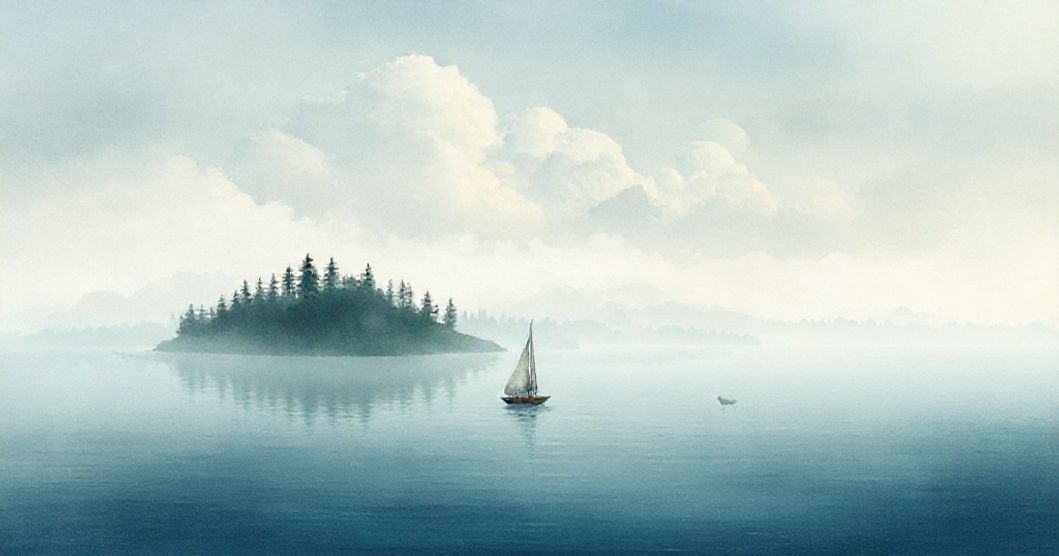
Sailing in dreams is rarely just about boats—it’s a metaphor for life’s journey, where the open water represents the unconscious mind and the boat your sense of agency. When you steer toward wolf islands, the islands act as thresholds: safe-seeming landmasses that hide both comfort and danger. Wolves, as symbols, carry layered meaning—they’re not just predators but teachers in many traditions, embodying loyalty, intuition, and the untamed self. The islands themselves might represent areas of your life you’ve avoided or are now ready to explore, while the horizon of wolves hints at a future self waiting to be claimed.
A wolf island isn’t just a destination—it’s a crossroads. If the islands feel mist-shrouded, they may signify hidden fears or repressed aspects of yourself; if they’re clear, they could represent untapped potential. The act of sailing past them, not stopping, suggests you’re moving through challenges rather than settling into them. Wolves on the horizon, meanwhile, blur the line between current reality and future possibility—they’re not just a destination but a call to align your actions with your deepest instincts.
Psychology Lens: The Subconscious as Navigator
Want a More Personalized Interpretation?
Get your own AI-powered dream analysis tailored specifically to your dream
🔮Try Dream Analysis FreeFrom a Jungian perspective, wolves embody the shadow archetype—the parts of ourselves we’ve pushed away but that still influence our behavior. Sailing toward wolf islands might mean your subconscious is urging you to integrate these shadow aspects instead of avoiding them. Freud, too, might interpret the dream as a manifestation of repressed desires for freedom or a fear of losing control, but modern dream psychology offers a softer lens: dreams during REM sleep process emotions, and the intensity of wolves could reflect unresolved feelings about power or vulnerability.
Neuroscience adds another layer: during REM, the amygdala (emotional center) is active, while the prefrontal cortex (planning) is quiet. This explains why wolf dreams feel primal—they’re not logical but emotional, processing fears or yearnings you haven’t fully acknowledged. Cultural traditions reinforce this: in Norse mythology, wolves are Odin’s companions, symbols of wisdom; in Native American lore, they’re teachers who remind us to honor both community and wildness. Together, these lenses show the dream isn’t just symbolic—it’s a psychological nudge to balance structure and spontaneity.
Life Triggers: When the Dream Resonates
This dream often surfaces during major life transitions: starting a new job, ending a relationship, or moving cities. The 'wolf islands' become stand-ins for the uncertainty of these changes, while the 'wolf horizons' represent the future self you’re becoming. If you’ve recently felt adrift, the dream might be urging you to trust your inner compass—your intuition—to navigate uncharted waters.
It also appears when you’re reconnecting with your authentic self. If you’ve spent years conforming to others’ expectations, the wolf islands could symbolize the courage to claim your own path. Conversely, if you’re feeling overprotected or confined, the dream might reflect a longing to break free—sailing toward wolf horizons is your psyche’s way of saying, 'It’s time to explore the wild within.'
Notice if you feel fear or exhilaration in the dream: fear might mean you’re avoiding necessary risks, while exhilaration signals readiness to embrace the journey. The dream’s emotional tone isn’t a prediction—it’s a mirror of how you’re navigating life’s currents right now.
What To Do Next: From Dream to Action
Start with short-term reflection: Journal the details of your dream—water conditions (calm, stormy?), the wolf islands’ appearance (forested, rocky?), and your emotional state. Ask yourself: What in my life feels like a 'wolf island' I’m avoiding? This reflection helps you map real-world parallels to the dream’s imagery.
Medium-term, experiment with small acts of trust. If the dream stirs a desire for adventure, try a new route to work or a conversation with someone you’ve been hesitant to engage with. Notice how it feels to 'sail' toward uncertainty—does it energize you or drain you? This experimentation reveals whether you’re aligning with your intuition.
Long-term, integrate the journey into daily life. Set aside time for 'wild exploration'—walks in nature, creative projects without structure, or conversations that challenge your assumptions. Remember: the wolf isn’t a foe but a guide, and the horizon isn’t a finish line but a reminder that growth lies in the journey itself.
FAQ: Unpacking the Dream’s Layers
Q: What if the wolf islands feel threatening in my dream?
A: Threatening islands often reflect fears of failure or rejection. Instead of avoiding these areas, ask: What part of me is 'howling' for attention? This could be a repressed goal or a relationship needing repair.
Q: Does the direction of the sailboat matter?
A: Sailing toward wolf islands suggests active engagement with challenges, while sailing away might mean avoiding them. If you’re moving toward, lean into curiosity; if away, explore why you’re retreating.
Q: How do I tell if this dream is about a specific person or goal?
A: Look at the wolves’ behavior—are they solitary or in a pack? A pack might signal relationships, while a lone wolf hints at self-discovery. The islands’ proximity to the boat shows how close the issue is to your daily life.