
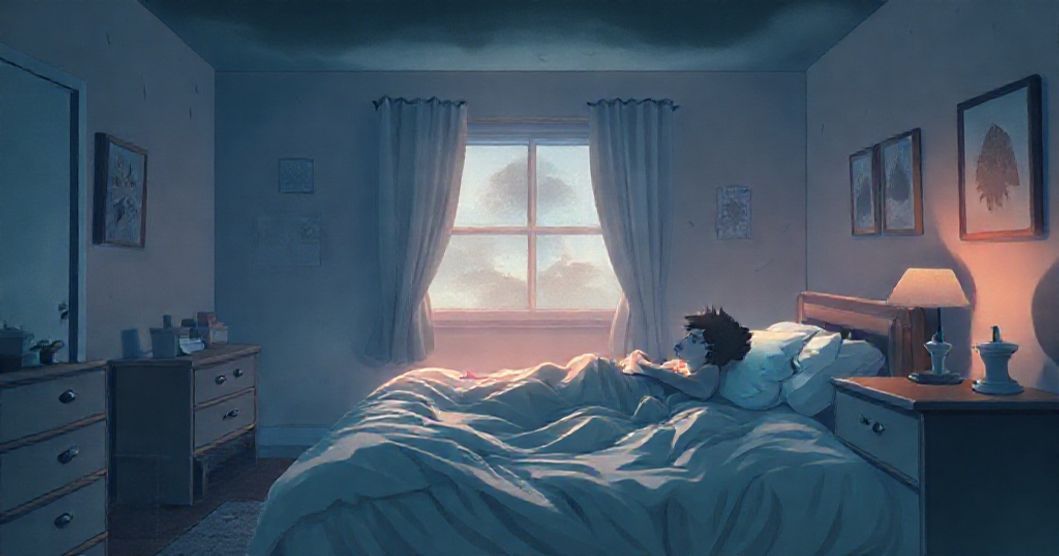
Part 1: Dream Presentation
Dreams often serve as windows into our unconscious minds, revealing truths we may not readily acknowledge in waking life. This particular dream narrative unfolds in a bedroom—a space typically associated with intimacy, safety, and rest—yet transforms into a site of recurring terror. The dreamer describes a room that feels familiar and comforting in waking life, yet becomes a battlefield in sleep, haunted by a violent intruder. The specific elements—a girl, a man resembling Don Vito from Viva La Bam, and escalating aggression—create a disturbing tableau that disrupts the couple’s otherwise peaceful relationship.
I’ve always prided myself on my ability to distinguish between dreams and reality, yet there’s a recurring nightmare that sabotages my peaceful sleep whenever I’m in my boyfriend’s bedroom. Each time, the room transforms into a labyrinth of tension, though the physical space itself remains familiar—the soft glow of his bedside lamp, the faint scent of his cologne, the creak of the old wooden floorboards under my feet. Despite our happy relationship and the comfort I associate with this room, these dreams feel like unwelcome intrusions, their violence seeping into the quiet moments we share together.
Last night, the nightmare unfolded with the same relentless clarity. I found myself in the corner of the room, alongside a girl I recognize from childhood but can’t quite place, as a man—his features oddly familiar yet distorted—presses against the door, trying to force his way in. He moves with the swagger of someone who knows he’s untouchable, his posture a caricature of authority. I realize with a jolt that he resembles the character Don Vito from Viva La Bam—that loud, brash personality from my teenage years, now twisted into a menacing figure. He bangs on the door, his voice slurred and threatening, and the girl and I scramble to block him, our hands pressed against the doorframe as if we can physically bar his entry. But he’s relentless, his movements growing more violent, his eyes blazing with a rage that doesn’t match his cartoonish appearance. The walls seem to close in, and I wake up screaming, heart pounding, gasping for air, only to find my boyfriend’s confused face hovering over me, asking if I’m okay. I nod, too shaken to speak, as the terror of the dream clings to me like a wet blanket.
Want a More Personalized Interpretation?
Get your own AI-powered dream analysis tailored specifically to your dream
🔮Try Dream Analysis FreeThese nightmares have become a pattern, and I hate that they taint the cozy nights we share. I’ve researched dream psychology, read about how environments can become charged with repressed emotions, and yet the more I try to rationalize it, the more these dreams feel like a mystery I can’t solve. Why does my safe space with him become a battlefield in my sleep? What does this recurring violence symbolize? I just want to understand why my mind insists on tormenting me in a place that should feel like safety.
Part 2: Clinical Analysis
Symbolic Landscape: The Bedroom as Emotional Container
The boyfriend’s bedroom functions as a powerful symbolic container in this dream. In Jungian psychology, the bedroom represents the unconscious mind’s inner sanctuary—a space where repressed emotions and unresolved conflicts manifest. The dreamer’s initial association of the room with “good memories” creates a paradox: the physical space is a source of comfort, yet the mind projects fear onto it. This contradiction suggests the room has become a repository for emotions that the dreamer cannot fully process in waking life.
The violent intruder embodies the shadow self—the repressed aspects of personality that feel threatening or foreign. The dreamer’s description of the intruder as “Don Vito from Viva La Bam” introduces a layer of cultural and personal symbolism. This character likely references a public persona (or a figure from the dreamer’s past) associated with dominance, aggression, or authority. In dreams, such figures often represent external pressures or internalized expectations to conform to certain behaviors.
The struggle to “keep him out” reveals themes of boundary-setting. The dreamer’s active resistance suggests an unconscious conflict between asserting control and feeling overwhelmed by external forces. The girl’s presence alongside the dreamer hints at collective unconscious elements or the dreamer’s feminine aspects (Jung’s anima or animus), working together to maintain boundaries.
Psychological Undercurrents: Unprocessed Fears and Relationship Dynamics
From a Freudian perspective, dreams function as the “royal road to the unconscious,” revealing repressed desires and conflicts. The recurring nature of this nightmare suggests an unaddressed emotional issue that persists despite the dreamer’s conscious happiness in the relationship. The boyfriend’s role in the dream is ambiguous—he is absent during the conflict, yet the room is his space, creating tension between the dreamer’s need for safety and the underlying anxiety that this safety is fragile.
Jungian analysis emphasizes the dream’s role in integrating the shadow self. The intruder represents the dreamer’s own shadow aspects—parts of the self she may reject or fear, such as anger, assertiveness, or a rebellious streak. The cartoonish nature of the intruder (Don Vito) could indicate that these shadow elements feel “familiar yet distorted,” as if the dreamer recognizes them from pop culture or past experiences but cannot fully own them.
Neuroscientifically, the dream’s violence and repetition may reflect hyperarousal in the amygdala, the brain’s emotional processing center. The dreamer’s difficulty distinguishing between sleep and waking states (waking up screaming) suggests a high level of emotional activation during REM sleep, possibly triggered by unresolved stressors in waking life.
Emotional & Life Context: The Paradox of Safety and Fear
The dreamer’s note that “we are not able to sleep together very often” introduces a layer of relationship dynamics. The infrequency of shared nights may create an emotional paradox: the dreamer values the intimacy of the bedroom yet feels uneasy about its safety. This tension between desire for connection and fear of vulnerability manifests in the recurring nightmare.
The “Don Vito” reference likely connects to a specific cultural or personal trigger. If the dreamer identifies with this character’s persona (perhaps as a rebellious figure from her youth), the intruder could symbolize the pressure to conform to societal expectations of how a girlfriend “should” behave—restrained, passive, or unassertive. The struggle to keep him out then becomes a metaphor for resisting these external pressures.
The dreamer’s confusion (“Why is it ruining the cozy nights with my guy?”) reflects a fundamental conflict: the room, which should be a place of safety, has become a site of internal conflict. This suggests the dreamer’s relationship with her boyfriend may have underlying insecurities about vulnerability, despite conscious happiness. The violence in the dream could represent the dreamer’s fear of losing control in the relationship or being overwhelmed by external demands.
Therapeutic Insights: Bridging the Unconscious and Conscious
To integrate this dream into waking life, the dreamer might benefit from journaling exercises to explore the emotional triggers behind the nightmare. Keeping a dream journal can help identify patterns between waking experiences and nighttime imagery. For example, the dreamer should reflect on moments when she felt pressured to conform or unable to assert herself—these may be the waking counterparts to the “Don Vito” figure.
Communication with her boyfriend about the recurring nightmares can strengthen their bond while addressing the emotional distance created by the dreams. Sharing vulnerability about these nighttime struggles may reveal that the boyfriend has unspoken fears about the relationship’s stability, creating a deeper connection.
Therapeutic techniques like guided imagery can help reframe the bedroom from a site of fear to safety. The dreamer can visualize the room as a protective cocoon, actively reconditioning the unconscious mind to associate the space with security rather than threat. This involves conscious affirmations paired with relaxation techniques before sleep.
FAQ Section: Navigating the Dreamer’s Unconscious Landscape
Q: Why do I keep having nightmares in my boyfriend’s room despite feeling safe there?
A: The room likely symbolizes a conflict between your conscious desire for safety and unconscious fears. The space holds repressed emotions you haven’t processed, manifesting as nightmares.
Q: What does the “Don Vito” character represent in my dream?
A: This figure likely symbolizes repressed aspects of yourself (your shadow) or external pressures you feel unable to resist, distorted by familiarity and fear.
Q: How can I stop these recurring nightmares?
A: Try journaling to identify triggers, communicate openly with your boyfriend, and practice relaxation techniques to reduce amygdala hyperarousal before sleep. Visualization can reframe the room as a safe space.
Reflective Closing: Embracing the Dream as a Path to Self-Knowledge
This recurring nightmare offers a valuable opportunity for self-discovery. By exploring the symbolic elements—the bedroom, the intruder, and the Don Vito figure—the dreamer can uncover hidden aspects of her personality and relationship dynamics. The dream’s violence, while disturbing, ultimately serves as a signal to integrate these shadow elements into a more authentic self-concept.
In waking life, the dreamer can practice assertiveness exercises to address boundary issues, whether with her boyfriend, family, or colleagues. By acknowledging the fear underlying the nightmare, she can transform it into a source of strength, allowing her to create safer, more authentic connections in both her relationships and self-expression. The bedroom, once a site of conflict, can become a symbol of emotional resilience—a testament to the dreamer’s ability to face and integrate her deepest fears.}