
Part 1: Dream Presentation
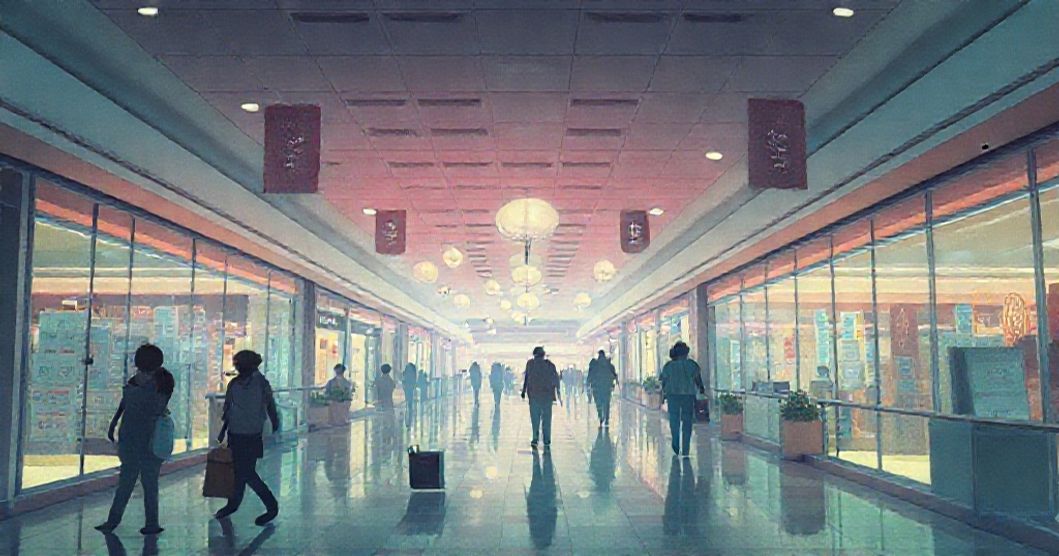
Dreams have a way of revisiting us with surprising persistence, often in spaces that feel simultaneously ordinary and profoundly strange. This recurring dream narrative offers a window into a subconscious landscape defined by endless corridors and stark, unyielding architecture. The dreamer finds themselves in what appears to be a mall—a space traditionally associated with social interaction, consumerism, and community—yet here, the environment is eerily empty and sterile. The long hallway stretches infinitely before them, its white walls reflecting light without warmth, and the floor’s black-and-white tile pattern creates a disorienting, almost hypnotic rhythm beneath their feet. There are no other people to be seen, or if there are, they remain indistinct, faceless, and unrecognizable—a stark contrast to the bustling reality of waking life. The dreamer never enters any stores, choosing instead to walk the endless corridor, a journey without destination or purpose. This recurring experience evokes a sense of the 'backrooms'—a liminal, limbo-like space where time and place lose their usual boundaries, leaving the dreamer adrift in an atmosphere of existential uncertainty.
Part 2: Clinical Analysis
Symbolic Landscape of the Mall Hallway
Want a More Personalized Interpretation?
Get your own AI-powered dream analysis tailored specifically to your dream
🔮Try Dream Analysis FreeThe mall in this dream, stripped of its usual vibrancy and purpose, functions as a powerful metaphor for modern life’s disorienting rhythms. Malls traditionally symbolize the intersection of commerce and community, yet here, they’ve been drained of both. The endless hallway, rather than representing a literal journey, embodies the psychological experience of feeling trapped in a repetitive, unfulfilling routine—one without clear direction or meaning. The sterile white walls and black-and-white tile floor suggest emotional coldness and disconnection: the white may symbolize emotional detachment or the 'blank slate' of an unexamined life, while the stark contrast of black and white hints at binary thinking or the lack of nuance in the dreamer’s current emotional state. The 'backrooms' reference, a cultural touchstone for liminal spaces, amplifies this sense of existential limbo—a place between two states of being, neither fully awake nor asleep, neither present nor absent. This aesthetic speaks to the dreamer’s subconscious awareness of feeling 'stuck' in a space that should feel familiar yet does not, evoking the modern experience of emotional isolation despite physical proximity.
Psychological Undercurrents: Jungian and Freudian Perspectives
From a Jungian perspective, the mall and its endless hallway can be interpreted as a reflection of the collective unconscious and the dreamer’s journey toward individuation. In Jungian theory, recurring dreams often represent the psyche’s attempt to integrate unconscious material or resolve unresolved conflicts. The empty mall could symbolize the shadow self—the parts of the personality the dreamer has neglected or disowned—manifesting as a sterile, uninhabited space. The hallway, stretching infinitely, might represent the path of self-discovery that lacks clear landmarks, forcing the dreamer to confront the unknown aspects of their psyche without external guidance. Conversely, Freud might view the dream as a manifestation of repressed anxieties about social interaction or the pressures of consumer culture, though the lack of overt conflict in the dream suggests it may instead reflect deeper existential concerns.
Neuroscientifically, recurring dreams often correlate with the brain’s default mode network—a neural system active during rest, daydreaming, and self-referential thought. This network processes memories, emotions, and future planning, and its hyperactivity during sleep could explain the dream’s persistence: the brain may be replaying unresolved emotional themes or life transitions, using the mall’s liminal space as a metaphor for the internal journey of self-reflection.
Emotional Context: Waking Life Triggers and Unresolved Themes
Recurring dreams rarely arise in isolation; they typically mirror the dreamer’s waking emotional landscape. The empty mall could signal feelings of disconnection from community, purpose, or identity—perhaps the dreamer is experiencing a period of transition, uncertainty, or existential questioning. The lack of recognizable people might reflect social isolation or a sense of not belonging in their current environment, while the absence of storefronts could symbolize unmet needs or unfulfilled desires that remain unaddressed. The 'backrooms' vibe, with its connotations of limbo and stagnation, suggests the dreamer is grappling with the aftermath of a significant life change—perhaps a job loss, relationship shift, or identity crisis—that has left them adrift in a psychological no-man’s-land. The dream’s repetition indicates that these themes have not yet been resolved, prompting the subconscious to revisit them until they find expression.
Therapeutic Insights: Navigating the Uncanny Hallway
For the dreamer, this recurring experience offers an invitation to explore the 'unseen' aspects of their inner life. The first step in interpretation is to journal about the emotions triggered during the dream: Is there a sense of anxiety, loneliness, or curiosity? What waking life situation might this mirror? Reflecting on these feelings can reveal underlying concerns about direction, connection, or self-worth. Practical exercises could include creating a 'dream map' of the mall, noting where the hallway leads (or doesn’t lead) and what sensations arise at each point—this externalization can help the dreamer process the internal journey. Mindfulness practices, such as walking meditation, might help the dreamer reconnect with their body’s sensations in waking life, countering the emotional detachment suggested by the dream’s sterile environment. Additionally, exploring the 'purpose' of the dreamer’s current life—asking what they truly want from their daily routines and relationships—can transform the endless hallway into a metaphor for intentional movement rather than stagnation.
FAQ Section
Q: What does a recurring long hallway in dreams symbolize?
A: A long, unending hallway often reflects feelings of being trapped in a repetitive, unfulfilling routine or grappling with existential uncertainty. It may signal the need to confront unexamined emotions or life transitions.
Q: Is the