
Part 1: Dream Presentation
Dreams often serve as mirrors reflecting our unconscious struggles and yearnings, and this recurring narrative of seeking shelter in abandoned houses offers a rich psychological landscape. The dreamer’s journey begins on a public beach with a dog, a symbol of loyalty and emotional support, as they confront an impending flood—a primal fear of loss of control and safety. The coastal town, with its construction sites and abandoned structures, becomes a microcosm of the dreamer’s real-life experience: a transient existence marked by instability and the search for security.
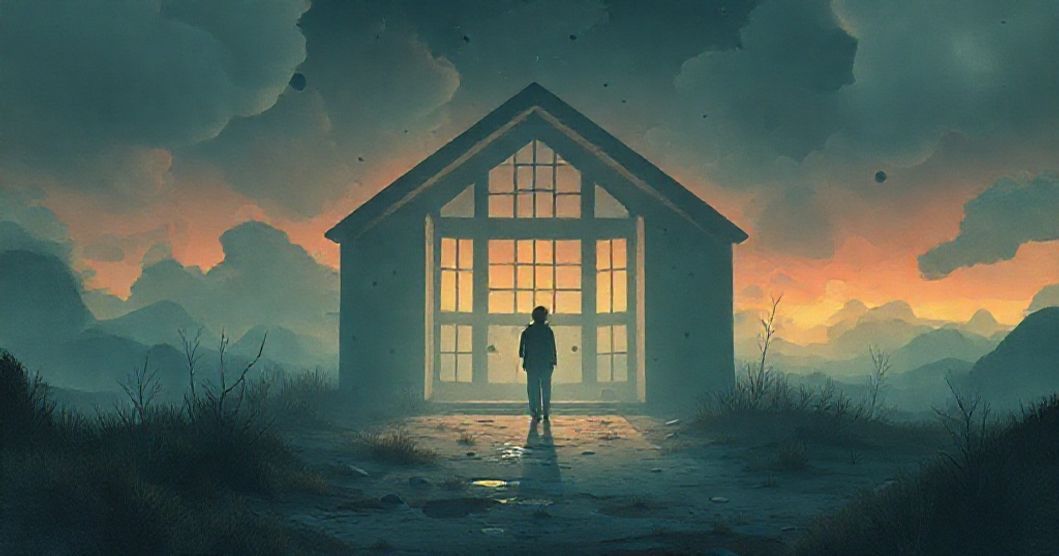
The abandoned house itself emerges as a central metaphor, its dilapidated exterior contrasting sharply with the cozy, hidden attic. This dual nature mirrors the dreamer’s internal conflict: the external chaos of homelessness versus the internal need for safety. The secret passage, a narrow path to an unexpected sanctuary, represents the dreamer’s capacity to find comfort even in seemingly hopeless situations—a psychological defense mechanism against life’s uncertainties.
The dream’s sensual turn introduces another layer of complexity. The group of girls, including a romantic crush, symbolizes the dreamer’s deep-seated need for connection and intimacy. Their flirtatious interaction and eventual physical closeness suggest repressed desires for belonging and partnership, even as the dreamer maintains a degree of shyness (a common emotional defense in vulnerable situations). The abrupt police raid shatters this moment of connection, yet the dream’s overall tone remains more positive than past iterations, hinting at psychological growth or shifting emotional priorities.
Want a More Personalized Interpretation?
Get your own AI-powered dream analysis tailored specifically to your dream
🔮Try Dream Analysis FreePart 2: Clinical Analysis
The Symbolic Landscape of Abandoned Spaces
The abandoned house functions as a multifaceted symbol in this dream. In Jungian psychology, abandoned structures often represent the shadow self—the parts of ourselves we’ve neglected or left behind. For the dreamer, this could include unfulfilled potential or suppressed needs for stability. The house’s damaged exterior contrasts with the cozy attic, suggesting a deeper psychological truth: beneath chaos lies hidden comfort and safety, even in the most unstable circumstances.
The secret passage embodies the dreamer’s unconscious resourcefulness. This narrow, hidden route to safety reflects the adaptive strategies developed during years of homelessness—a survival instinct that persists in dreams. The passage’s unexpected comfort implies that the dreamer has learned to create safety within instability, a crucial insight for understanding resilience in the face of adversity.
The beach and flood imagery further enrich the symbolic palette. The beach, a liminal space between water and land, represents transition and uncertainty—fitting the dreamer’s transient lifestyle. The approaching flood symbolizes overwhelming external forces (like economic instability or social judgment) that threaten to displace the dreamer, triggering the need to seek refuge in familiar, if imperfect, spaces.
Psychological Perspectives: Jungian, Freudian, and Modern Frameworks
From a Jungian perspective, the abandoned house may represent the ‘anima’ or ‘animus’—the feminine/masculine aspects of the dreamer’s psyche that need integration. The secret attic, a place of warmth and safety, could symbolize the integration of these neglected parts, offering wholeness in an otherwise fragmented life.
Freudian analysis might interpret the house as a manifestation of repressed childhood fears of abandonment, amplified by the dreamer’s current homeless state. The construction workers and police as pursuers could represent superego forces—the internalized judgment of societal norms about ‘proper’ housing and stability. The dream’s shift from fear to sensual connection might reflect repressed sexual desires and the need for intimacy, displaced onto a symbolic safe space.
Modern dream psychology emphasizes emotional processing. The dream’s narrative structure—seeking shelter, finding safety, then confronting external threats—mirrors the brain’s nightly work of consolidating emotional memories. The recurring elements (beach, town, abandoned house) suggest the dreamer’s unconscious is processing ongoing themes of displacement, resilience, and connection.
Emotional and Life Context: Homelessness and Longing
The dreamer’s real-life circumstances—years of hitchhiking and homelessness—undoubtedly shape these recurring dreams. Abandoned houses symbolize both literal and metaphorical displacement: the physical absence of a permanent home translates to psychological restlessness. The construction workers and police represent external systems that police or restrict access to shelter, reflecting the dreamer’s experiences with systemic barriers to stability.
The sensual elements introduce a new emotional layer: the need for human connection. The girl the dreamer crushes on, though symbolic, represents the desire for partnership and emotional security. In dreams, sexual or romantic themes often emerge when the conscious mind suppresses deeper needs for intimacy—a common response to transient living conditions that limit stable relationships.
The dream’s positive tone, despite its chaotic elements, suggests psychological adaptation. The dreamer has learned to extract comfort from instability—a sign of resilience. The secret attic, a place of safety, might represent the internalization of stability, a mental space that exists regardless of external circumstances.
Therapeutic Insights: Navigating the Dreamer’s Journey
This dream offers opportunities for self-reflection. The recurring beach and town imagery suggest the dreamer is processing ongoing life transitions, perhaps considering more permanent housing or emotional stability. The secret passage and cozy attic invite the dreamer to identify internal ‘safe spaces’—not just physical shelters but mental or emotional ones that can be accessed during difficult times.
The sensual elements suggest the dreamer may benefit from exploring how to balance emotional needs with practical stability. The open relationships discussed in the dream could reflect a desire for non-traditional connection, or perhaps a fear of commitment—common in transient lifestyles where permanence feels threatening.
Therapeutic reflection exercises might include: mapping personal ‘safe spaces’ (both physical and emotional) and identifying how they’ve evolved; journaling about moments of comfort in unstable situations; and exploring the relationship between homelessness and feelings of safety in dreams.
FAQ Section
Q: Why do I keep dreaming about finding secret passages in abandoned houses?
A: Secret passages symbolize your unconscious resourcefulness—adaptive strategies developed during homelessness. They represent hidden strengths and unexpected sources of comfort amid chaos.
Q: What does the flood symbolize in my dreams?
A: The flood reflects fear of losing stability, displacement, or overwhelming external pressures. It mirrors real-life anxieties about homelessness and the unpredictability of your current lifestyle.
Q: Why did my dream shift from stress to sensual connection?
A: This shift suggests your psyche is integrating emotional needs for intimacy alongside survival instincts. The crush represents repressed desires for partnership and safety in relationships.