
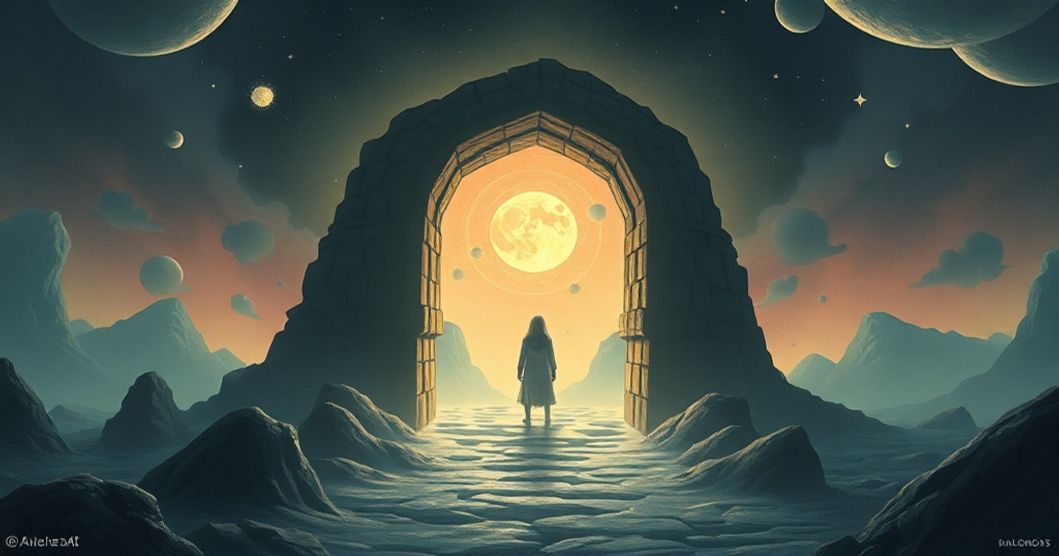
Part 1: Dream Presentation
The mind of a child is a canvas where fear and creativity intertwine, painting nightmares that sometimes reveal deeper truths about the self. This dream, with its recurring portal imagery, offers a window into childhood's relationship with terror and protection. As a child, the narrator experienced two distinct nightmares, each marked by a magical threshold that transformed fear into agency. In the first, a kindergarten classroom becomes a site of dread, with a once-familiar teacher manifesting as a red demon—a figure of authority warped into something insidious. The second nightmare transports the dreamer to a dark ocean, where a boat capsizes, only to be saved by the same portal that appeared in the classroom. This recurring threshold symbol suggests a profound psychological response to childhood anxiety, where the mind constructs protective mechanisms to navigate overwhelming fear.
The rewritten dream captures these moments with clarity: the classroom's oppressive atmosphere, the teacher's grotesque transformation, the portal's static and rainbow border, and the ocean's threatening depths. The narrative maintains the first-person perspective, emphasizing the visceral fear and subsequent relief of escape, while adding sensory details that immerse the reader in the dreamer's experience.
Part 2: Clinical Analysis
Want a More Personalized Interpretation?
Get your own AI-powered dream analysis tailored specifically to your dream
🔮Try Dream Analysis FreeSymbolic Landscape of the Portal Dream
The portal itself emerges as a powerful threshold symbol—a liminal space between the conscious and unconscious realms. In Jungian psychology, such symbols represent the psyche's attempt to bridge conflicting states, often manifesting during periods of psychological development. The TV static bordering the portal speaks to the dreamer's liminal state: a space neither fully real nor fully imagined, where reality and fantasy blur. The rainbow halo, with its spectrum of colors, suggests integration and wholeness, even within chaos—a reminder that the mind seeks balance even in terror.
The red demon nun represents a shadow archetype, Jung's concept of the unconscious repressed aspects of self. In childhood, authority figures often embody both protection and constraint, and the teacher's transformation into a demonic figure reflects the child's fear of that authority turning against them. This shadow projection is common in nightmares, where the familiar becomes uncanny—a psychological defense mechanism to process anxiety about loss of control.
The classroom setting, a site of learning and socialization, becomes a space of confinement and judgment. The children's collective terror suggests a shared anxiety about authority, while the dreamer's ability to escape through the portal implies an emerging sense of agency. This mirrors real childhood experiences of feeling powerless in social settings, where the mind invents solutions to regain control.
The ocean, in the second nightmare, represents the unconscious mind—a vast, unpredictable realm where childhood anxieties reside. The boat capsizing symbolizes the loss of security, while the portal's reappearance in this context suggests the psyche's innate wisdom to find safety even in the depths of the unconscious. Water, in dreams, often signifies emotional depth and the flow of repressed feelings, making the ocean a fitting metaphor for the dreamer's submerged fears.
Psychological Perspectives: From Jung to Modern Dream Science
From a Jungian perspective, this dream embodies the concept of the threshold guardian—a figure who tests the dreamer's courage before allowing passage. The red demon nun, as a threshold guardian, forces the dreamer to confront fear directly, then offers the portal as a reward for bravery. This aligns with Jung's idea that dreams often present us with challenges to develop psychological strength.
Freud would likely interpret the red demon as a manifestation of repressed childhood conflicts, particularly around authority figures. The teacher, a symbol of parental and societal control, becomes a figure of anxiety, with the portal representing the unconscious's attempt to resolve these conflicts. The dreamer's escape through the portal might signify the ego's ability to overcome repressed anxieties.
Modern cognitive neuroscience views dreams as a byproduct of the brain's attempt to process emotional memories. During REM sleep, the brain synthesizes emotional experiences, and nightmares may represent unresolved emotional conflicts. The portal here could be seen as a neural shortcut, allowing the brain to 'rehearse' escape responses, thereby strengthening emotional regulation over time.
Emotional Resonance and Life Context
Childhood anxiety often manifests through symbolic imagery, as the developing mind lacks the vocabulary to articulate complex emotions. The portal's consistent appearance suggests a deep-seated need for protection during periods of vulnerability. The red demon nun, for example, might reflect the child's fear of judgment or punishment, common in early school environments where authority figures wield significant power.
The transition from childhood to adulthood brings changes in emotional regulation, but the dream's recurrence hints at lasting psychological effects. The adult narrator's infrequent nightmares suggest that these childhood mechanisms have persisted, perhaps manifesting in more subtle ways during stress. The portal, as a protective symbol, might represent the adult's inner resources to navigate modern stressors—even if not literally appearing, the memory of escape persists as a metaphor for resilience.
The ocean and classroom settings reflect the dual nature of childhood anxiety: internal (classroom dynamics) and external (natural environment). The portal's consistency across these disparate settings suggests it is not tied to specific situations but to a fundamental need to transform fear into agency—a pattern that persists into adulthood.
Therapeutic Insights: Waking the 'Portal' of Self-Awareness
Dreams like this offer valuable insights into the self, reminding us that even our most terrifying nightmares contain seeds of wisdom. For the dreamer, reflecting on this portal can reveal how the mind constructs protective mechanisms during vulnerability. One exercise is to journal about recurring dream themes, noting how they connect to waking life stressors.
The portal can be seen as a metaphor for self-compassion: the mind's ability to create safe spaces even in turmoil. Cultivating this self-compassion involves acknowledging fear without judgment, then seeking inner resources to navigate it. Practices like mindfulness meditation can help adults access this 'portal' of self-awareness, allowing them to recognize when old patterns of anxiety arise and respond with the same agency the childhood mind discovered.
Another therapeutic approach is lucid dreaming, where the dreamer becomes aware of being in a dream and can consciously navigate it. This builds on the childhood portal's function, empowering the adult to take control of one's inner world. By practicing lucid dreaming, the dreamer can re-experience the portal as a tool for emotional regulation.
FAQ Section
Q: Why did the portal specifically appear in these nightmares?
A: The portal represents the psyche's protective mechanism—your mind's way of creating agency in overwhelming situations. It's a symbolic 'escape' that transforms fear into control.
Q: Is the red demon nun a common childhood symbol?
A: Yes, authority figures often become shadow archetypes in nightmares, reflecting unresolved feelings about control, judgment, or punishment during early development.
Q: How can adults 'recreate' this portal experience?
A: Through mindfulness and lucid dreaming practices, adults can cultivate awareness of inner resources to navigate stress, channeling the childhood portal's protective energy into present-moment resilience.
Q: Why do these nightmares rarely occur now?
A: Childhood anxiety often diminishes as emotional regulation skills develop. The portal's absence may reflect increased confidence and reduced vulnerability to the specific fears that triggered it in childhood.