
Part 1: Dream Presentation
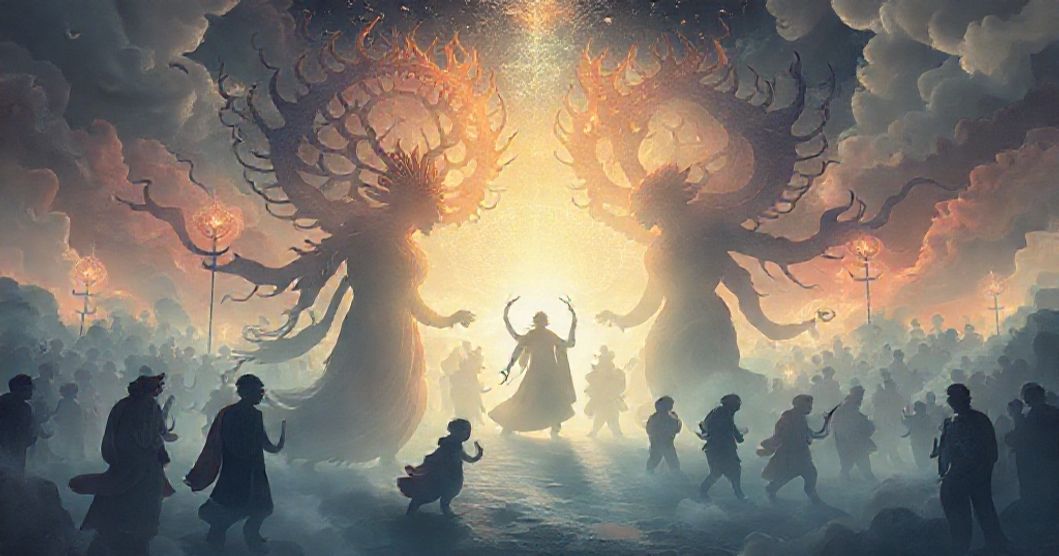
Dreams have an uncanny way of lingering in our consciousness, their symbolic landscapes refusing to fade even as we return to waking reality. This particular dream, months after its occurrence, retains the clarity of a memory that feels almost tangible—a testament to the powerful emotional resonance of its imagery. The dreamer finds themselves in a surreal realm reminiscent of ancient Egyptian iconography, surrounded by towering figures who evoke both awe and comfort. These beings, initially perceived as 'people,' reveal themselves to be shapeshifters, capable of transforming into chickens—a curious detail that introduces themes of duality and metamorphosis. The setting resembles a parade, yet the atmosphere balances welcoming hospitality with an undercurrent of caution. A protective elder figure, adorned in traditional attire, offers guidance tinged with both warning and farewell, ultimately leading the dreamer toward a sudden, disorienting exit. This narrative weaves together elements of cultural symbolism, emotional ambivalence, and the liminal experience of crossing between worlds, inviting exploration of its deeper psychological layers.
The dreamer’s journey begins in a landscape that echoes Egyptian iconography—towering figures, grand architecture, and a parade-like atmosphere that suggests celebration and ritual. The beings who populate this realm display an extraordinary ability to transform, shifting between human and chicken forms. This shapeshifting introduces a central theme of duality: what appears to be one thing may reveal another, challenging the dreamer’s perception of reality. The dreamer experiences both fear and contentment simultaneously—a paradox that hints at deeper emotional tensions between safety and adventure, fear and curiosity. The parade itself functions as a metaphorical journey, with the dreamer initially unsure of their place but ultimately finding acceptance among the crowd.
The older woman with the head dress and gold jewelry emerges as a key symbolic figure. Her traditional attire and assertive guidance suggest she embodies the archetype of the wise elder or cultural keeper, offering protection and boundary-setting. Her warning about 'ways' to lose money hints at financial anxieties or fears of vulnerability, while her eventual farewell and the 'wooshing' white light exit suggest a transition or release from this symbolic realm. The skeleton soldier, who transforms from human to skeletal form and back, represents resilience and the ability to overcome apparent death or failure—a powerful image of inner strength.
Want a More Personalized Interpretation?
Get your own AI-powered dream analysis tailored specifically to your dream
🔮Try Dream Analysis FreePart 2: Clinical Analysis
Symbolic Landscape: Decoding the Dream’s Visual Language
The Egyptian-inspired architecture and towering figures establish a connection to ancient civilizations, evoking the collective unconscious’s archetypal imagery of legacy, power, and cultural identity. In dream symbolism, Egypt often represents timelessness, hidden knowledge, and the 'otherworldly'—a realm where the past and present intersect. The dreamer’s perception of these figures as 'people' who can transform into chickens introduces the concept of the shadow self: the part of the psyche that resists easy categorization, existing in multiple states of being. Chickens, in dream imagery, frequently symbolize fertility, transformation, and sometimes vulnerability (think of the 'chicken' as a symbol of something smaller, more fragile yet capable of flight or transformation).
The parade setting functions as a liminal space—a threshold between worlds where the dreamer is both insider and outsider. The initial fear of not knowing where to sit and the subsequent invitation to join the parade suggest a desire for belonging balanced with anxiety about integration. The soldier who transforms into a skeleton and returns to life represents the dream’s central theme of resilience and rebirth. In Jungian terms, this could symbolize the shadow’s integration—facing aspects of the self that feel 'dead' or discarded and bringing them back into consciousness.
The older woman’s warning about 'stealing money' introduces financial anxiety or fears of exploitation, while her eventual departure and the 'wooshing' white light signal a release from the dream’s symbolic realm. The white light itself is a classic dream symbol of transcendence, spiritual awakening, or the dissolution of ego boundaries—a common theme in dreams where the dreamer experiences a sense of leaving their physical body behind.
Psychological Undercurrents: Jungian, Freudian, and Cognitive Perspectives
From a Jungian perspective, this dream reflects the collective unconscious’s archetypal themes. The towering figures represent the 'great mother' or 'wise elder' archetype, figures who offer guidance and protection. The shapeshifting beings embody the anima/animus—the masculine/feminine aspects of the unconscious that resist rigid definition. The dreamer’s ambivalence toward these figures (fearful yet content) mirrors the tension between the conscious self’s desire for safety and the unconscious’s yearning for transformation.
Freudian analysis might interpret the shapeshifting as a manifestation of repressed desires or anxieties. The 'chicken' transformation could symbolize the dreamer’s fear of being seen as 'small' or 'incapable,' while the soldier’s skeleton form might represent a defense mechanism against feelings of inadequacy. The parade’s performance-like quality could reflect the dreamer’s need to 'perform' in waking life, maintaining a facade of confidence while feeling vulnerable beneath the surface.
Cognitive dream theory offers another lens: dreams as problem-solving tools. The dream’s narrative—where the dreamer navigates uncertainty, witnesses resilience, and receives guidance—might reflect an attempt to process waking-life challenges. The shapeshifting could represent the mind’s attempt to find flexibility in approaching problems, while the 'death and rebirth' of the skeleton soldier suggests creative problem-solving or the need to embrace change.
Emotional and Life Context: Unpacking the Dreamer’s Internal Landscape
The dream’s themes likely resonate with the dreamer’s waking experiences. The 'outsider' status—initially unsure of where to sit, eventually finding acceptance—suggests feelings of uncertainty about a new situation, relationship, or life transition. The fear of 'losing money' hints at financial anxieties or concerns about vulnerability in resource management. The older woman’s protective yet warning stance could reflect a relationship with authority figures or a desire for guidance in a situation where boundaries feel unclear.
The dream’s balance of fear and contentment suggests an ambivalence about transformation. The dreamer experiences both the terror of stepping into the unknown and the comfort of being among a welcoming community. This tension might mirror real-life situations where the dreamer feels pulled between staying in familiar territory and embracing growth. The shapeshifting beings represent the fluidity of identity—how we can be both one thing and another, depending on context or circumstance.
The 'wooshing' exit into white light suggests a desire for closure or a need to process experiences before fully integrating them. This abrupt departure might reflect the dreamer’s struggle with letting go of certain aspects of themselves or a situation, yet the lingering memory indicates an unprocessed part of the psyche seeking attention.
Therapeutic Insights: Translating Dream Imagery to Waking Life
This dream invites the dreamer to embrace their own shapeshifting nature—the ability to transform and adapt in different situations. The resilience of the skeleton soldier offers a reminder that apparent 'death' or failure is often temporary, and growth can emerge from unexpected places. The older woman’s guidance suggests the importance of seeking wisdom from trusted sources, even as we navigate uncertainty.
Practical reflection exercises might include journaling about recent life transitions, noting where feelings of fear and contentment overlap. Exploring financial anxieties or resource management could reveal underlying insecurities that the dream addresses. The shapeshifting beings encourage the dreamer to question fixed identities, asking: 'What aspects of myself might I be resisting transforming?'
Long-term integration involves recognizing that dreams often reflect the psyche’s attempt to process emotions. This dream’s message of resilience and transformation suggests the dreamer should embrace flexibility in approaching challenges, viewing them as opportunities for growth rather than threats. The welcoming yet cautionary nature of the parade reminds us that stepping into the unknown can be both scary and rewarding, with support available from unexpected sources.
FAQ Section: Clarifying Key Dream Elements
Q: Why do the beings transform into chickens?
A: Chicken symbolism in dreams often relates to fertility, transformation, and vulnerability. The shapeshifting here suggests fluidity of identity or the need to adapt, with the chicken form representing a more 'primitive' or instinctual self waiting to be integrated.
Q: What does the older woman’s head dress symbolize?
A: Traditional head dress imagery often connects to cultural identity, wisdom, and ancestral connection. Her attire suggests she embodies the collective wisdom of experience, offering guidance while maintaining cultural or spiritual boundaries.
Q: Why does the dream end with a 'wooshing' white light?
A: The white light and sudden exit symbolize a liminal transition—leaving one state of being for another. This could represent the dreamer’s need to let go of old patterns, embrace transformation, or process closure before moving forward in waking life.