
Part 1: Dream Presentation
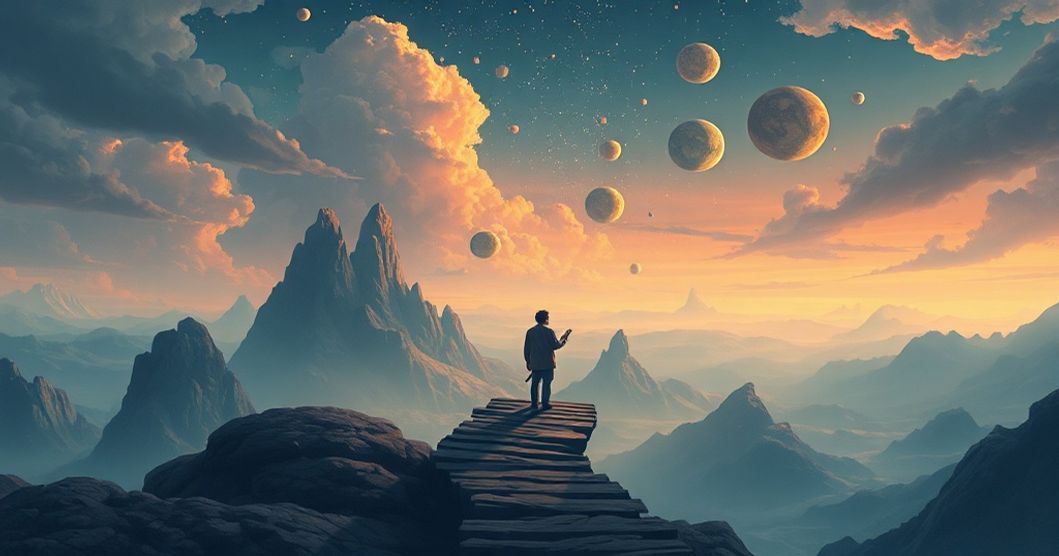
In the liminal space between sleep and wakefulness, I found myself in a world that felt simultaneously familiar and alien—a hybrid of pixelated adventure and immersive exploration. The landscape stretched infinitely before me, its visual language a curious fusion of Minecraft’s blocky geometry and Subnautica’s fluid, underwater realism. I was adrift in an open-world realm where the terrain itself seemed to breathe, yet I knew my destination: home, a place I’d left weeks ago in this dreamscape. The distance felt astronomical—500,000 meters, perhaps more—unfolding across a map so vast it dwarfed even the most ambitious seed websites for Minecraft. To my north, the land stretched endlessly in rolling hills and forests; to my south, the ocean yawned, its depths hinted at but never fully revealed. This was no ordinary game world, but a dream of epic proportions, where every step felt charged with purpose yet tinged with uncertainty. As I ventured forth, I traversed three distinct biomes: a sun-dappled forest where light filtered through canopy leaves in golden shafts, a vast plain dotted with swaying grasses that whispered secrets in the wind, and a strange, otherworldly zone I later realized was the 'corrupt' area—its purple hue unnatural, trees twisted into gnarled, dead forms like some nightmare version of Terraria’s corrupted biomes, though this zone itself seemed excluded from my initial map awareness. My journey was solitary at first, driven by the need to gather resources for my village—a place I’d left behind, now reduced to a blue marker on my mental compass. When I finally neared home, a figure emerged from the shadows: a friend, though I couldn’t recall our last conversation. 'Dude, I haven’t seen you in months!' he exclaimed, his voice carrying the weight of forgotten time. 'I know,' I replied, 'I’ve been so caught up in... life, I guess.' Together, we made our way to our shared home, where the world transformed into a place of construction and purpose. My friend had built apartment-style homes for non-player characters, tended farms bursting with potential, and constructed a fortress—a wooden wall shaped like a box, its rough planks a testament to makeshift security. Inside, the air felt heavy with unspoken tension. 'We’ve got problems,' he said, his tone grave. 'Food shortages. The NPCs are starving. We need to find more.' We set off immediately, retracing my path southward past the corrupt zone, where the air grew thick with foreboding. In a clearing bathed in sunlight, banana trees stood heavy with fruit, their leaves rustling in an unseen breeze. But as we approached, the tranquility shattered: dangerous mobs emerged, their forms blurred yet menacing, and in two swift hits, they overwhelmed us. The dream ended abruptly, leaving me suspended between the urgency of survival and the frustration of unmet needs. The world faded as quickly as it had appeared, leaving only the echo of our failed quest and the weight of unfinished business.
Part 2: Clinical Analysis
Symbolic Landscape: The Open-World as Life’s Metaphor
Want a More Personalized Interpretation?
Get your own AI-powered dream analysis tailored specifically to your dream
🔮Try Dream Analysis FreeThe dream’s central setting—a vast, hybrid game world—serves as a powerful metaphor for the human experience of navigating life’s uncharted territories. The 500,000-meter distance from home symbolizes emotional or psychological separation from one’s sense of belonging, purpose, or core values. This extreme spatial measurement suggests not just physical distance but a profound disconnect from what feels 'home'—perhaps a relationship, a career, or a sense of self. The biomes themselves represent distinct life domains: the forest (growth and exploration), the plains (open possibilities), and the 'corrupt zone' (psychological 'shadows' or areas needing attention). Jungian psychology would interpret the corrupt zone as the shadow archetype—those aspects of ourselves we avoid or project onto external threats. The unnatural purple hue and dead trees signal unresolved issues or emotional 'toxicity' that, while present in the dreamer’s experience, were excluded from conscious awareness ('not adding it in the map').
The friend encountered upon returning home embodies relationship dynamics. His exclamation of 'I haven’t seen you in months!' reflects the universal human need for connection and validation. Their reunion in a world of construction and purpose suggests that maintaining relationships requires intentional effort, even in the face of life’s demands. The apartment-style homes, farms, and wooden fortress represent the dreamer’s attempts to create structure and security—a Jungian 'shadow work' process where the dreamer actively addresses needs through building (both literal and metaphorical). The fortress, in particular, symbolizes the defense mechanism of isolation or protection, while the farms and NPCs reflect the dreamer’s desire to nurture growth and community.
Psychological Currents: Jungian, Freudian, and Cognitive Perspectives
From a Jungian perspective, this dream unfolds as a hero’s journey archetype—the protagonist venturing forth to reclaim what was lost (home, resources, connection). The journey through biomes mirrors the individuation process, where the dreamer confronts different aspects of self (forest = conscious growth, plains = unconscious potential, corrupt zone = shadow integration). The friend’s role as both guide and companion suggests the animus/animus archetype—internalized aspects of the dreamer’s psyche working together toward integration.
Freudian theory would interpret the dream as wish fulfillment and unconscious conflict. The building projects and resource gathering reflect the dreamer’s need for control and mastery in waking life, while the food shortages and dangerous mobs represent repressed anxieties about scarcity and vulnerability. The 'not adding it in the map' of the corrupt zone hints at denial—a common defense mechanism against confronting uncomfortable truths.
Cognitive dream theory, meanwhile, frames this as a problem-solving exercise. The dreamer’s attempt to gather resources, navigate dangerous terrain, and solve food shortages mirrors waking life challenges being processed during sleep. The brain’s natural tendency to 'rehearse' solutions is evident in the collaborative effort with the friend to address the NPC starvation—a collective problem-solving approach.
Emotional and Life Context: Depletion and Reconnection
The food shortages and NPC starvation in the dream likely reflect real-life resource depletion—emotional, creative, or relational. The dreamer may be experiencing burnout, feeling their 'energy resources' diminished, or struggling to maintain connections with others (represented by the NPCs). The banana trees, though abundant, are inaccessible due to dangerous mobs, symbolizing opportunities that feel out of reach due to perceived threats or obstacles. This tension between desire and accessibility mirrors the dreamer’s internal conflict between taking risks and protecting oneself.
The 'enormous map' and 500,000-meter distance suggest overwhelm or feeling lost in life’s complexity. The dreamer may be navigating a period of transition—perhaps a career change, relationship shift, or personal growth phase—that feels both expansive and disorienting. The friend’s presence offers a reminder that even in isolation, connection remains possible, yet requires effort to bridge the gap created by distance.
Therapeutic Insights: Mapping Life’s Biomes
This dream invites several reflective practices for personal growth. First, the dreamer can create a 'life map' identifying their own 'biomes'—areas of growth (forest), open possibility (plains), and shadow work (corrupt zones). Journaling about each area and the 'distance' from home can clarify what feels 'unreachable' or 'forgotten.'
The food shortage scenario suggests the importance of acknowledging depletion before it becomes crisis. The dreamer might benefit from setting boundaries to prevent burnout and implementing 'resource checks'—regularly assessing emotional, physical, and relational reserves. The wooden fortress, while protective, can also become a symbol of unnecessary isolation; practicing vulnerability and reconnection (even in small ways) may help balance security with openness.
FAQ Section
Q: What does the enormous distance from home symbolize in the dream?
A: The 500,000-meter distance represents emotional or psychological separation from core values, relationships, or purpose. It signals a need to bridge the gap between where one is and where they feel 'home.'
Q: How should I interpret the 'corrupt zone' with its dead trees?
A: This zone likely represents unresolved emotional issues, toxic thought patterns, or areas of life needing attention. The dream suggests acknowledging these 'shadows' rather than excluding them from awareness.
Q: What do the dangerous mobs and inaccessible banana trees mean?
A: Mobs symbolize perceived threats or obstacles, while the banana trees represent opportunities. The dream encourages recognizing when fear prevents accessing resources, suggesting that courage and strategy may be needed to overcome barriers.