
Part 1: Dream Presentation
Dreams that echo across nights often serve as a subconscious dialogue, addressing themes we may not yet recognize in our waking lives. This recurring nightmare, with its stark imagery of staircases and spectral children, offers a compelling case study in how the unconscious communicates through symbolic language. The dreamer describes two distinct yet thematically linked episodes: ascending a familiar-yet-unnerving staircase toward a shadowy child, then descending a strange blue-lit staircase with twin girls who transform and reverse positions, all culminating in overwhelming fear and a sensation akin to sleep paralysis. The repetition of these nightmares suggests an urgent message from the depths of the psyche, urging attention to unresolved emotional currents.
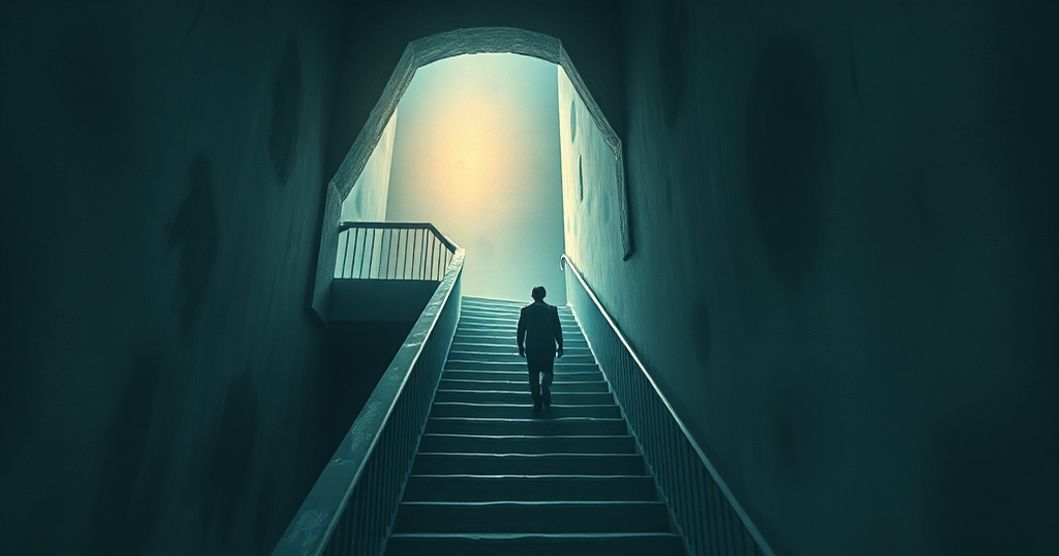
The first dream unfolds in a dimly lit environment bathed in orange light—a color often associated with caution, warmth, or anxiety in dream symbolism. The staircase, simultaneously familiar (resembling the dreamer’s actual home) and uncanny, represents a threshold between conscious awareness and the unconscious. As the dreamer ascends, the shadow child materializes—a figure that lacks distinct features, embodying the 'shadow' archetype from Jungian psychology. This shadow, appearing as a child, may symbolize repressed aspects of the self, particularly those associated with vulnerability, innocence, or unexpressed emotions. The act of reaching toward the dreamer’s face suggests an attempt at connection or confrontation, triggering primal fear that propels the dreamer awake.
The second dream shifts to a blue-lit staircase, a color evoking depth, sadness, or the unknown. The twin girls, pale and strawberry-blonde, represent duality and conflicting aspects of the self—perhaps the dreamer’s awareness of both light and dark sides, or past and present selves. Their backward-facing posture as they descend suggests a focus on the past or a retreat from the future, while their transformation into younger versions mirrors regression or the re-examination of childhood experiences. When they reverse positions to stand above the dreamer, they embody the shadow’s return, now in a position of power, reaching downward—a reversal of the first dream’s upward ascent, symbolizing a shift from approaching to being overwhelmed by the unconscious.
Want a More Personalized Interpretation?
Get your own AI-powered dream analysis tailored specifically to your dream
🔮Try Dream Analysis FreeThe recurring nature of these nightmares, combined with the sleep paralysis sensation, indicates a psychological state where the dreamer feels caught between two states of being—awake and asleep, conscious and unconscious—amplifying vulnerability. The inability to move or speak during sleep paralysis, a real phenomenon often linked to REM sleep disruption, translates metaphorically here to a sense of powerlessness in the face of inner forces.
Part 2: Clinical Analysis
Symbolic Landscape: Stairs, Children, and the Unconscious
Staircases in dreams universally symbolize life transitions, growth, and the journey of self-discovery. The ascending staircase in the first dream may represent the dreamer’s attempt to confront challenges or integrate new aspects of self, while the descending staircase in the second dream suggests a descent into the unconscious to retrieve repressed material. The house staircase, familiar yet 'not quite right,' reflects the dreamer’s relationship with their waking environment—perhaps feeling disconnected from home, identity, or personal values.
Children in dreams often embody the inner child, representing innocence, creativity, or unresolved childhood emotions. The shadow child, lacking distinct features, is a classic Jungian shadow archetype—a collection of repressed traits, fears, or memories the conscious mind has rejected. Its colorless form may signify the shadow’s anonymity, making it feel like an external threat rather than an internal one. The twin girls, with their strawberry-blonde hair and pale complexions, introduce a different layer of symbolism: twin archetypes often represent complementary forces, such as conscious and unconscious, masculine and feminine, or past and future selves. Their transformation into younger versions as they descend suggests a regression to childhood, where unresolved issues may still reside.
The color symbolism reinforces emotional undertones: orange, in the first dream, evokes caution or warning, signaling that the dreamer’s ascent is fraught with anxiety. Blue, in the second dream, suggests emotional depth or sadness, indicating a different emotional register in the unconscious journey. The reversal of positions—the shadow child and twin girls moving from below to above—represents a shift from approaching the unknown to being overwhelmed by it, a common pattern in nightmares where the dreamer loses control of the narrative.
Psychological Undercurrents: Fear, Control, and Identity
From a Jungian perspective, this dream sequence mirrors the individuation process—the journey toward wholeness by integrating conscious and unconscious parts. The shadow child represents the 'not me' aspects of the self that need acknowledgment, while the twin girls embody the dualities the dreamer must reconcile. The recurring nature of the dream suggests these aspects remain unresolved, requiring active engagement rather than avoidance.
Freudian theory might interpret the dreams through the lens of repressed anxieties, particularly those related to childhood. The shadow child could symbolize repressed fears of inadequacy or abandonment, while the twin girls might represent sibling rivalry or unresolved conflicts with authority figures. The sleep paralysis sensation aligns with Freud’s concept of the 'censor'—the unconscious blocking repressed material, causing anxiety when it breaks through.
Neuroscientifically, recurring nightmares often correlate with REM sleep fragmentation, trauma, or hyperarousal states. The brain’s default mode network, active during dreaming, processes emotional memories and unresolved conflicts, explaining why similar themes repeat. The dreamer’s mention of sleep paralysis suggests a hypervigilant state, where the body’s natural paralysis during REM is perceived as threatening, amplifying the fear response.
Emotional Context: Unresolved Fears and Developmental Echoes
The dreamer’s description of 'almost feels a bit like sleep paralysis' hints at underlying vulnerability and fear of losing control. Sleep paralysis often occurs during periods of high stress or when the body’s circadian rhythms are disrupted, suggesting the dreamer may be experiencing waking life stressors that trigger this hyperarousal. The recurring nature of the nightmare implies these stressors are persistent or unprocessed.
The staircase imagery could reflect the dreamer’s relationship with life transitions—perhaps recent changes in career, relationships, or self-perception. Ascending might represent ambition or growth, while descending could symbolize a need to let go of old identities or expectations. The children’s transformation into younger versions suggests a longing to revisit or heal childhood wounds, perhaps related to feelings of powerlessness or neglect.
The twins’ reversal from below to above mirrors the dreamer’s internal power shifts—from feeling in control to feeling trapped. This dynamic often occurs when the unconscious demands attention, forcing the dreamer to confront aspects of self they’ve been avoiding. The dream’s repetition serves as a call to action, urging the dreamer to examine these themes before they escalate into more severe anxiety.
Therapeutic Insights: Navigating the Unconscious Staircase
To integrate these dream themes, the dreamer can begin by journaling about recurring dreams, noting when they occur and any waking life triggers. This practice increases self-awareness of patterns and helps identify underlying emotional states.
Active imagination, a Jungian technique, involves visualizing the shadow child and engaging in dialogue with it. This process can demystify the fear by humanizing the shadow, transforming it from an external threat to an internal teacher. The dreamer might ask: 'What do you need from me?' or 'What am I avoiding?'
For the sleep paralysis sensation, grounding techniques during waking hours can reduce hyperarousal. Practices like 4-7-8 breathing (inhale for 4, hold for 7, exhale for 8) or progressive muscle relaxation can calm the nervous system, reducing the likelihood of sleep paralysis and its associated fear.
Exploring the twin archetype through art or writing can reveal the dualities the dreamer struggles with. By creating visual representations of the twins, the dreamer can externalize these conflicting forces and begin to integrate them, rather than being overwhelmed by them.
FAQ Section
Q: Why do the children in my dreams feel threatening rather than comforting?
A: Children in dreams often represent the inner child, but their shadowy or spectral nature suggests unresolved fear or trauma. The shadow child’s anonymity and the twins’ transformation create uncertainty, triggering protective instincts. This reflects unintegrated parts of yourself needing acknowledgment.
Q: What does it mean when the twins get younger as I descend the stairs?
A: Their regression suggests a need to revisit childhood experiences or emotional states. This could indicate unresolved issues from earlier life stages or a desire to recapture lost innocence. The descent into the unconscious may be retrieving these elements for healing.
Q: How can I differentiate between helpful dream messages and just anxiety?
A: Dreams with recurring themes often signal unprocessed emotions. If the dream evokes fear but provides clarity, it’s a message to integrate shadow aspects. Anxiety dreams lack this clarity; focus on journaling to track if the dream connects to waking stressors needing resolution.