
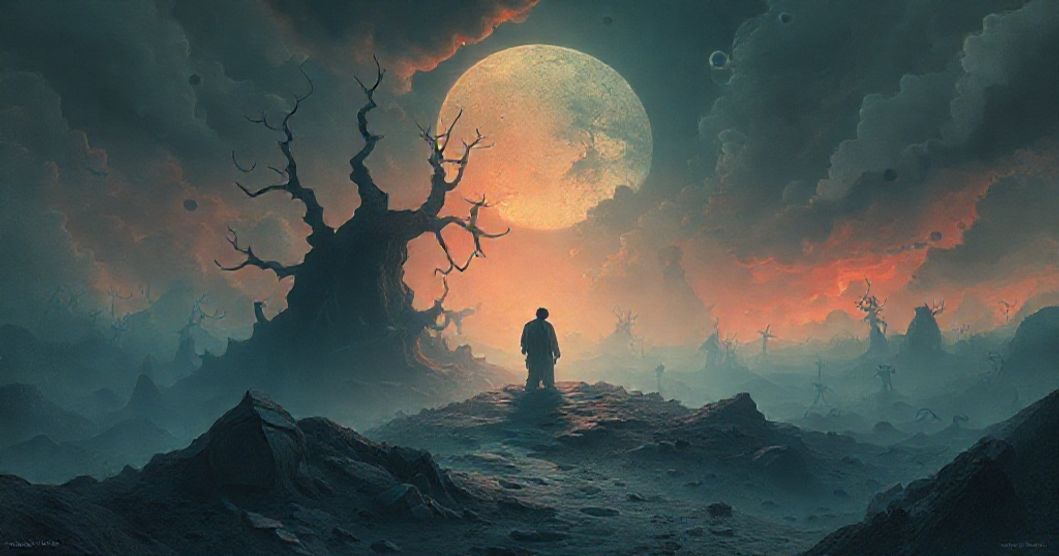
Part 1: Dream Presentation
Dreams have long served as psychological mirrors, reflecting the unconscious’s deepest concerns, and for this 29-year-old man, they’ve become a recurring portal to unsettling scenarios over the past decade. Since 2014, he experiences nightmares approximately five times monthly, each ending in death—ranging from subtle stillness to more graphic imagery—featuring both strangers and familiar faces. These recurring dreams, while numbing in their frequency, paradoxically evoke rare normal dreams that feel far more terrifying. Most recently, a vivid encounter with a former love interest in a café dream coincided with news of her brain surgery, leaving him questioning the boundary between dream and reality. Raised in poverty yet now with a fulfilling career, he grapples with these nightmares as his mind processes an existence that, despite its comforts, still feels haunted by unresolved emotional currents.
The rewritten dream narrative: Since 2014, my sleep has become a recurring theater of endings. Each month, five times like clockwork, I step into a dreamscape where the final curtain always falls to death—some swift, some slow, but always definitive. I’ve never been a frequent dreamer, yet these nightmares feel inevitable, as if my unconscious has a script it’s desperate to perform. The faces in these dreams shift: sometimes strangers with hollow eyes, their features indistinct but their presence charged with dread; other times, people I recognize from waking life—colleagues, neighbors, even distant relatives—though their expressions remain fixed in silent horror. The setting rarely varies: dimly lit rooms, fog-choked streets, or endless corridors with no exits. The deaths themselves aren’t always violent—sometimes it’s a quiet collapse, a sudden stillness that feels more like an erasure than a struggle. Yet the terror lingers not in the act, but in the aftermath: the weight of knowing nothing will ever be the same, the realization that this is not just a dream but a story my mind insists on replaying. I’ve grown accustomed to the dread, yet it never fully fades. My body betrays me in rare moments: a gasp, a flinch, or once, years ago, a scream that jolted me awake, heart hammering. But mostly, I lie there, processing the residue like a movie I can’t turn off—the taste of ash in my mouth, the tremor in my hands when I try to recall the faces of strangers. Then there are the rare normal dreams, which are far more unsettling. Once or twice a year, I’ll have a dream so vivid, so ordinary, that when I wake, I’m convinced I’ve stumbled into a memory. The most recent one: I found myself in a familiar café, sunlight streaming through the windows, and there she was—the girl I loved years ago, laughing as we shared a pastry. We talked easily, no awkwardness, just the comfort of old friends. But as I woke, the dream’s clarity dissolved into a cold knot of fear. Hours later, I reached out to her, and the news came: she was in the hospital, undergoing brain surgery. The timing felt too precise, too uncanny. Did my mind know something I didn’t? Or was it just a coincidence, my overactive imagination stitching together past and present? My father used to say that the dead visited in dreams, that his own ancestors had spoken to him in the night. I never believed him then, but now, with the nightmares stretching on for over a decade, I find myself considering all possibilities. Could these dreams be a bridge between worlds, or just my mind’s way of processing a life that, despite its comforts, still feels incomplete? I help people daily in my fulfilling job, and I love my family, yet the dreams persist—endless, inevitable, and deeply personal. I’m not sure if I’m desensitized, or if I’ve simply learned to navigate the darkness within. Either way, these nightmares feel like a language I’ve yet to decode, a message my unconscious is desperate to send.
Part 2: Clinical Analysis
Want a More Personalized Interpretation?
Get your own AI-powered dream analysis tailored specifically to your dream
🔮Try Dream Analysis FreeThe Symbolic Landscape of Death in Dreams
Death imagery in recurring nightmares rarely signifies literal mortality but rather psychological endings, transformations, or unresolved emotional states. For this dreamer, the consistent presence of death suggests a deep-seated fear of loss—whether of control, relationships, or identity—manifesting in symbolic form. The distinction between unknown and known faces reveals layers of the unconscious: strangers may represent repressed fears or unacknowledged aspects of self, while familiar figures could symbolize unresolved relationships or guilt. The dreamer’s