
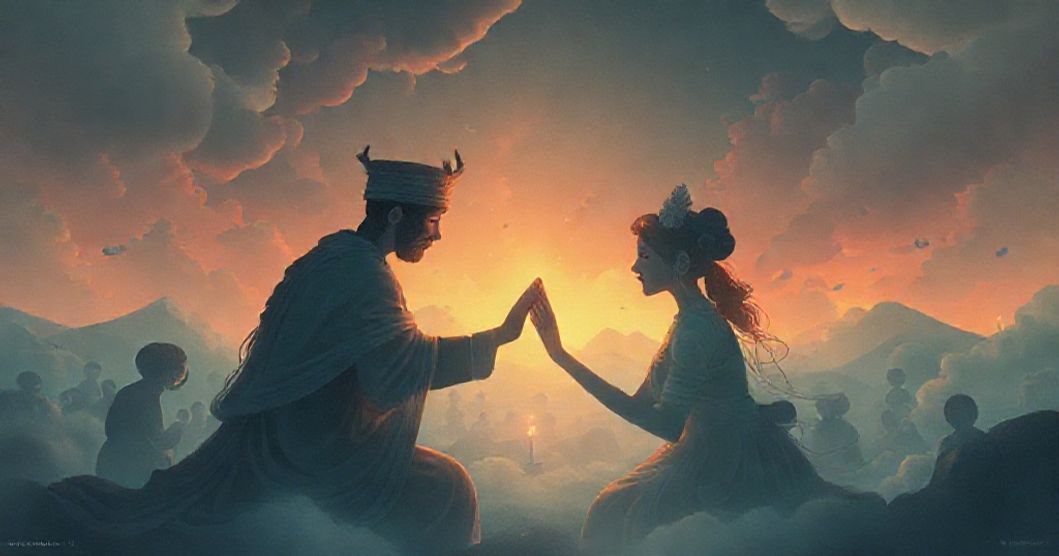
Part 1: Dream Presentation
Dreams often serve as mirrors to our internal conflicts, reflecting tensions between conscious desires and unconscious pressures. This particular dream unfolds as a stark narrative of forced union, ritual constraint, and the visceral struggle between agency and compulsion. The dreamer finds themselves in a situation where a ritual marriage is imposed, despite profound horror and aversion. A dark-skinned woman, her hands marked by labor and vulnerability, becomes the unwilling participant in a symbolic act that the dreamer is forced to perform—stringing guitar-like objects through her fingertips. The dream’s conclusion, marked by silence and resignation, leaves the dreamer grappling with unresolved conflict, awakening to seek escape through coffee.
Part 2: Clinical Analysis
Symbolic Landscape: Decoding the Dream’s Visual Language
Want a More Personalized Interpretation?
Get your own AI-powered dream analysis tailored specifically to your dream
🔮Try Dream Analysis FreeThe dream’s central imagery—forced marriage, ritual constraint, and the hands as both instruments and victims of the ritual—reveals a complex web of symbolic meaning. The forced marriage itself functions as a powerful metaphor for situations in waking life where the dreamer feels coerced into commitments or relationships against their will. This could manifest as professional obligations, social expectations, or even emotional bonds that feel imposed rather than chosen. The ritual nature of the marriage adds layers of cultural and psychological significance, suggesting a deeper need to conform to unwritten rules or societal pressures.
The woman’s hands are particularly telling. Her dry, calloused palms and swollen fingertips, marked by small holes, suggest years of labor and resilience. The holes, in particular, serve as a powerful symbol of vulnerability and penetration—they imply both the violation of her body and the dreamer’s complicity in that violation. The guitar strings, with their rounded ends, evoke creativity and musical expression, yet here they are repurposed as tools of constraint. The act of 'stringing a human being' through these holes mirrors the dreamer’s sense that their life is being controlled or 'strung along' by external forces, with no agency over the outcome.
Psychological Currents: Theoretical Perspectives
From a Jungian perspective, this dream may reflect the Shadow archetype—the unconscious aspects of the self that feel foreign or threatening. The forced marriage could represent the Shadow’s projection of repressed desires or unintegrated parts of the self that the dreamer finds difficult to accept. The ritual’s specificity suggests a collective or cultural element, possibly referencing ancestral pressures, societal expectations, or historical narratives of constraint.
Freudian theory might interpret the dream as a manifestation of repressed conflicts around control and intimacy. The inability to stop the ritual despite revulsion could symbolize unresolved guilt or fear of consequences, even when acting against one’s values. The hands, as erogenous zones, may also represent unconscious anxieties about physical connection and vulnerability.
Cognitive psychology frames the dream as a processing mechanism for emotional stressors. The dreamer’s focus on the ritual’s mechanics (stringing through holes) suggests an attempt to rationalize an irrational situation, a common defense mechanism when facing overwhelming pressure in waking life.
Emotional & Life Context: Unpacking the Dreamer’s Internal Landscape
The dream’s emotional core—horror, aversion, and resignation—likely reflects waking life experiences of feeling trapped or coerced. The dreamer may be navigating a situation where external expectations (professional, familial, or social) override personal desires. The fear of 'unknown consequences' that prevents stopping the ritual hints at underlying anxieties about breaking established patterns or disappointing others.
The woman’s dark skin and calloused hands may symbolize resilience and labor, possibly referencing historical or cultural narratives of marginalized groups facing systemic constraints. The dreamer’s visceral reaction to touching her hands could represent discomfort with power dynamics or a sense of being 'used' in relationships.
Therapeutic Insights: Practical Reflections and Integration
This dream invites the dreamer to examine areas of their life where they feel coerced into actions against their will. Journaling exercises could help identify specific waking situations that mirror the dream’s themes—whether professional obligations, social commitments, or emotional bonds. Reflective questions like 'When do I feel most like I’m being forced into something?' can uncover patterns of compliance.
The dream also suggests the need to honor the body’s wisdom—the 'screaming' of the dreamer’s body to stop the ritual. In waking life, practicing assertiveness and setting boundaries may help reclaim agency. The dream’s silence and resignation upon completion could indicate a need to process unresolved grief or anger about situations that feel out of control.
FAQ Section
Q: Does the dream’s cultural reference to an African woman add specific meaning?
A: The woman’s description likely reflects the dreamer’s connection to themes of resilience, labor, or cultural identity, rather than literal ethnicity. Dark skin often symbolizes depth, history, and collective experiences of constraint.
Q: What does 'stringing a human being' with guitar strings represent?
A: It symbolizes feeling one’s life is controlled by external forces, with the strings representing invisible constraints or expectations. The 'guitar' element contrasts creativity with coercion.
Q: Why did the dream end in silence and resignation?
A: Silence reflects the internalization of the dream’s conflict, while resignation suggests the dreamer’s struggle to accept the situation without resolution. This mirrors waking life’s difficulty in changing unhelpful patterns.