
Part 1: Dream Presentation
Dreams have long served as windows into the unconscious mind, revealing fragments of our deepest fears, unresolved conflicts, and unacknowledged emotions. This particular dream narrative—recounted by a childhood experience with recurring nightmares—unfolds as a compelling exploration of primal anxieties that persist beyond the developmental years. As a child, the dreamer endured two distinct nightmare patterns that left lasting impressions: one involving an inescapable mechanical threat and another depicting existential shrinking within an overwhelming space.
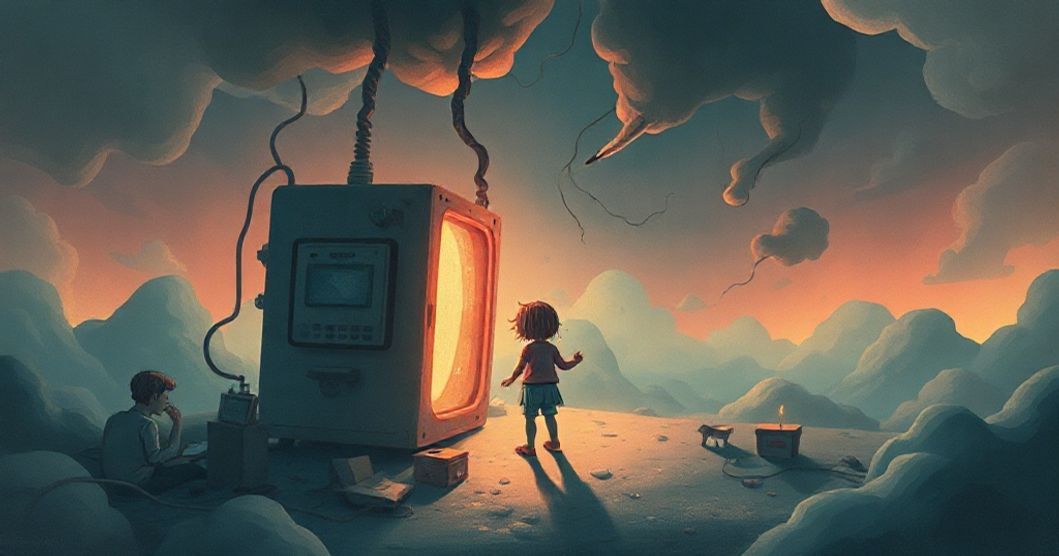
As a child, I endured recurring nightmares that felt both viscerally real and deeply disorienting. One particular nightmare, which repeated with mechanical precision, depicted a massive industrial machine advancing toward my face. From my perspective, it was as if I stood at the mercy of an inescapable force—a metallic behemoth with smooth, unyielding surfaces that gleamed faintly in the dim, dreamlike light. The machine’s mechanism moved with deliberate, menacing slowness, its crushing components closing in on my face. I could feel the weight of its approach, the cold metal edging closer until it was inches from my skin, the breath of the dream world suspended in anticipatory terror. Despite the overwhelming fear, I never actually felt the crushing pressure; it merely hovered, a threat perpetually inches from realization. The endless cycle of this near-squeeze, the mechanical repetition without fulfillment, created a visceral dread that lingered even after waking, leaving me gasping for breath and disoriented in the dark of my bedroom.
Equally terrifying were the dreams where the room itself seemed to transform. In these nightmares, the boundaries of my surroundings expanded infinitely, stretching upward and outward into an endless void, while my own body contracted—shrinking to the size of a child, then smaller still. The walls receded, dissolving into darkness, while I felt myself diminishing, my limbs folding inward like a deflating balloon. The air grew thin, the silence oppressive, and I experienced a primal sense of powerlessness against forces beyond my control. These two recurring nightmares—one of inescapable mechanical threat, the other of existential shrinking in an overwhelming space—haunted my sleep for years, leaving me waking in cold sweats and disoriented fear. I wonder if others have experienced similar manifestations of childhood anxiety in their dreams.
Want a More Personalized Interpretation?
Get your own AI-powered dream analysis tailored specifically to your dream
🔮Try Dream Analysis FreePart 2: Clinical Analysis
Symbolic Landscape: The Machinery and the Shrinking Self
The recurring nightmare of the machinery closing on the face offers a rich symbolic landscape. The massive industrial machine represents external pressures, responsibilities, or authoritative forces that feel inescapable yet never fully realized as a complete threat. The machine’s partial closure—never fully squeezing the dreamer’s face—suggests an unresolved tension rather than a definitive danger. This partial threat mirrors the ambiguous nature of childhood anxieties, where fears often feel overwhelming but lack clear resolution. The machinery’s cold, metallic nature symbolizes emotional detachment or the mechanization of fear, while the dreamer’s inability to escape creates a primal sense of vulnerability.
The second nightmare—where the room expands and the dreamer shrinks—represents existential anxiety and loss of control. The shrinking self in an overwhelming space embodies feelings of insignificance, powerlessness, and the fear of being overwhelmed by adult responsibilities or societal pressures. This transformation of physical space and personal scale reflects the child’s perspective of the adult world as vast, unknowable, and potentially threatening. The expanding room without clear boundaries suggests an environment that lacks structure or safety, triggering primal fears of abandonment or insignificance.
Psychological Undercurrents: Jungian, Freudian, and Modern Perspectives
From a Jungian perspective, these nightmares may represent archetypal fears and shadow aspects. The machinery could symbolize the