
Part 1: Dream Presentation
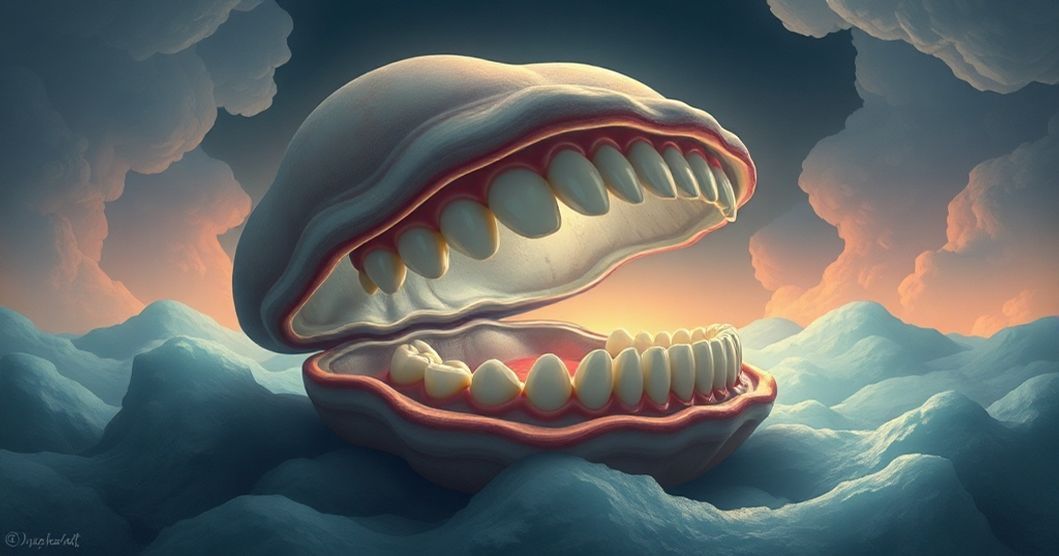
Dreams often serve as windows into our unconscious minds, revealing truths we might otherwise ignore or suppress. In this particular dream, the visceral experience of dental pain and transformation offers profound insights into the interplay between physical sensations and emotional states. The dream begins with an excruciating toothache, so intense that the dreamer finds themselves examining their reflection in a mirror—a moment of self-scrutiny that reveals dark, unusual blood oozing from the gums. This act of inspection evolves into a desperate act of extraction: the dreamer pulls out their canine tooth, which has transformed into something extraordinary—a pearl attached to a cracked nacreous shell, evoking the iridescent beauty of marine life. The dream’s emotional core lies in its physical realism—the dreamer can feel the pain, the texture of the shell, and the unsettling nature of this transformation. This dream, rich with symbolic imagery, invites exploration into themes of self-image, vulnerability, and the connection between physical health and psychological well-being.
The dream narrative unfolds with remarkable clarity: a severe toothache, visual inspection in a mirror, the appearance of black blood, the extraction of a canine tooth, and the unexpected marine shell-pearl hybrid. The dreamer explicitly connects this experience to bruxism, suggesting a potential waking context for the dream’s themes of dental distress and physical discomfort. This connection between waking stressors and dream imagery is crucial for understanding the dream’s psychological significance, as bruxism often reflects unconscious tension or emotional pressure manifesting physically.
Symbolic Landscape: Teeth, Blood, and Shells
Want a More Personalized Interpretation?
Get your own AI-powered dream analysis tailored specifically to your dream
🔮Try Dream Analysis FreeIn dream symbolism, teeth represent multiple layers of meaning: they often symbolize power, self-expression, and vulnerability. The canine tooth, in particular, carries additional significance as a symbol of aggression, protection, and sexual vitality in Jungian psychology. The act of pulling out a tooth in a dream typically reflects a fear of losing control or power, or a desire to shed something that feels harmful. Here, the transformation of the tooth into a marine shell introduces an unexpected element: shells symbolize protection, growth, and the boundary between self and environment, while nacre (mother-of-pearl) represents beauty emerging from adversity. The black blood adds another layer of complexity, often signifying hidden emotions or suppressed truths that have reached a breaking point.
The canine tooth’s transformation into a pearl attached to a nacreous shell suggests a process of refinement or transformation. Pearls form from irritation within an oyster, symbolizing growth through adversity—a common theme in dreams about transformation. The cracked shell might indicate vulnerability or a sense of imperfection, yet the presence of a perfect pearl within hints at hidden value or beauty beneath surface appearances. This hybrid creature—part human tooth, part marine shell—blurs the boundaries between the self and nature, suggesting an integration of internal and external experiences.
Psychological Undercurrents: Bruxism and the Unconscious
Bruxism, or teeth grinding, often occurs during sleep as a response to stress, anxiety, or unresolved emotional conflicts. In waking life, bruxism is a physical manifestation of unconscious tension, while in dreams, dental pain and extraction can symbolize the same underlying psychological stress. From a Freudian perspective, teeth might represent sexual energy or oral desires, and pain could signify repressed impulses or unmet needs. The act of pulling out the tooth in the dream could be interpreted as an attempt to control or eliminate something that feels threatening or uncomfortable.
Jungian psychology offers a different lens, viewing dreams as expressions of the collective unconscious. The canine tooth, as a symbol of the