
Part 1: Dream Presentation
The mind’s theater often conjures scenes that defy waking logic yet carry profound emotional weight. In this dream, the dreamer steps into a familiar yet disorienting domestic space before being thrust into a cataclysmic external world. What begins as an ordinary moment in a house transforms into a surreal apocalypse when the sky bleeds crimson—a color traditionally associated with sacrifice, danger, and divine judgment. As the dream unfolds, the dreamer observes a world unraveling: buildings collapse, streets fill with abandoned vehicles, and homes disintegrate. Amidst this destruction, two colossal figures emerge—Jesus and the Devil—engaged in a cosmic battle that shakes the very foundations of reality. The dreamer’s immediate recognition of these archetypal figures, followed by their awakening, suggests a powerful emotional impact and unresolved psychological tension.
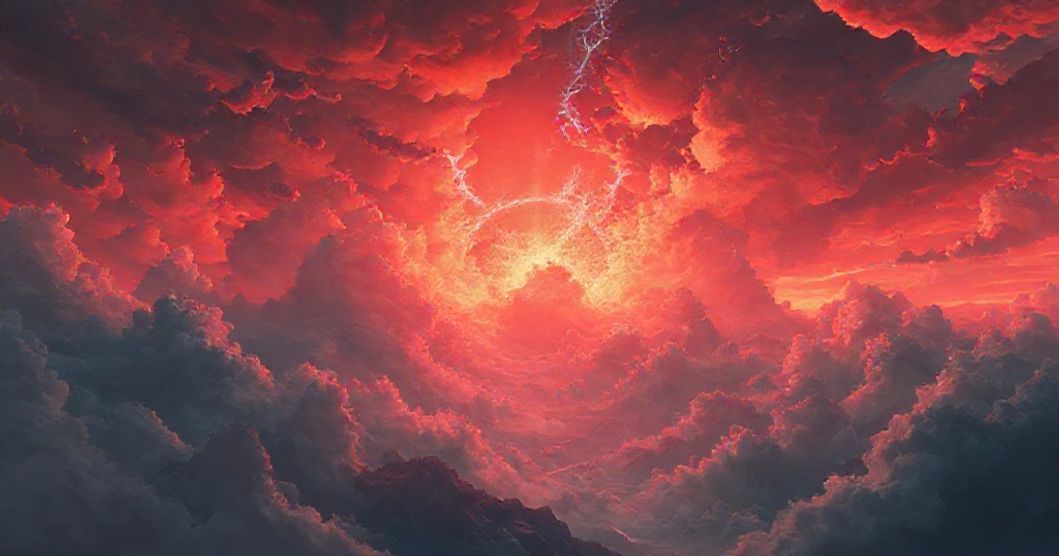
I found myself standing in the quiet of a familiar house, though its layout felt strangely unfamiliar—furniture rearranged, corners I didn’t recognize. The air was still, almost oppressively so, until without warning, the sky outside transformed. What had been a normal afternoon sky bled into a vivid crimson, as if the heavens themselves had split open and spilled their deepest blood. I stepped outside, drawn by an inexplicable urgency, and gasped at the sight: swirling red clouds roiled overhead, lightning arcing between them like jagged veins of fire. The world around me began to unravel. Buildings crumbled in the distance, their foundations cracking and concrete pillars crumbling into dust. Streets, once bustling with life, were now silent except for the occasional groan of collapsing structures, lined with abandoned cars that had been frozen in time. Houses tore themselves apart, their wooden frames splintering like matchsticks in the wind. Then, from amidst the chaos, I heard a sound—a colossal clash, like mountains colliding. I turned to see two figures, colossal beyond comprehension, their forms towering over the tallest skyscrapers. They were humanoid, yet not quite—their features blurred in the distance, but I recognized them immediately: one radiated an otherworldly light, the other exuded a shadowy malevolence. They were locked in combat, their fists colliding with a sound that shook the very ground. Each impact sent shockwaves through the city, reducing more structures to rubble. As I watched this cosmic struggle unfold, I realized with a jolt of terror that these were no ordinary giants—they were Jesus and the Devil, their divine and infernal essences made manifest in physical form. The realization hit me like a lightning strike; I felt paralyzed by both awe and dread. In that moment, the dream shattered, and I woke with a gasp, heart pounding, the memory of that red sky and clashing titans still vivid in my mind.
Part 2: Clinical Analysis
Want a More Personalized Interpretation?
Get your own AI-powered dream analysis tailored specifically to your dream
🔮Try Dream Analysis FreeSymbolic Landscape: The Language of Color and Conflict
The dream’s most striking element is the blood-red sky, a color rich with symbolic potential. In dream imagery, red frequently represents intense emotions—rage, passion, danger, or spiritual awakening. Here, the crimson sky functions as a threshold between the mundane and the transcendent, signaling that the dreamer’s inner world is undergoing profound transformation. The swirling clouds and lightning add to this sense of cosmic upheaval, suggesting internal turmoil manifesting externally.
The collapsing structures and abandoned cars represent the crumbling of old belief systems or life patterns. This destruction serves as both threat and opportunity, mirroring how major life changes often feel apocalyptic before revealing new possibilities. The two humanoid figures—Jesus and the Devil—embody the fundamental human struggle between good and evil, light and darkness, or divine and demonic aspects of the psyche. Their scale, towering over the city, emphasizes their overwhelming nature, suggesting these forces feel inescapable in the dreamer’s current emotional landscape.
Psychological Lenses: Jungian, Freudian, and Modern Perspectives
From a Jungian perspective, Jesus and the Devil represent the animus and shadow archetypes—respectively, the masculine, protective, and nurturing aspects of the psyche and the repressed, darker elements of self. Their physical confrontation mirrors the dreamer’s internal integration process, where these opposing forces must come into contact before psychological wholeness can occur. The house as a starting point symbolizes the conscious mind, while the external destruction represents the unconscious breaking into awareness.
Freudian theory might interpret this as a manifestation of repressed moral conflicts or unresolved guilt. The Devil figure could represent forbidden desires or impulses, while Jesus embodies the superego’s demands for moral perfection. The dream’s emphasis on judgment and cosmic consequence aligns with Freudian concepts of the dream as a compromise formation between repressed wishes and defensive censorship.
Modern psychology, particularly the work of Carl Jung and contemporary dream researchers, views such dreams as indicators of psychological development. The clash between divine and infernal figures suggests the dreamer is navigating a period of spiritual questioning or existential crisis, where traditional belief systems are being challenged.
Emotional Undercurrents: Fear, Divinity, and Existential Choices
The dreamer’s emotional response—shock, awe, and dread—reflects the intensity of confronting one’s inner conflicts. The sudden destruction and the overwhelming figures create a sense of existential threat, yet the dreamer’s ability to observe and recognize the figures suggests a degree of psychological detachment. This paradox might indicate the dreamer is simultaneously both terrified of and drawn to these internal forces.
The dream likely arises from a period of significant life transition, where the dreamer is reevaluating values, relationships, or spiritual beliefs. The clash between divine and demonic forces mirrors the common human experience of choosing between competing moral frameworks or life paths. The house, initially familiar and then disorienting, represents the dreamer’s attempt to maintain stability while the world around them (and within them) transforms.
Therapeutic Pathways: Navigating Inner Conflicts
This dream offers valuable therapeutic insights. First, it urges the dreamer to examine their relationship with moral absolutes—are they rigidly adhering to traditional concepts of good and evil, or is there room for nuance? The dream suggests that confronting these dualities is necessary for psychological growth.
Journaling exercises could help unpack the dream’s details: What specific aspects of the dream felt most intense? What emotions did the figures evoke? Exploring these questions can reveal underlying fears or hopes. The dreamer might benefit from exploring their spiritual beliefs and how they navigate moral dilemmas in waking life.
Mindfulness practices, particularly those involving breathwork and grounding techniques, can help manage the anxiety this dream evokes. By recognizing the symbolic nature of the destruction, the dreamer can reframe it as a necessary part of growth rather than an inevitable disaster.
FAQ: Understanding the Clash of Divine Forces
Q: Why did the dreamer see Jesus and the Devil as the only two figures?
A: These figures represent the fundamental polarities the dreamer is grappling with—perhaps spiritual identity, moral choices, or competing life paths. Their prominence suggests these are the most pressing internal conflicts.
Q: What does it mean when the dreamer wakes immediately after the clash?
A: Waking suddenly during a climactic dream moment often indicates the dreamer’s unconscious is signaling that these internal forces require immediate attention. The abrupt ending may reflect the dreamer’s need to process these emotions in waking life rather than remaining in denial.
Q: How can this dream help with personal growth?
A: By recognizing the symbolic nature of the clash, the dreamer can begin integrating opposing aspects of self rather than seeing them as enemies. This integration process leads to greater self-acceptance and psychological resilience.
Keywords: dream symbolism, red sky, divine conflict, psychological integration, existential crisis, moral dilemmas, shadow archetype, animus archetype, unconscious processing, spiritual awakening , entities: