
Part 1: Dream Presentation
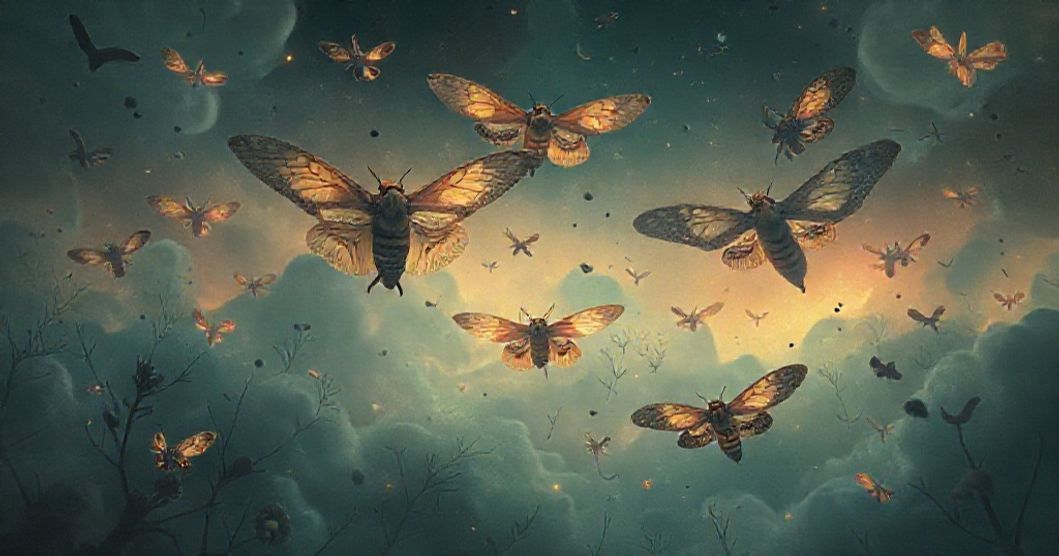
Dreams have a remarkable way of distilling our most primal anxieties into surreal narratives, and this particular dream offers a vivid, unsettling portrait of parental vulnerability and symbolic imagery. In the dream, my toddler—with their small, chubby hands—had somehow collected five or more brown moths, their delicate wings dusted with a fine, grayish powder that made them look as though they’d crawled through some forgotten corner of the world. The child’s expression was a curious mix of fascination and obliviousness as they crushed the moths between their palms, tiny teeth sinking into the insects with disturbing calm. I felt a primal panic surge through me, my chest tightening as I lunged forward, desperate to pry the moths from their mouth. But every time I turned away—whether to grab a cloth or call for help—the scene repeated: my toddler, undeterred, would find another moth, crushing it and attempting to swallow it. In the background, a muted, indistinct monologue played, its words fragmented but clearly fixated on themes of 'control' and 'management.' I cried out in desperation, 'But my toddler can’t be eating bugs!' The dream’s tension escalated as I noticed tiny, wriggling moth larvae crawling across my skin, their dark bodies squirming beneath my awareness. I woke with a start, heart pounding, convinced I could still feel their minuscule legs against my skin. Now, as I sit awake, I can’t shake the irrational urge to check my blankets for bugs, my mind fixated on the danger of something so small yet seemingly inescapable.
Part 2: Clinical Analysis
Symbolic Landscape: Moths, Control, and Contamination
Want a More Personalized Interpretation?
Get your own AI-powered dream analysis tailored specifically to your dream
🔮Try Dream Analysis FreeThe moths in this dream serve as powerful symbols of 'small, persistent threats' that we often overlook in waking life. Their delicate, fluttering nature contrasts with the violence of the child’s consumption—moths traditionally represent transformation, hidden dangers, and the 'invisible' aspects of our environment. The five or more moths may signify accumulated anxieties, each representing a separate concern that feels manageable individually but overwhelming collectively. The 'fine, grayish powder' on the moths suggests an 'unseen contamination'—a metaphor for threats we can’t clearly identify but sense in our peripheries. The child’s act of crushing and eating the moths embodies a primal fear of loss of control: the dreamer is simultaneously horrified by the child’s exposure to danger and the child’s apparent lack of awareness of harm.
The 'monologue about control' in the background introduces an external/internal pressure dynamic. This could represent societal expectations of parenting perfection, or the dreamer’s own internal voice demanding order in chaos. The phrase 'But my toddler can’t be crushing bugs!' crystallizes the emotional core: the dreamer’s desperate assertion of normalcy in the face of something inherently abnormal, revealing a deeper fear of their child’s vulnerability and their own inability to shield them perfectly.
Psychological Undercurrents: Jungian and Freudian Perspectives
From a Jungian framework, the moths and larvae represent the 'shadow'—the unconscious aspects of the self that we struggle to acknowledge or control. The child in the dream may symbolize the dreamer’s inner child, exploring forbidden territories, or it could represent the dreamer’s own vulnerability in the face of uncontrollable forces. The dream’s focus on 'control' aligns with Jung’s concept of the 'anima/animus'—the archetype of the feminine/masculine self that seeks integration, suggesting the dreamer may be grappling with a part of themselves that feels out of balance.
Freudian analysis would likely interpret the child’s consumption of moths as an expression of the oral stage—an infantile fixation on exploration through the mouth. The dreamer’s panic could reflect repressed anxieties about their own childhood experiences with contamination or forbidden objects, projected onto the child. The 'monologue about control' might stem from the dreamer’s superego, imposing rigid rules on a situation that feels inherently messy and uncontrollable.
Cognitively, the dream functions as a 'problem-solving mechanism'—processing real-life stressors through symbolic imagery. The moth larvae crawling on the dreamer’s skin mirror the 'unresolved worries' that feel inescapable, even after waking. The dream’s repetition of the child eating moths represents the dreamer’s attempt to work through the same anxiety cycle in different scenarios.
Emotional and Life Context: Parental Fears and Safety Boundaries
This dream likely emerges from the intersection of several real-life stressors. The dreamer’s panic around 'something so small yet seemingly inescapable' suggests recent experiences with minor but persistent threats—perhaps a new environment, illness, or changes in the child’s routine that have heightened sensitivity to safety. The 'dust' on the moths could symbolize the invisible contaminants of modern life: environmental concerns, social pressures, or even digital information that feels inescapable.
The 'monologue about control' hints at broader feelings of losing agency in parenting. Many parents experience a paradoxical tension between wanting to protect their children and accepting that some experiences are inevitable. The dream amplifies this tension by making the 'contamination' literal and tangible, turning abstract fears into a visceral, sensory experience.
Therapeutic Insights: Unpacking the Dream’s Messages
The dream invites the dreamer to distinguish between real threats and symbolic ones. The moths, while initially terrifying, can be reframed as opportunities for growth: perhaps the dreamer needs to address specific, manageable concerns rather than allowing anxiety to escalate into paranoia. Reflective journaling about recent parenting stressors could help identify which real-world 'moths' are causing this internal infestation.
Mindfulness practices focused on grounding techniques can help manage the 'larvae crawling' feeling of being overwhelmed by small, persistent worries. The dream suggests the need to 'decontaminate' the mind by separating manageable concerns from those that are truly dangerous. For example, creating a physical 'safety ritual'—like checking for bugs in a controlled, deliberate way—can transform irrational paranoia into a healthy, actionable habit.
FAQ Section
Q: Why do moths specifically appear in this dream?
A: Moths symbolize hidden threats, transformation, and the 'small but persistent' anxieties we overlook. They represent the dreamer’s struggle with invisible dangers in daily life.
Q: What does it mean when a child in a dream eats something unsafe?
A: This reflects the dreamer’s fear of their child’s vulnerability and their own inability to shield them perfectly. It may also project the dreamer’s anxiety about their child’s exploration of boundaries.
Q: How can I differentiate between real danger and symbolic anxiety in this dream?
A: Ask: What specific real-world stressors feel uncontrollable? The dream’s power lies in its metaphor—focus on actionable steps to address real concerns, not the symbolic 'moths' that feel overwhelming but are manageable.