
Part 1: Dream Presentation
Dreams, even the most disturbing ones, often serve as windows into a child’s developing emotional landscape, especially during early childhood when language struggles to fully articulate inner experiences. In this case, a parent’s account of their four-year-old son’s terrifying dream reveals a powerful narrative that demands careful exploration. The child woke screaming, his small body trembling as he described a 'bad guy' using sharp scissors to cut his skin—a deeply unsettling image for any parent to hear. The dream’s intensity and specificity suggest more than random imagery; it likely reflects the child’s emerging sense of self, body boundaries, and fear of threats to safety during a vulnerable developmental stage.
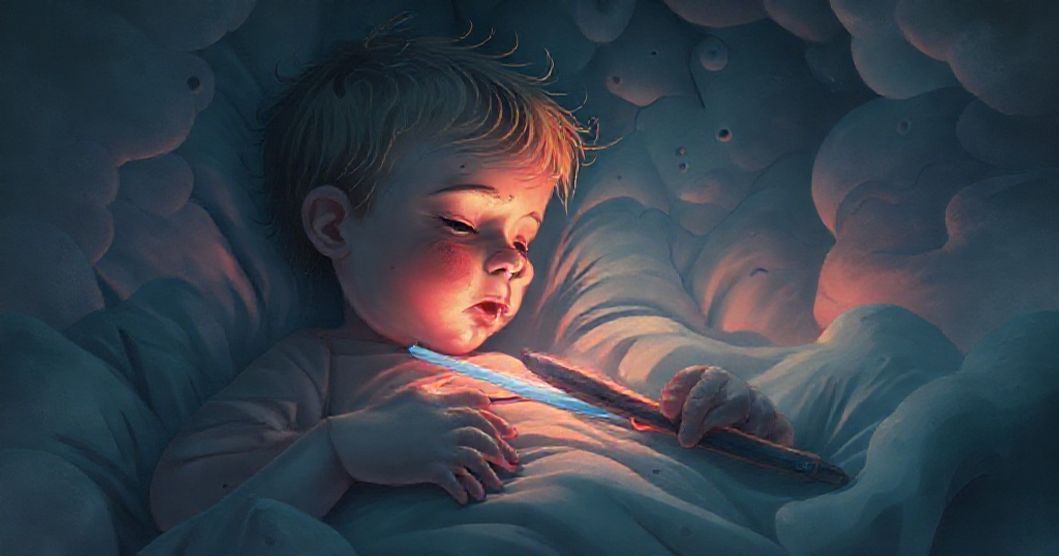
My four-year-old son woke with a cry that shattered the quiet of our bedroom, his small body trembling as he thrashed in the sheets. I rushed to his side, scooping him into my arms and pressing my face against his damp forehead. 'Shhh, buddy, it's okay,' I whispered, rocking him gently while my heart raced. 'I'm here.' After several minutes, his sobs softened into sniffles, and he buried his face in the crook of my neck. 'I had a bad dream,' he mumbled, his voice still thick with fear. When I asked him to tell me about it, his tiny fingers clutched my shirt, and he trembled as he spoke. 'There was a bad guy,' he said, his eyes wide with terror. 'He was cutting my skin with scissors that were so sharp.' He lifted his arm, as if to show me where the imaginary cuts had been, his brow furrowed in confusion and pain. 'It felt like he was taking my skin away,' he added, his voice cracking. I pulled him closer, wondering if I'd ever heard a more disturbing description from such a young child. At four, he should be lost in adventures of dragons and princesses—not nightmares of bodily harm. Is this too dark for his age? What could it possibly mean? The image of those sharp scissors and the 'bad guy' lingered in my mind, leaving me both worried and desperate to understand what my son's subconscious might be trying to tell us.
Part 2: Clinical Analysis
Want a More Personalized Interpretation?
Get your own AI-powered dream analysis tailored specifically to your dream
🔮Try Dream Analysis FreeSymbolic Landscape: The Language of a Child's Nightmare
In children’s dreams, especially those involving bodily harm, the imagery rarely carries literal meaning but rather expresses complex emotional states through primal symbols. The 'bad guy' represents a vague, externalized fear rather than a specific person—a common phenomenon in childhood when threats feel abstract and overwhelming. For a four-year-old, the concept of 'cutting skin' likely relates to the child’s emerging sense of self and body boundaries. Skin imagery in dreams often connects to vulnerability, exposure, or protection—all critical themes during early childhood when children are learning about their physical selves and how to navigate the world. Scissors, while initially terrifying, take on deeper significance in developmental psychology: scissors symbolize cutting, separation, or transformation in both cultural imagery and child development. In this context, the scissors may represent the child’s anxiety about losing control or safety, as the act of cutting suggests a loss of wholeness or protection.
Psychological Perspectives: Understanding Developmental Dreams
From a developmental psychology lens, four-year-olds are in Piaget’s preoperational stage, where symbolic thinking flourishes but concrete understanding of cause and effect remains limited. Their dreams often reflect unresolved fears tied to separation anxiety, new social situations, or physical changes (like potty training, growing teeth, or changes in body image). Jungian psychology might view the 'bad guy' as a shadow archetype—the child’s emerging awareness of threats to their sense of safety, even if those threats are internalized fears about losing control or safety. Freud’s perspective, while controversial in modern child psychology, might interpret the scissors as a displaced expression of aggression or fear of punishment, though in this case, the imagery is more about the loss of bodily integrity than punitive aggression. Importantly, children this age lack the cognitive framework to distinguish between real and imaginary threats, making abstract fears feel visceral and immediate.
Emotional & Life Context: Possible Triggers and Developmental Milestones
Children this age often experience heightened anxiety during transitions or new experiences. The 'bad guy' cutting skin could emerge from several potential triggers: recent exposure to a scary movie or TV show (even age-inappropriate content children might absorb), separation anxiety during daycare or preschool, or a physical change like a haircut, vaccination, or injury that left the child feeling vulnerable. The specific reference to 'cutting skin' suggests a fear of bodily harm or loss of control over one's body—a common concern when children are learning about boundaries and safety. Additionally, four-year-olds are developing empathy and imagination, which can make abstract fears feel very real. The parent’s mention of 'too young to be dreaming like this' reflects a common concern about developmental appropriateness, but in reality, nightmares can occur across ages as children process complex emotions.
Therapeutic Insights: Helping the Child Process the Dream
For parents navigating such a situation, the first step is validating the child’s feelings without reinforcing fear. When comforting the child, avoid phrases like 'there's nothing to be scared of' which dismiss their experience. Instead, acknowledge: 'That sounds so scary—I'm glad you told me.' To help the child process the dream, create a safe space for expression through drawing or play: 'Let's draw what the bad guy looked like and how he made you feel.' Using stuffed animals or dolls to reenact the dream in a controlled way can help the child regain a sense of control. Parents should also reflect on recent changes in the child's life—any new routines, transitions, or stresses that might have triggered the fear. If nightmares persist, gentle reassurance and consistency in bedtime routines can help reduce anxiety. Consider creating a 'dream journal' for the child to illustrate or describe nightmares, which helps normalize the experience and build emotional resilience.
FAQ Section
Q: Is a dream about skin cutting normal for a 4-year-old?
A: While not common, nightmares with bodily harm imagery can occur in children this age. The key is the frequency and context—occasional nightmares are typical during developmental transitions.
Q: How can I tell if my child needs professional help for this type of dream?
A: Seek guidance if nightmares occur multiple times weekly, disrupt sleep, or cause persistent fear of nighttime. A child psychologist can assess for underlying anxiety or trauma.
Q: Should I avoid letting my child watch scary content?
A: Yes—limit exposure to age-appropriate media and monitor content for themes of violence, as children this age struggle to distinguish fantasy from reality.
Keywords: childhood anxiety, skin imagery, scissors symbolism, developmental dreams, trauma response, nightmares in children, parenting anxiety Entities: 4-year-old, bad guy, scissors, skin cutting, childhood fear