
Part 1: Dream Presentation
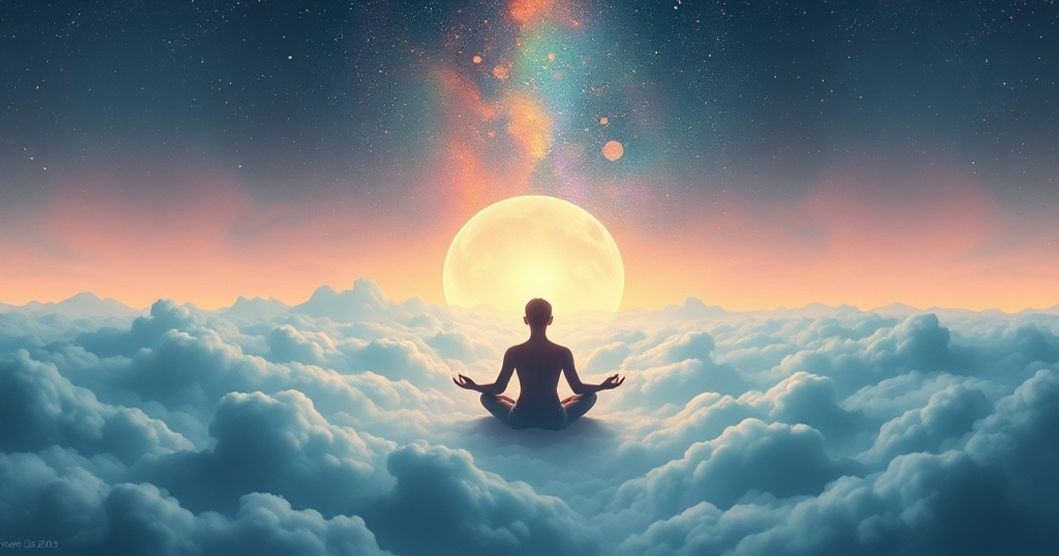
Lucid dreams offer a unique intersection of consciousness and creativity, where the boundaries between waking and sleeping dissolve. In this dream narrative, the dreamer describes a recurring practice within these liminal states, blending intentional meditation with the curious phenomenon of self-initiated control over the dream environment. The dream begins with the sudden clarity of 'knowing' one is dreaming—a hallmark of lucid dreaming—and transitions into a deliberate meditative practice: hands pressed in prayer position, legs folded in stillness, eyes closed, and breath synchronized with the moment. The chanting of 'aum' introduces a spiritual dimension, while the physical posture anchors the practice in both yoga and meditation traditions. As the dreamer focuses on breath and vibration, a strange thrumming sensation begins to spread, eventually becoming the catalyst for awakening. This pattern repeats: the dreamer attempts to 'go deeper' into the sleep state, only to encounter the same vibrational energy and abrupt transition back to wakefulness.
The rewritten dream narrative captures the sensory richness of these experiences—the charged air, the electric hush, the physical resonance of 'aum,' and the unsettling yet compelling vibration that propels the dreamer toward awakening. The repetition of the practice (meditation → vibration → awakening) suggests both intentionality and a deeper, unconscious process at work within the dream state.
Part 2: Clinical Analysis
Want a More Personalized Interpretation?
Get your own AI-powered dream analysis tailored specifically to your dream
🔮Try Dream Analysis FreeSymbolic Landscape: The Language of Lucid Dreams
The dream’s core elements—meditation, 'aum' chanting, posture, and vibrational awakening—contain rich symbolic meaning. The 'aum' syllable, a universal spiritual symbol in Hinduism and Buddhism, represents the primordial sound of the universe, the connection between the individual and the collective unconscious. In this context, its repetition within the dream suggests the dreamer’s unconscious desire to align with a deeper, transcendent truth. The physical posture (prayer hands, folded legs) evokes grounding and focus, symbolizing the dreamer’s attempt to maintain control and presence in an otherwise fluid, dreamlike state.
The 'vibrational sensations' are particularly significant. In dream psychology, such physical phenomena often represent energy movement or the activation of dormant psychological processes. These vibrations may symbolize the dreamer’s internal energy becoming conscious—a kind of 'awakening' within the dream itself. The abrupt transition back to wakefulness suggests tension between the desire to explore deeper states of consciousness and the need to return to waking reality, perhaps reflecting unresolved psychological currents.
Psychological Perspectives: Layers of Consciousness
From a Jungian perspective, lucid dreams represent the 'individuation process,' where the conscious and unconscious collaborate. The dreamer’s deliberate attempt to meditate and control the dream state reflects the conscious mind’s active engagement with the unconscious, seeking integration. The repetition of the practice (meditation → vibration → awakening) mirrors Jung’s concept of synchronicity—a meaningful coincidence—suggesting the unconscious is repeatedly offering the same message or experience.
Freudian analysis might interpret the dream as a manifestation of repressed desires for control or transcendence. The attempt to 'go deeper' into sleep could symbolize a wish to escape waking responsibilities, while the chanting and posture reflect attempts to impose order on an otherwise chaotic internal landscape. The vibration, as a physical manifestation, may represent the pressure of repressed emotions seeking expression.
Neuroscience frames lucid dreaming as a state where the prefrontal cortex remains active during REM sleep, allowing for metacognitive awareness. The dreamer’s intentionality suggests the brain’s default mode network (responsible for self-referential thought) is engaged, creating a 'waking mind' within sleep. The vibration might correlate with hypnagogic hallucinations, where sensory perceptions intensify as the brain transitions between states.
Emotional & Life Context: Patterns of Seeking and Transition
The recurring nature of this dream suggests underlying emotional themes. The dreamer’s consistent attempt to 'meditate while lucid' may reflect a desire for control in an otherwise uncertain waking life. The pressure to 'go deeper' could indicate a spiritual or existential quest for meaning, or perhaps a need to process unresolved emotions that surface during sleep.
The abrupt awakening—despite deliberate attempts to maintain control—suggests a tension between the dreamer’s conscious goals and unconscious resistances. The vibration might symbolize the body’s natural tendency to return to equilibrium, even in states of altered consciousness. In waking life, this could manifest as difficulty sustaining focus or completing projects, or an inability to fully commit to spiritual practices.
Therapeutic Insights: Integrating Dream Practice into Waking Life
The dream’s message invites reflection on the value of intentionality in both sleep and waking states. The practice of meditating within lucid dreams demonstrates the dreamer’s ability to harness their mind’s power—a skill that can be transferred to waking mindfulness practices. The vibration, often associated with energy movement, might represent an opportunity to explore emotional or spiritual blocks.
Journaling the details of these dreams (time of day, preceding events, emotions) could reveal patterns in the dreamer’s life. Reflecting on the 'aum' chanting as a symbol of intention, the dreamer might explore what 'deeper sleep' represents in their waking life—perhaps a need for rest, or a desire to connect with something greater than themselves.
Therapeutic exercises might include mindfulness meditation to bridge the gap between dream and wakefulness, exploring the 'vibration' as a metaphor for energy awareness. The dreamer could experiment with maintaining the meditative posture during waking moments to strengthen the connection between conscious intention and physical presence.
FAQ Section
Q: Why do vibrations occur in these lucid dreams?
A: Vibrations often signify energy movement in the dream state, reflecting the dreamer’s unconscious processing or spiritual awakening. They may also stem from hypnagogic sensations during sleep transitions.
Q: Is this a common experience in lucid dreaming?
A: Yes, intentional meditation in lucid dreams is increasingly recognized, with vibrations (sometimes called 'dream vibrations') occurring in 20-30% of lucid dreamers, often during attempts at deepening consciousness.
Q: How can I use this dream pattern for personal growth?
A: Reflect on the 'aum' chanting as a symbol of intention, and apply that focus to waking life. The vibration can be integrated as a reminder to embrace energy shifts, rather than resisting them, in both dreams and daily mindfulness practices.