
Part 1: Dream Presentation
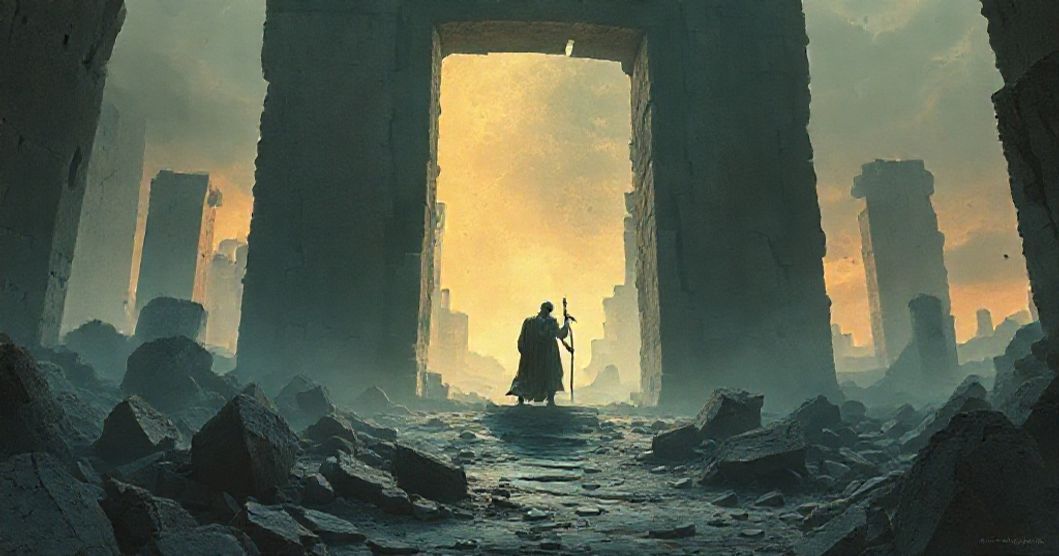
The boundary between waking reality and dream consciousness blurs in this vivid narrative, revealing a subconscious landscape where medieval valor collides with modern urban decay. In this dream, the dreamer embodies a knight or crusader figure, clad in armor with a red drape and yellow cross, navigating a post-apocalyptic New York City where skyscrapers overgrown with nature stand as silent tombs to a forgotten civilization. The dreamer’s mission to retrieve a dangerous artifact from a cursed steel hatch—one that erases purpose and triggers telepathic warnings in others—culminates in a tragic moment when a companion leaps to their death rather than witness the forbidden act. This dream weaves together symbolic imagery of medieval chivalry, modern urban collapse, and psychological barriers, offering profound insights into the dreamer’s inner conflicts and collective anxieties.
[Insert rewritten dream narrative here]
Part 2: Clinical Analysis
Want a More Personalized Interpretation?
Get your own AI-powered dream analysis tailored specifically to your dream
🔮Try Dream Analysis FreeSymbolic Landscape: Archetypes and Modern Decay
The knight/crusader figure represents a powerful Jungian archetype—the 'sacred warrior,' embodying duty, protection, and moral purpose. In medieval iconography, such figures often carry crosses (here, yellow on red—a combination evoking both religious devotion and martyrdom). The post-apocalyptic New York setting, with its overgrown skyscrapers, symbolizes the decay of modern civilization and the loss of meaning in contemporary life. The abandoned skyscrapers—once beacons of human achievement—now overrun by nature, reflect the dreamer’s subconscious perception of societal collapse or personal disillusionment.
The artifact itself remains unnamed, functioning as a metaphor for the unknown dangers that lurk beneath the surface of conscious awareness. The steel hatch, reminiscent of submarine doors, embodies psychological thresholds—forbidden knowledge, repressed memories, or the unconscious mind’s protective barriers. Touching the wheel triggers two profound symbolic responses: forgetfulness (representing the mind’s defense against overwhelming truths) and telepathic images (revealing the collective nature of fears and desires). The dead men surrounding the hatch symbolize failed attempts to confront these barriers, their bodies littered like discarded shadows of unprocessed trauma.
Psychological Undercurrents: From Archetypes to Modern Trauma
From a Jungian perspective, the dreamer’s role as a crusader aligns with the 'shadow' archetype—the repressed aspects of the psyche that demand integration. The red drape and yellow cross may symbolize the shadow’s dual nature: the 'red' of passion, danger, or bloodshed and the 'yellow' of caution, warning, or spiritual awakening. The telepathic images sent to others when the wheel is touched suggest the collective unconscious at work—the dreamer’s fears and desires becoming shared experiences.
Freudian analysis might interpret the artifact as a manifestation of repressed desires or forbidden knowledge, while the hatch represents the ego’s attempt to seal off these unconscious elements. The dreamer’s decision to 'leave and think of another plan' reflects a healthy defense mechanism—recognizing the danger of confronting repressed material without proper preparation. The knight brother’s suicide, however, suggests a deeper conflict: the inability to balance duty with self-preservation, or the collapse of the ego’s protective structures.
Emotional and Life Context: Unpacking Modern Anxieties
This dream likely emerges from the dreamer’s confrontation with modern-day challenges: societal uncertainty, loss of purpose, or overwhelming responsibilities. The post-apocalyptic setting may mirror anxieties about environmental collapse, technological dehumanization, or economic instability. The 'dangerous artifact' could represent a looming decision with high stakes—a career change, relationship shift, or moral dilemma that feels both necessary and suicidal.
The knight brother’s desperate plea ('don’t open it!') and subsequent suicide suggest a fear of betrayal or abandonment when facing difficult truths. The dreamer’s internal conflict between duty and self-preservation manifests as the choice to either confront the unknown (and risk losing purpose) or avoid it (and risk losing connection to meaning). This mirrors real-life experiences where individuals must choose between honoring commitments and protecting their mental health.
Psychological Perspectives: Jungian, Freudian, and Cognitive Frames
Jungian psychology illuminates the dream as a collective mythopoetic expression. The knight archetype connects to the 'wise old man' or 'shadow' figures in the collective unconscious, while the cursed hatch represents the 'forbidden door' to the underworld—a threshold requiring psychological preparation. The telepathic images reflect the 'collective shadow'—shared fears and taboos that unite humanity across time and space.
Freud would likely view the dream as a manifestation of repressed aggression or forbidden desires, with the artifact symbolizing repressed sexual or power fantasies. The hatch’s effect (forgetting purpose) could represent the ego’s defense against these repressed impulses, while the dead men embody the 'death drive' (Thanatos) and the destructive nature of unprocessed trauma.
Cognitive dream theory suggests this dream functions as problem-solving: the dreamer processes waking-life decisions by reimagining them in a high-stakes, mythic context. The knight’s mission mirrors real-world challenges requiring courage and discernment, while the telepathic warnings represent the mind’s attempt to avoid repeating past mistakes.
Therapeutic Insights: Confronting the Forbidden and Honoring the Shadow
This dream invites the dreamer to recognize the tension between duty and self-preservation—a universal human struggle. Journaling exercises could help explore specific waking-life decisions that feel similarly fraught, using the dream’s imagery to symbolize emotional risks. The 'hatch' represents psychological barriers; creative visualization techniques might help dismantle these barriers by approaching them with curiosity rather than fear.
Therapeutic work should focus on integrating the knight’s archetypal energy (purpose) with the brother’s caution (self-preservation). This balance requires distinguishing between healthy courage and reckless endangerment, learning to honor both the call to action and the wisdom of self-protection.
FAQ Section: Unpacking the Dream’s Layers
Q: What does the post-apocalyptic setting symbolize?
A: The overgrown skyscrapers represent modern civilization’s collapse—either literal fears of environmental collapse or metaphorical loss of purpose in a technology-driven world.
Q: Why does touching the wheel cause forgetfulness?
A: This symbolizes the mind’s protective mechanism against overwhelming truths, where confronting certain knowledge might erase identity or purpose, triggering a survival instinct to forget.
Q: What does the knight brother’s suicide signify?
A: It represents the fear of betrayal or the collapse of support systems when facing difficult choices, suggesting the dreamer may struggle with isolation during high-stakes decisions.